Facebook Pixel

Building Better Teams: Why Diverse Perspectives Drive Success

Building a team that embraces diverse perspectives is essential for fostering innovation and driving productivity. While having a team with a common vision seems ideal, it often limits the potential for new ideas and growth. By embracing diverse perspectives, organizations can tap into a multitude of talents, experiences, and ideas, leading to greater innovation, improved problem-solving, and ultimately, a more thriving company.
Why Does Having a Team With Diverse Perspectives Make Us More Successful?

Uniformity in opinions might bring comfort, but it risks becoming stagnant in your industry. To push your business to its greatest potential, diverse perspectives are necessary. This is especially true for developing new products, creating helpful solutions, and collaborating successfully.

A team of professionals with different areas of expertise, experience levels, and cultural backgrounds all can lead to different sources of inspiration from which ideas flourish. Research shows that diverse teams can problem-solve much more effectively.

Fostering a Culture of Openness

Encouraging diverse perspectives is easier said than done. But remember, you hired each employee for their unique expertise and perspective. Creating an environment where team members feel comfortable voicing their opinions can be achieved through regular open forums or anonymous suggestion boxes. These small steps can empower employees to share their insights without fear of being sidelined.

The Role of DEI Leaders

DEI leaders play a major role in creating a work environment where diverse perspectives are not just accepted but valued. Establishing a culture of acceptance, trust, and creativity helps your employees feel more comfortable sharing any ideas without fear of judgment. This is just one of many benefits of diversity in the workplace that will help your team be happier and more productive.

In today’s rapidly changing business landscape, having a team with diverse perspectives is more than a nice-to-have; it’s a fundamental requirement for success. As we move forward, the ability to integrate and leverage these diverse perspectives will become increasingly important in driving business growth.

FAQs

How does diversity help increase a team’s success?

Diversity helps the way that your staff works together, comes up with new ideas, and drives the bottom line. It introduces a range of perspectives that can challenge conventional thinking and lead to breakthrough innovations. Additionally, diverse teams are better equipped to understand and meet the needs of a global customer base, enhancing competitiveness.

Why is it important to have a diverse and inclusive workplace?

A diverse workplace is important as it looks at the strength of every employee and the potential they may bring to the organization. When you value the differences between us, this brings us all together to have a successful workplace. It also enhances the company’s ability to understand and cater to a broader client base, reflecting the diverse society we live in. An inclusive culture encourages more open dialogue and collaboration, leading to higher employee engagement and retention.

How do diverse perspectives bring value to a team?

Diverse teams generate more innovative ideas and solutions. Because the workforce is so diverse, it creates a wide range of ideas that can be efficiently executed because the team has a diverse skill set. This diversity not only fosters creativity but also enhances problem-solving capabilities, as different viewpoints can lead to unique solutions that might not have been considered otherwise. The rich variety of experiences and backgrounds in a diverse team can also enhance the team’s adaptability to new markets and challenges.

Why is having diverse perspectives important?

Every work culture should have different perspectives and points of view that offer unique insight into the challenges an organization is facing. These varied perspectives can lead to more comprehensive problem-solving strategies and enhance the creativity of solutions. Embracing diversity also helps in building a more inclusive environment where everyone feels valued and empowered to contribute.

10 DEI Interview Questions to Ask in Your Hiring Process

When it comes to interviewing potential hires, there are many factors to consider, including how to effectively incorporate DEI interview questions. It’s important to assess not only their experience and skill set, but also their understanding and commitment to diversity, equity, and inclusion. This approach provides valuable insight into how prospective employees might prioritize these critical aspects within your organization. Additionally, it offers candidates an opportunity to showcase their values and how they could contribute to advancing DEI initiatives in your workplace.

As organizations strive to create diverse and inclusive workspaces, recognizing the value of bringing different voices and perspectives is key. Screening candidates for their commitment to diversity, equity, and inclusion helps identify potential cultural fit and alignment with your organization’s values before making a hiring decision.

Key DEI Interview Questions to Consider

  1. How have you contributed to or supported diversity in your previous roles, and how do you envision continuing that in this position?
  2. Where can an organization most effectively improve its DEI efforts?
  3. How do you think being a part of a diverse and inclusive workplace would impact your productivity?
  4. Can you share how diverse cultural experiences have shaped your professional outlook?
  5. What challenges have you experienced related to diversity in previous positions? How did you communicate them to leadership?
  6.  How would you handle witnessing or experiencing
  7. Do you have prior experience with DEI training?
  8. What strategies would you use to advocate for DEI among colleagues?
  9. How would you respond to insensitive, homophobic or sexist comments at work?
  10.  Can you give me an example of how you’ve adapted your communication style to work effectively with colleagues from different backgrounds?

Interviewing for DEI Success

Valuing diversity and inclusion is a shared aspect between many organizations and candidates. By asking these important DEI interview questions, you start important conversations that enable growth both as an HR leader and as an individual.

Understanding the benefits of diversity and inclusion in the workplace goes beyond improving productivity and innovation, it also significantly affects your employee retention rates. Embracing these questions in your interview process is a step towards building a more inclusive and diverse work environment.

FAQs

What are some great DEI questions to ask during an interview?

Asking important questions like these in an interview allows the hiring manager to determine if they are a good fit for their diverse and inclusive workplace. Questions like: “What is your definition of diversity and why is it important?”, “What is inclusion?” or “Why do you want to work at an organization that prioritizes DEI?” Asking about a candidate’s experience with diverse teams and how they address conflicts or challenges arising from diversity can provide deeper insights into their DEI commitment.

Why should I ask DEI interview questions?

By asking diversity questions during interviews, you can better understand someone’s perspective on diversity and inclusion in the workplace you’re applying to. This allows the hiring manager to gain insight into your values and how you value working with people from different backgrounds than your own. It also sets the tone for the organizational culture, signaling to potential employees that diversity and inclusion are not just buzzwords but integral to the company’s culture.

What are the five key areas of diversity and inclusivity?

The five most common diversity areas include race, culture, gender, ability, and diversity in interests. Understanding and valuing these areas can lead to a more dynamic work environment where everyone has the opportunity to contribute their best work. It’s also important to recognize and address the intersectionality of these identities, as they can compound the experiences of marginalization or privilege.

What are the 4 P’s of diversity?

The four pillars of diversity are being present, persistent, proactive, and passionate. These principles encourage active engagement with diversity initiatives, continuous effort towards inclusivity, initiating changes to support diversity, and a genuine commitment to creating an equitable workplace. They serve as a guide for both individuals and organizations to foster a more inclusive culture.

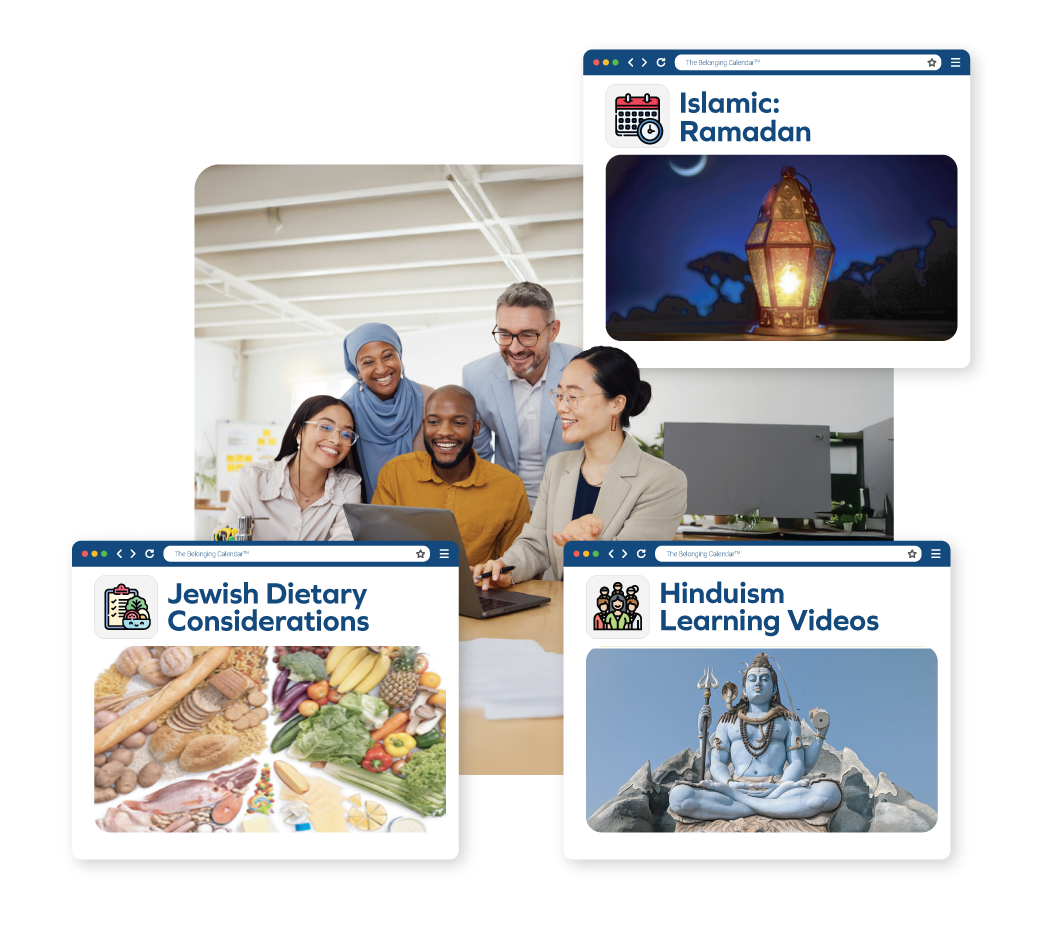
Islamic Holy Days, Muslim Holidays, Muslim Religious Calendar

Islam, like Christianity and Judaism, is an Abrahamic religion, a term referring to monotheistic religions which trace back to the Hebrew prophet Abraham. Islam places great importance in these prophets, one of the most widely known being the prophet Muhammad. Followers of Islam are referred to as Muslims. Muslim holidays hold significant cultural and spiritual meaning for followers around the world. Islam is the world’s second-largest religion, with over two billion followers worldwide, or roughly a quarter of humanity.

The Islamic (Hijri) calendar differs from the western (Gregorian) calendar and as such, Islam holy differ from year to year. The Islamic religious calendar follows lunar months and consists of 354 or 355 days. Most Muslims use the Gregorian calendar for civil events and business, but the Islamic calendar determines Muslim religious holidays. Due to the difference between the lunar and tropical year, Islam religious holidays occur about 11 days “earlier” in the Gregorian calendar each year. The two most widely recognized Muslim holidays are Eid al-Fitr (the end of Ramadan) and Eid al-Adha.

Below is our Islam holy days calendar which includes Muslim holidays, Islamic religious observances and Islamic festivals.

Muslim Holidays

Muharram

Muharram is the first month in the Hijri calendar, considered the second-holiest month in Islam, after Ramadan. The tenth day of Muharram is known as the holy day of Ashura. Muslims limit their eating, but it is not considered a full fast.

The start of Muharram is the Islam New Year’s Day.

Mawlid

Most Muslims observe Mawlid al Nabi, a holiday which commemorates the birth of the Prophet Muhammad on the 12th day of the 3rd month (Rabi al-Awwal).

In addition to this list of Muslim holy days, you can also explore our Interfaith Calendar 2024 which includes holidays, religious holidays and religious festivals.

Ramadan

Islam Holy Days: Ramadan is a holy month, rather than a holy day, observed by Muslims as the ninth month in the Islamic calendar. It lasts 29-30 days and is marked by sightings of the crescent moon.

With some exceptions regarding health and childbirth, Muslims fast from dawn to sunset during Ramadan. Many Muslims also abstain from many vices such as tobacco. Families eat a pre-dawn meal (suhur or suhoor) and a dusk meal to break the fast (iftar). Ritual prayer, acts of charity and recitation of the Quran are common traditions of Ramadan. There are many other celebrations and rites which occur throughout Ramadan, varying by region and culture.

Hilāl is Arabic for crescent moon; referring to the first sighting of the moon which marks the beginning of Ramadan. Laylat al-Qadr, or the Night of Decree, is the holiest night of the year. This night falls within Ramadan’s final 10 days, and although the exact date is unidentified, it is commonly observed on the 27th night of Ramadan.

Eid al-Fitr

Eid al-Fitr takes places once Ramadan ends and normal cultural practices are resumed. It is a 3-day festival, where feasting plays a central theme. Prayer, preparing and eating special foods, giving gifts, wearing new clothes, and visiting friends and family are among the traditions observed.

Hajj

Hajj (also spelled Haj) is a yearly pilgrimage to Mecca, the holiest city in Islam, located in Saudi Arabia. It lasts for five to six days, during the final month of the calendar, Dhu al-Hijjah.

Eid al-Adha

Eid al-Adha (feast of the Sacrifice), is one of the two main Muslim religious holidays, commemorating Abraham’s obedience to Allah. During this holiday, meat is ritually prepared and served, with a portion going to the family who provided the animal, and the rest distributed among the poor and hungry. Gift-giving and family gatherings are common. Eid al-Adha occurs during the 10th day of Dhu al-Hijjah, lasting four days.

The second day of Eid al-Adha is the Day of Arafa, one of the holiest days of the year.

Final Thoughts

These were some of the main Muslim holidays, but it’s not a comprehensive list. We hope this list of Islam holy days is useful to you. Inclusive scheduling is a must for businesses and organizations. It allows everyone to recognize muslim holy days regardless of which world religion their employees or members participate in.

For all 2025 religious holidays, see our interactive DEI Calendar for all 200+ religious events.

For more diversity topics, see our Diversity Calendar 2025.

Allyship Vs Advocacy: What’s the Difference?

In today’s world, many of us are trying to understand the role we play in advancing racial and social justice, but often lack proper guidance on how to start this journey. Allyship and advocacy are words that we often hear in the workplace, but what do they mean when it comes to diversity and inclusion training?

In this blog, we will explore the meaning of both terms and offer suggestions on how to become a more meaningful supporter of marginalized groups.

Exploring the Definitions of Allyship Vs Advocacy

Allyship involves actively supporting marginalized groups, while advocacy goes a step further by taking actions to  inspire positive systemic changes, such as addressing gender inequality or racism.

While often used interchangeably, allyship and advocacy have distinct roles. Allyship focuses on support, while advocacy pushes for systemic change and influences decision-makers. Advocates use their privilege and/or platform to bring attention to these issues and help advocate for change.

Allyship Vs Advocacy in the Workplace

As an inclusive leader, your priority should be to create an inclusive culture where everyone feels understood, valued, and accepted. This helps to create a positive work environment where employees can thrive.

Your DEI workplace initiatives must be clear, effective, and cognizant of all employees. Being aware of implicit or unconscious biases ensures you’re working toward better awareness, educating others in your organization and taking impactful advocacy actions to encourage positive change.

How to Avoid Performance Allyship

Performance allyship is when an organization publicly supports a cause but fails to address related issues within their own workplace. It’s not enough to simply declare allyship. It involved doing the hard work of changing behavior to align with your public statements.

In navigating the complexities of allyship vs advocacy, it’s vital to recognize that both play a crucial role in shaping a more inclusive and equitable world. Understanding the benefits of inclusion in the workplace and learning practical strategies are essential steps. To dive deeper into these topics, try out a free trial of our online Diversity Calendar.

FAQs

What’s the difference between advocacy and allyship?

A workplace advocate uses their position of power to provide support to underrepresented groups. An ally will defend or speak out on these groups’ behalf to ensure they are treated fairly.

Like a workplace ally, a workplace advocate often utilizes a position of privilege, but rather than just providing support to an underrepresented group, an advocate will defend, write, or speak on their behalf to ensure fair and accurate representation.

What are the 3 C’s of advocacy?

The three major C’s of advocacy include connection, communicate, and collaborate. Building connections involves creating networks that support and amplify advocacy efforts. Effective communication is key to raising awareness and influencing change, while collaboration allows for pooling resources and knowledge to tackle complex issues more effectively. Together, these components can drive significant progress in advocacy campaigns.

The Multimillion-Dollar Cost of Anti-DEI Policies in the Workplace

In recent years, organizations have increasingly recognized the importance of diversity, equity and inclusion (DEI). This shift wasn’t just a moral awakening, it was also a response to avoid the hefty costs associated with anti-DEI policies. However, the past year has seen a concerning trend of pushback against DEI initiatives, with some organizations scaling back their efforts. This reversal, often in response to new laws and pressures, can prove detrimental. In addition the immediate financial repercussions, such as legal settlements, organizations face indirect costs like reputation damage, boycotts, reduced productivity  and high employee turnover when they neglect DEI.

Here we will explore some of the largest lawsuits that highlight the costly impact of discrimination, bias, racism, sexism, and more.

Gender Discrimination Cases

Pinterest (2020)
Francoise Brougher, former Chief Operating Officer of Pinterest, filed a gender discrimination lawsuit after being sidelined and fired for raising concerns about sexist conduct and unfair remuneration. Her case, which highlighted issues of gender bias, resulted in a $22.5 million settlement by Pinterest. Brougher’s situation shed light on the broader gender discrimination issues within the tech industry. As part of the settlement, Brougher also donated $2.5 million to organizations supporting women and minorities in Silicon Valley​​.

Google v US Department of Labor (2021)
Google settled for over $3.8 million to resolve allegations of systemic compensation and hiring discrimination at their California and Washington State facilities. The U.S. Department of Labor’s Office of Federal Contract Compliance Programs identified pay disparities affecting female software engineers and hiring rate differences disadvantaging female and Asian applicants. The settlement included back pay and interest to affected employees and job applicants. Additionally, Google agreed to enhance future compliance and review its current policies to ensure non-discrimination​​.

Race Discrimination Cases

Coca-Cola Company (2001)
Coca-Cola faced a lawsuit involving nearly 2,200 current and former Black American employees who alleged racially discriminatory business practices affecting their promotion and equal pay. The court approved a $192 million settlement, the largest race employment discrimination class action settlement in American history at the time. Subsequently, Coca-Cola became an advocate for equitable employment practices and established a court-appointed Task Force to oversee their progress.

EEOC v. Jacksonville Association of Firefighters, Local 122, IAFF (2019)
The Jacksonville Association of Fire Fighters, Local 122, IAFF, agreed to pay $4.9 million to settle a race discrimination lawsuit. The lawsuit alleged that the union advocated for an unlawful promotional process disproportionately impacting Black candidates. This case undoubtedly exemplifies the impact of anti-DEI policies and discriminatory practices in professional advancement and promotion​​.

Disability Discrimination Case

EEOC v. Verizon Communications Inc. (2011)
Verizon Communications settled a nationwide class disability discrimination lawsuit for $20 million, the largest disability discrimination settlement in a single lawsuit in EEOC history. Verizon was charged with violating the Americans With Disabilities Act (ADA) by refusing to make exceptions to its “no fault” attendance plans to accommodate employees with disabilities. The settlement required Verizon to revise its attendance and ADA policies, provide mandatory ADA training, and report all employee complaints of disability discrimination​​.

Age Discrimination Case

EEOC v. Texas Roadhouse (2017)
Texas Roadhouse, a national restaurant chain, agreed to pay $12 million to settle an EEOC age discrimination lawsuit. The lawsuit alleged that Texas Roadhouse engaged in a nationwide pattern of age discrimination by denying front-of-the-house positions to applicants aged 40 and older. The consent decree required Texas Roadhouse to change its hiring and recruiting practices, establish a diversity director, pay for a decree compliance monitor to ensure adherence to the Age Discrimination in Employment Act (ADEA), and increase its recruitment and hiring of older employees​​.

LGBTQ+ Discrimination Case

Harris Funeral Homes v. EEOC (2020)
In this landmark case, Aimee Stephens, a transgender funeral director, was awarded $250,000 after facing sex discrimination at Harris Funeral Homes. The Sixth Circuit Court of Appeals ruled the dismissal as unlawful discrimination based on her sex. This case, which reached the U.S. Supreme Court, resulted in a historic ruling in June 2020, confirming that federal sex discrimination laws protect transgender individuals. This ruling marks a significant moment for LGBTQ+ rights and underscores the financial and ethical implications of anti-DEI policies in the workplace.

Religion Discrimination Case

Abercrombie & Fitch (2015) 
The U.S. Supreme Court found Abercrombie & Fitch liable for violating civil rights law by refusing to hire Samantha Elauf, a Muslim woman, because she wore a hijab. The company was ordered to pay $25,670 in damages to Elauf and $18,983 in court costs. Additionally, Abercrombie & Fitch had to revise its “look” policy. This ruling set a precedent, clarifying that an employer could be liable under Title VII for decisions motivated by avoiding the need to accommodate a religious practice, even without direct knowledge of the need for accommodation.

Consequences of Anti-DEI Policies

These cases underline the costly consequences of anti-DEI policies in the workplace. Neglecting DEI not only leads to substantial financial losses in legal settlements but also damages an organization’s reputation and affects employee morale and productivity. Embracing DEI is not just a moral imperative but a business necessity to foster a fair, inclusive and productive workplace. This doesn’t have to be ambiguous – you can measure the ROI of DEI.

To help your organization foster an inclusive workplace, try out our Diversity Calendar. This valuable tool not only helps in respectful scheduling but also offers a wealth of DEI educational resources. By integrating our Diversity Calendar into your workplace, you can actively work towards preventing discrimination and promoting equality.

FAQs

What are the objections to DEI?
Critics may argue that DEI efforts can lead to reverse discrimination, prioritizing diversity over merit and qualifications. Others view DEI programs as potentially divisive, fostering a focus on differences rather than unity. However, proponents of DEI highlight its role in fostering inclusive environments that respect and value diverse perspectives, ultimately contributing to more equitable and innovative organizations.

What is the anti DEI law in Texas?
The anti-DEI law in Texas, known as Senate Bill 17, took effect on January 1, 2024. This legislation prohibits state-funded colleges and universities from maintaining diversity, equity, and inclusion offices and bars them from soliciting DEI statements from job candidates or mandating diversity training related to race, color, ethnicity, gender identity, or sexual orientation. The law’s impact is already prompting changes in DEI programs and staff roles within affected institutions, with some announcing closures of DEI offices or adjustments to comply with the new regulations​​.

What is opposition to DEI training?
Opposition to DEI training often arises from concerns about the content and approach of such programs. Critics may perceive DEI training as promoting a particular political or ideological agenda, infringing on personal beliefs and freedoms. Concerns are also raised about the effectiveness of these trainings, with some arguing that they can be counterproductive, inadvertently reinforcing stereotypes or creating resistance among participants. On the other hand, supporters assert that DEI training is crucial for building awareness, reducing biases, and creating more inclusive workplaces, which can enhance team collaboration and organizational success.

DEI Trends 2024: What’s Ahead?

DEI consistently made headlines in 2023, like after the Supreme Court ruling regarding affirmative action. As we move into the new year, DEI trends 2024 will continue to evolve further, influenced by an increasing number of organizations committing to DEI initiatives. This shift will have a significant impact on your corporate DEI strategies, especially in alignment with HR trends.

2024 has the potential to be a transformative year in DEI. It’s a critical time for leaders to revisit and rework their DEI approach, ensuring it’s a proactive part of their strategy with a focus on reshaping the workplace for the better.

Key DEI Trends 2024 to Watch

Using Generative AI for Inclusive Hiring

AI is revolutionizing how we address biases in recruitment. AI tools are becoming more sophisticated, enabling organizations to identify and eliminate biased language in job descriptions and website content, creating a more inclusive hiring process.

Embracing Hybrid Work Schedules

Hybrid work schedules are here to stay. The post-pandemic workforce aren’t interested in being in the office five days a week. From a DEI perspective, offering flexible work options makes your organization more attractive to a diverse pool of potential new hires.

Prioritizing Mental Health Support

The world is undeniably stressful, with  the usual daily life stressors exasperated by global events. As we head into 2024, finding ways to balance productivity, family time and leisure is more challenging yet more important than ever. Recognizing this, more organizations are focusing on mental health and wellness, understanding that breaks and work-life balance are not just beneficial but necessary for a healthy, inclusive workplace.

Elevating Hiring and Retention Through DEI

Studies consistently show that DEI-focused leadership is crucial to attracting top talent. Companies lacking strong DEI programs risk falling behind in the competitive hiring landscape.

Brainstorm How to Improve Your DEI Programs in 2024

As you reevaluate your DEI program, understanding and embracing DEI trends 2024 is essential. These trends are not just fleeting ideas, they are keys to ensuring your organization continues to flourish in an increasingly diverse and inclusive world.

To support your journey in DEI, consider subscribing to our Online Diversity Calendar. It’s a comprehensive resource that helps you stay connected with important DEI events and fosters an inclusive culture in your workplace.

FAQs

What is the 2024 DEI prediction?

This year, companies will prioritize DEI training and education. This prioritization helps create a sense of belonging among teams from different backgrounds. Inclusive leadership training is a big focus for many organizations as it provides awareness of unconscious bias in the workplace.

What are DEI initiatives?

DEI initiatives are important for creating an equitable experience for every employee. Diversity,  equity, and inclusion (DEI) initiatives foster a positive work culture where people of different backgrounds, faiths, sexual orientations, genders, abilities, or ethnicities can be productive together. Studies prove that the most diverse teams are more likely to outperform their competition by 36%.

What is diversity, equity, and inclusion?

DEI is a framework that promotes the fair treatment of all people. Historically, underrepresented groups have been subject to discrimination. Equity provides resources that help these populations be high-functioning and successful in every workplace. Diversity refers to the representation of different social groups in an organization. Inclusion is a workspace that accepts and values every member of its team, regardless of their faith, ethnicity, gender identity, etc.

DEI Statistics 2024 That Will Impact Your Workplace and Hiring

In a year marked by both challenges and opportunities in diversity, equity, and inclusion (DEI) initiatives, the need to stay informed with DEI Statistics 2024 has never been more critical. The DEI industry has seen significant changes, with a noticeable retreat in progress from some DEI industry leaders after an initial surge in diversity awareness. This situation has been further complicated by the undefined roles of many chief diversity officers, limiting their impact on decision-making. Additionally, certain states have imposed restrictions on DEI funding, posing further challenges.

Understanding DEI in the Current Climate

As organizations  looking towards a brighter future, learning about DEI Statistics 2024 is curial for planning a successful new year.

One in Four Women Report an Increase in DEI Commitment

This statistic reflects a positive trend, but it’s nuanced. Another DEI statistic reveals that 22% of women have noticed a decline in support. This complexity highlights the importance of ongoing, impactful conversations with coworkers and leadership to continue to build your DEI strategy and training.

One in Three Employees Say Their Employer Supports Their Mental Health & Work/Life Balance

Since the pandemic, there’s a growing recognition of the significance of employee well-being. Let’s face it, the better that someone feels, the more productive they’ll be. Part of that includes having a healthy work/life balance to prevent burnout. Many companies are now more vocal about their commitment to supporting the mental health of their employees, an essential component of DEI efforts

83% of women who have been working remotely want to continue remote work

While the future of remote work is still complicated, especially when it comes to DEI, employers should strive to create an inclusive path forward that accommodates various working styles –  remote, hybrid, or in-person.

Looking Ahead with DEI Statistics 2024

Gaining insights from DEI statistics 2024 is more than just number-crunching. It’s about understanding emerging trends and shaping an inclusive, successful workplace culture for 2024 and beyond. Let’s use these insights not just as data points, but as catalysts for positive change in our organizations.

To further enhance your understanding and application of DEI principles, consider exploring our Online Diversity Calendar. It’s an invaluable resource for staying updated about important DEI events and fostering a culture of diversity and inclusion in your workplace.

FAQs

How does DEI impact the workplace?

DEI creates a positive work environment where everyone feels valued for their contributions. This helps to improve productivity and collaboration for a team. This sense of belonging allows your staff to feel respected and heard as their true self, regardless of their faith, ethnicity, socioeconomic status, or ability.

What are some of the major concerns about DEI in the workplace?

There are many DEI challenges in organizations across the world. Many times the biggest challenge isn’t that DEI initiatives don’t exist, it is that they do but there is a failure of measuring their effectiveness. When you don’t know what benchmarks to compare, you won’t learn much about their impact. By having an open-communication policy, you learn how your employees feel about your work culture regularly. This will generate ideas of changes to make to ensure that everyone feels valued, seen, and heard.

How important is DEI to a staff?

Diversity, equity, and inclusion are not only important but beneficial too. Diversity allows for new perspectives, which leads to better innovation. Equity helps create a fair and equitable work environment that offers opportunities for all team members to grow with the company. Lastly, inclusion ensures that employees feel a sense of belonging. This understanding is what helps a team thrive together regularly and helps your bottom line.

Exploring Key Milestones in American Diversity

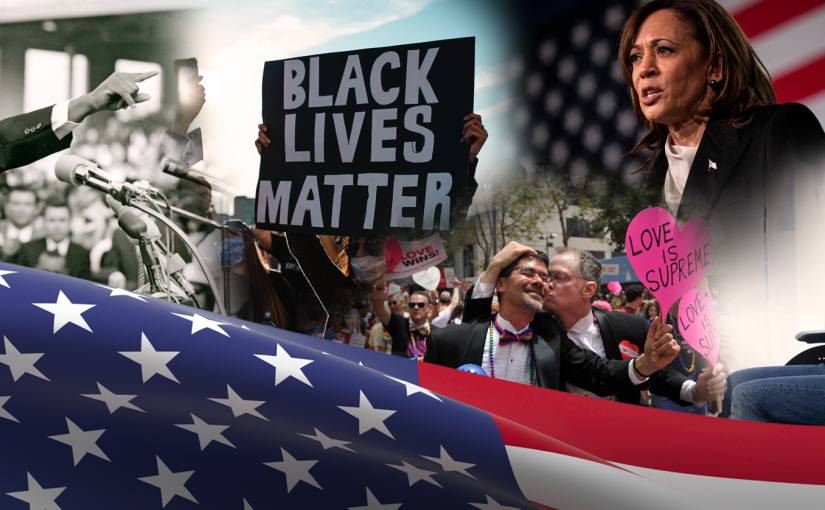
Throughout history, the United States has experienced significant milestones and transformative moments that have shaped the landscape of equality, human rights, and social progress. From groundbreaking legislation to pivotal cultural movements, each event has played a crucial role in advancing American diversity, equity, and inclusion.

This timeline highlights key moments in American diversity spanning several decades, showcasing the strides made in areas such as civil rights, gender equality, LGBTQ+ rights, disability rights, and racial justice. Together, these events reflect the ongoing pursuit of a more inclusive and equitable nation, fostering conversations that resonate across diverse communities and cultures.

American Diversity Across the Years

1962 – Illinois becomes the first US state to decriminalize homosexuality, a landmark step for LGBT+ rights, heralding a new era of legal recognition and acceptance.

1964 – The Civil Rights Act of 1964 is passed, becoming one of the most monumental legislative pieces in American history. Building upon legislation introduced in 1957, this sweeping act prohibits discrimination based on race, color, religion, national origin, or sex. It also ensures equal voting requirements, and prohibits segregation. It was followed with the Voting Rights Act of 1965 which further ensures equal access to voting.

1972 – Title IX (“Title Nine”) is passed as part of the Education Amendments of 1972. It prohibits discrimination on the basis of sex in public schools, but its impact would later extend far beyond that scope to affect gender equity and protections against sexual harassment and assault.

1973 – In a significant shift in medical understanding and societal perception, the American Psychiatric Association removes homosexuality from its list of mental illnesses.

1990 – The Americans with Disabilities Act (ADA) is signed into law. It extends protections similar to those in the Civil Rights Act to Americans with disabilities. It also requires certain employers to provide accommodations to employees with disabilities.

2000 – Vermont becomes the first state to recognize same-sex partnerships and unions.

2004 – Massachusetts becomes the first state to legalize same-sex marriage, marking a pivotal moment in the LGBTQ+ rights movement.

2008 – Barack Obama is elected president, becoming the first non-white and first Black person to hold the nation’s highest office.

2016 – The Supreme Court rules in Obergefell v. Hodges that states cannot prohibit same-sex marriage, affirming the constitutional right to marriage equality.

2017 – #MeToo becomes a mainstream movement, acting as a watershed moment for feminism and the conversations surrounding harassment, assault, and gendered power dynamics.

2020 – The Black Lives Matter movement captures national and international attention, prompting an ongoing conversation on policing, politics and popular culture about the treatment of Black people.

2021 – Kamala Harris makes history as the first woman and first person of color to hold the office of Vice President.

2022 – Ketanji Brown Jackson is nominated by President Biden to become the first Black woman to hold a seat on the Supreme Court. This year also witnesses a surge in diversity within the legislative branch, reflecting a broader and more inclusive representation of the American population.

2023 – President Joe Biden issues an executive order to ensure federal agencies enhance service accessibility for underserved communities, bolstering government-wide efforts in diversity and inclusion.

Here’s to more monumental strides in American diversity in 2024. Take advantage of our comprehensive Online Diversity Calendar and stay up-to-date with important dates, learn about diverse cultures, and foster inclusivity in your personal and professional life.

Understanding Sexual Orientation vs. Gender Identity

One of the main barriers to creating a fully inclusive workplace is the assumption that sex, gender and sexual orientation fit into binary models – either male or female, straight or gay, nothing in between. For anyone who understands the nuances of gender identity and pronouns, it’s clear that this binary framework is limiting. To be truly understanding and accepting of all people, we must explore the differences between sexual orientation, gender identity and gender expression.

What Is Biological Sex?

Biological sex refers to the anatomy and physical attributes that define us as male or female. However, the term “intersex” refers to people who are born with sexual anatomy that doesn’t neatly fit traditional definitions of male or female.

What Is Gender Identity?

Defining gender is a complex task, as there are so many identities and the meaning of each is deeply personal. Gender identity is how a person perceives their own gender, which may or not be the sex that was assigned to them at birth.

Pronouns may or may not correspond to a person’s gender identity; for example, someone may use she/her pronouns but identify as non-binary.

Gender Identity Terms to Know

  • Agender: People who don’t identify with any gender or typically fall within the non-binary category.
  • Cisgender: People whose gender identity aligns with their assigned sex at birth.
  • Genderfluid: People who have a fluctuating gender identity.
  • Non-binary: A gender that doesn’t align exclusively as male or female.
  • Intersex: People who have sexual characteristics that don’t align with their assigned sex at birth.
  • Transgender: People whose gender identity differs from their assigned sex at birth.

What Is Sexual Orientation?

Sexual orientation describes who you are attracted to emotionally, romantically, or sexually. Sexuality can be fluid, much like gender.

Sexual Orientations Terms to Know

  • Heterosexual: A person who is attracted to someone from the opposite gender. Also known as straight.
  • Homosexual: A person who identifies as gay and is attracted to someone of the same gender.
  • Lesbian: A woman who is attracted to other women.
  • Bisexual: A person who is attracted to both someone of the same gender and other genders too, although some consider this term limiting.
  • Queer: A broad term that includes anyone who doesn’t identify as straight, allowing for fluidity in its definition.

Understanding Gender Expression

Gender expression is how someone shows their gender to the world, whether through clothing, hairstyle, voice, or body language.

People can express their gender in ways that conform to societal norms or defy them; it’s crucial to understand that gender expression doesn’t have to align with someone’s biological sex.

Learning to Accept All People

Taking the time to understand these terms and concepts properly helps create a society in which everyone feels understood and accepted. After all, isn’t that what we all want to feel?

If you’re looking to learn more, LGBTQ+ Inclusion Training can help you and your staff learn how to respectfully identify others in the workplace. A Diversity and Inclusion Calendar also helps you learn about other races, ethnicities, and faiths at work too.

FAQs

What is the definition of gender identity?

Gender identity is someone’s individual experience of their gender. It may be the same or different from their birth-assigned sex. This deeply personal sense of self can influence one’s self-concept and interactions with others. Societal norms and expectations often play a significant role in how people express and navigate their gender identity.

What is your gender identity?

This is a personal question, so refrain from asking it until someone is comfortable sharing it, especially in a work setting. One’s gender identity isn’t readily seen by others, it can be the same sex that you were assigned at birth or cisgender, or not, which is transgender. Some people identify as male, female, or non-binary. Understanding and respecting each person’s self-identification is crucial in creating inclusive environments.

What are the 8 gender identities?

The spectrum of gender identity is evolving every day. Some of the known gender identities include male, female, gender neutral, non-binary, transgender, agender, genderqueer, pangender, third gender, and two-spirit It’s essential to recognize this diversity and the unique experiences and challenges each identity may face. It’s important to remember that gender identity is fluid for some, and they may not fit into traditional categories.

What are the 4 gender pronouns?

There are actually more than four gender pronouns. The main gendered pronouns include she/her/hers, he/him/his, and non-binary pronouns such as they/them/theirs.  Other pronouns include ze/hir/hirs and xe/xem/xyrs, among others, catering to a wide range of gender identities. Respecting and using a person’s chosen pronouns is a fundamental aspect of acknowledging their identity and dignity.

How To Be an Ally

Commitment to diversity requires a responsibility to promote inclusion in the workplace. This helps us all create a vision of the world where all people are represented. Hiring and retaining a variety of different races, ethnicities, and people of different faiths ensures a positive and diverse work culture to be productive in.

As you work toward creating an environment where all employees can thrive, it’s important to understand the challenges associated with diversity in the workplace. Learning how to be an ally, whether as a friend, a boss, a colleague, or just as a human being, allows you to show support to those different from you, which hopefully will inspire others to do the same.

There are many different types of diversity training that can help your staff learn about the differences between them and how to navigate them effectively.

Five Tips for Becoming an Ally

Being an ally is not dependent on your race, gender, or faith; it’s about your actions and intentions.

#1 Identify yourself as an ally

To truly identify as an ally, you must define what it means to you. Traditionally, an ally is someone who actively supports and empowers marginalized individuals or communities, such as BIPOC (Black, Indigenous, and People of Color).

This step may be the most challenging, as it forces you to recognize and accept your own privilege. While it isn’t necessarily an identity, it is a commitment to building relationships that are based on trust and accountability, regardless of your differences.

#2 Eliminate any assumptions you may have about others

Differences should always be celebrated, whether in the workplace or beyond. Making assumptions about people based on their gender, sexual orientation, or ethnic background leads to unconscious biases.

#3 Listen to learn

Instead of drawing your own conclusions, engage in open dialogue to learn and understand, rather than judge. For instance, if someone feels discriminated against or misunderstood, ask them how you can help. Active listening helps you to understand specific concerns and perspectives.

#4 Build empathy

Being a good ally means understanding that what is acceptable for one person may not be for another. Create a safe, judgement-free space where everyone feels comfortable.

#5 Become an advocate

Listen to how people refer to themselves and honor the language that they use, like pronouns. Language plays an important role in improving DEI strategies at work. Allies should understand the power of words, especially in workplaces that are considered safe spaces.

Making Changes for Those Different Than You

Being an ally is about leveraging your privilege for positive change. By providing resources that can support your peers, you can help make major differences in how they feel, work, or just live.

It’s also important to remember that nobody’s perfect. If you make a mistake during this process, simply apologize, and learn from it. We are all learning and growing together, so taking the time to work toward something positive is the most important thing.

Online diversity training can help with workplace diversity, inclusion, and sensitivity, and an Online Diversity Calendar will go a long way to making your workplace more inclusive.

FAQs

What are the 4 pillars of allyship?

There are four main focuses when you commit to working as an ally: yielding, listening, learning, and action. Each pillar is crucial in building relationships based on trust and respect. Being an ally involves continuous effort and commitment to supporting others while recognizing one’s own privileges and biases.

How can I act as an ally?

Some main ways that you can be an effective ally at work include listening more than you speak to learn about those different from you. You can also recognize all of your team members and brainstorm ways to use their skills to better your own projects or efforts. Additionally, advocating for policies and practices that support equity and inclusion is vital. It’s also important to speak up against discrimination and bias when you witness it.

What is the first step to being an ally?

The first step to becoming an ally is taking the time to learn about other cultures different from your own and to examine your own prejudices to take proactive actions to become a better human to stand up for those around you. This involves being open to feedback and willing to change your behaviors and attitudes. Building empathy and understanding through personal connections and stories can deepen your commitment to allyship.

What Is Intersectionality?

Intersectionality is a term that helps us understand how various forms of discrimination or disadvantages can overlap and intersect for individuals or groups. Originally coined by Kimberlé Crenshaw, this concept allows us to gain a more nuanced understanding of the complex prejudices people face based on factors like race, socioeconomic class, gender identity, religion or sexual orientation. Intersectionality helps us all recognize that we often experience similar challenges, even when our identities differ.

The term ‘intersectionality’ emerged in the late 1980s within the context of legal discussions about discrimination. It has since evolved, becoming an important framework in understanding how systemic injustices intersect. For example, a Black woman might face unique challenges that are distinct from those experienced by Black men or white women, highlighting the importance of considering multiple aspects of identity.

Tips for Using Intersectionality for Good

Here’s how we can integrate intersectionality into our views on diversity:

Learn about Unconscious Biases
These are stereotypes and beliefs that we form subconsciously. They may come from how we were raised or how we organize the world into categories. They’re more common than outright prejudice and can be just as harmful.

Recognize Differences
While sometimes it’s easy to assume everyone shares a common understanding of an issue, it’s important to recognize the unique experiences of others. This acknowledgement can help people feel that their experiences of oppression, discrimination, or prejudice are heard and validated.

Listen & Create Change
Support doesn’t mean expecting others who experience different forms of oppression to automatically rally for your causes. Take the time to listen to their issues, learn about the work being done to address those issues and commit to helping them achieve change. Not only will this help you deepen your own understanding, but also foster a greater sense of community and shared purpose.

Incorporate Intersectionality in the Workplace
As professionals, we should strive to understand the intersectional identities of our colleagues. This understanding can be deepened through diversity training. Aim to cultivate a work culture where everyone, regardless of their intersectional identities, can thrive and contribute meaningfully.

Be a Proactive Ally
Act as an ally by recognizing your privileges and using them to uplift marginalized groups. This proactive approach can make a substantial difference in creating equitable environments.

Address Common Misconceptions
It’s essential to understand that intersectionality isn’t about creating a hierarchy of oppressions but rather about understanding the complexities of experiences.

Whether in personal life or in the workplace, embracing intersectionality can lead to more inclusive and understanding environments. By recognizing and valuing the complex nature of human experiences, we can build a society that’s equitable and respectful of all its members. Having a Diversity Calendar can go a long way in ensuring all team members feel seen, heard, valued and respected.

FAQs

What does intersectionality mean?

Intersectionality is the interconnected nature of categories such as gender, class, or race, and the overlapping systems of discrimination or disadvantage they may face. This concept highlights that people have multiple facets to their identities, which can compound experiences of oppression or privilege. Understanding intersectionality is essential for addressing the unique challenges faced by people at these intersections.

What are some examples of intersectionality?

The social categories associated with intersectionality include sexual orientation, disability, socioeconomic status, and neurodiversity, to name a few. For example, the experience of a Black woman can be different from that of a white woman or a Black man, due to the intersection of race and gender. Recognizing these intersections is important for creating equitable and inclusive policies and practices.

Why is intersectionality so important in society?

Intersectionality is a lens that is used to ensure that no one person is left out of the fight for justice. It helps us to assess as a society the differences between equality and equity and how to analyze how different forms of oppression reinforce the other. This framework encourages us to consider the complex realities of people’s lives in our efforts to promote fairness and justice.

What Is Inclusive Leadership?

To invoke societal change, we must aim for diverse and inclusive organizations, and that means having inclusive leadership. For organizations, this isn’t just the right thing to do, but it’s also a smart move. Research has proven that diverse and inclusive workplaces significantly outperform those that are not.

While many have tried to achieve this goal, many have failed. Diversity and inclusion should be implemented into every facet of your organization – from recruiting and interviewing to hiring and retention. Many businesses falter when it comes to inclusive leadership, an area that can be improved with intentional efforts.

Inclusive Leadership Definition

Inclusive leadership is a style of leadership that actively seeks to include and value diverse perspectives and backgrounds. It’s about recognizing and appreciating differences in team members, whether those differences are in culture, gender, age, sexual orientation, or other areas.

Inclusive Leader Traits

Inclusive leaders recognize and embrace diversity, build trust and foster a sense of belonging. They take the view of others into account in decision-making. This not only makes them more effective leaders, but also inspires those around them to want to do the same too.

Having an inclusive leader helps organizations to attract the best talent. This is vital to the success of any organization as different perspectives provide valuable insights into various customer segments, especially underrepresented ones.

Additionally, inclusive leadership has the ability to unlock the potential in every team member, which creates a culture of understanding where everyone can grow and thrive.

Inclusive leaders demonstrate an acute awareness of personal biases, cultural sensitivity, empathy, and courage in challenging norms.

What Does a Culture of Understanding Look Like?

When you create this sense of belonging at work, you allow your staff to:

  • Feel free to be themselves
  • Offer the ability for everyone to be accepted
  • Reassure everyone there are opportunities to grow with the company as a whole
  • Believe that everyone’s opinions and ideas are valid and important

Inclusive leadership helps underrepresented people understand that they can take ownership of their careers. By giving them the proper tools needed to grow, they are more likely to stay and thrive in your organization.

Making Your Staff Feel Comfortable

Inclusive leaders invest time in learning about every employee. Acknowledging them as individuals allows them to feel supported. When you practice cultural competency, you help your team feel more comfortable, which boosts morale and productivity.

By opening up channels of communication, you may be able to identify and address areas for improvement, and even discover unconscious biases that you or any staff member may have.

Learn More How A Diverse and Inclusive Staff And Leadership Can Benefit Your Business

When you create inclusive leadership roles at your organization, you will see results in your team’s performance. Are you ready to foster inclusive leadership? Explore our Diversity and Inclusion Training courses to empower your team to thrive in a diverse, equitable, and inclusive workplace.

FAQs

What does inclusive leadership mean?

An inclusive leader is someone who is aware of their own biases and works to seek out different perspectives to inform their influence in society or in an organization. This approach creates an environment where all team members feel valued and understood, encouraging them to contribute their unique insights. Inclusive leadership also involves actively creating opportunities for diverse voices to be heard and respected, further enhancing team cohesion and innovation.

What are 3 important leadership traits of inclusive leaders?

Some great traits to have as an inclusive leader are empathy, resilience, and humility. Empathy allows leaders to connect with their team members on a personal level, understanding their experiences and perspectives. Resilience is key in navigating challenges and driving change, while humility enables leaders to acknowledge their limitations and learn from others, promoting a culture of continuous improvement and mutual respect.

What are the best examples of inclusive leadership?

Some of the best examples are those in recruitment who mandate having a diverse candidate pool for their company or who work hard to embed diversity and inclusion efforts into their workplace. Leaders who prioritize inclusion in decision-making processes and policy development also set a strong example, as they demonstrate the value of diverse perspectives in achieving business objectives. Additionally, leaders who advocate for and implement mentorship programs for underrepresented groups contribute to building a more inclusive and equitable work environment.

Sign In

Sign in to Diversity Resources