Facebook Pixel

2023 DEI Trends

We’re already well into the second quarter of 2023 and most companies should be ramping up their diversity and inclusion efforts. If you’re part of the diversity and inclusion team for your company, here are some global DEI trends you should keep an eye out for this year. 2023 will continue to build on and improve what you worked on this past year by maximizing employee involvement and pushing you to create an even more cohesive DEI strategy.

Continuous DEI training

Too many companies look at DEI training as a checkbox. Some will host a once-a-year DEI workshop that every employee must attend. Others do even less. They mandate everyone do an online diversity training when they onboard, and then never again.

DEI is a dialogue that your employees must continuously engage in. If you’re not constantly talking and changing your message depending on what’s presently affecting company culture or the world, you can’t expect to create sustainable change.

Going forward, companies will cease to host one-off training and instead try to integrate DEI training more regularly. This will create a real culture surrounding diversity and inclusion.

Encouraging everyone to get involved in DEI

In the past, there’s been a lot of emphasis on encouraging people of color to lead conversations surrounding DEI. As they have more lived experiences on the topic, it makes sense to many that they would be the ones to lead discussions.

However, 2023 will see a trend toward encouraging everyone, regardless of their social indicators, to get involved with DEI. Talented leaders of all backgrounds can help develop data-driven DEI strategies. Everyone should advocate for a diverse and inclusive environment.

This year will take an “all-hands-on-deck” approach while still welcoming individuals from underrepresented backgrounds to help as much as they’re willing and able to.

Constructing a clear diversity and inclusion strategy

Many companies and organizations recognize that DEI is important, but they don’t know where to start. Sometimes, their DEI programs begin with a bit of a piecemeal approach. Someone suggests getting some diversity days on the calendar, or there may be a speaker or two that does a workshop annually. There’s not much thought behind it. The events related to diversity, equity, and inclusion just kind of happen.

However, DEI can suffer when it’s done haphazardly. The best programs are implemented thoughtfully. If you’re on the DEI leadership team, consider the following as you begin to create a cohesive plan for 2023:

  1. Key performance indicators about hiring, retention, advancement, etc. of diversity talent
  2. Clear responsibilities for diversity events and goals
  3. Expectations about how to implement your diversity strategy
  4. The tools and resources needed to bring your outlined DEI strategy to life

Final Thoughts

The new year is ushering in a new face for diversity, equity, and inclusion. This year, companies will focus on implementing a tangible diversity strategy and making everyone feel as though they can contribute. If you need a place to start, a diversity calendar is always a strong way to integrate consistent talking points regarding DEI into your company culture.

DEI is on your agenda, but you’re wondering where to start? Explore our article on How to Create a Diversity and Inclusion Council

And make sensitivity a part of your workplace, 365 days a year, with a Diversity and Inclusion Calendar

Buddhist Holidays & Observances

Buddhism is a religion and philosophical tradition followed by millions of people across the globe. Originating in the Indian subcontinent, it is now shared across a rich variety of cultures throughout different lands. As such, holidays fall on varying dates in different places. This guide will give a succinct but comprehensive overview of the major holidays in key countries, as well as some of the minor holidays and observances.

Below is our Buddhist holy days 2024 calendar which includes Buddhist observances, Buddhist religious holidays and Buddhist festivals.

New Year’s Celebrations in Buddhist Cultures

The New Year is celebrated differently among different Buddhist communities, but to many, it is a sacred time. Celebrants often ritualistically clean and sweep their homes, energetically renewing the space. Like other cultures that follow the lunar calendar, many Buddhist traditions recognize the new year during the spring. Some Buddhist cultures observe the New Year in January, similar to western cultures. Japan is a notable example; New Year’s is observed 1st of January ever since the Japanese calendar was westernized in 1868.

Vesak

Vesak (a.k.a. Wesak, Buddha Jayanti, Buddha Purnima, Buddha Day, or Buddha’s Birthday) is the most sacred day to Buddhists around the world. The holiday commemorates the birth, enlightenment and death of Gautama Buddha. Traditions include the ritual cleansing of the Buddha, eating vegetarian food, meditation, and observing the Eight Precepts.

Vesak falls on different dates in different regions, often based on varying lunisolar calendars, usually on or around the full moon. It always occurs during the Buddhist / Hindu month of Vaisakha, which roughly corresponds to April to May in the Gregorian calendar.

Mahayana Buddhism and some other cultures celebrate just the birth of the Buddha during Vesak. They observe his enlightenment and death separately, as Bodhi Day and Pariniravana Day, respectively.

January 1-3  –  Shōgatsu (Japanese New Year)

The Japanese New Year, Shōgatsu, is one of the most important holidays in Japan. It runs for 3 days and involves sacred rituals and specially prepared meals. Temples ring their bells 108 times, a sacred Buddhist number.

February 8th or 15th – Parinirvana Day

Parinirvana Day (a.k.a. Niravana Day, Nibbāna Day) is a holiday in Mahayana Buddhism that commemorates the death of the Buddha. It is observed throughout East Asia, the Philippines and Vietnam, with differing dates.

February 16 – Māgha Pūjā / Sangha Day

One of the most important Buddhist festivals, celebrating a gathering of monks. Many spiritual and social practices are observed throughout many Southeast Asian countries.

January 18th – Mahayana Buddhist New Year

March 3–5  –  Losar (Tibetan New Year)

The Tibetan New Year, known as Losar, is celebrated during several days around the end of winter. Losar often occurs close to the Chinese New Year, but the traditions are distinctly Tibetan and predate Chinese influence. Losar is a jubilant festival involving prayer flags and wheels, singing, dancing, meals and gifts.

April 13-15 – Songkran (Thai New Year)

The Thai New Year, Songkran, is an exuberant festival noteworthy for ritualistic “water fights” that symbolizes washing away misdeeds, and ceremonies such as cleansing Buddha statues with water.

In addition to this list of Buddhist holy days, you can also explore our 2024 Interfaith Calendar which includes religious holidays and religious festivals.

April 16 – Theravada Buddhist New Year

May 8  –  Vesak (China, Hong Kong, Taiwan, Korea, the Philippines)

May 15/16  –  Vesak (India, Sri Lanka, Pakistan, Indonesia, Singapore)

June 14/15  –  Parinirvana Day (Bhutan)

July 13 – Asalha Puja / Dharma Day

Asalha Puja (a.k.a. Asadha Puja, Asanha Bucha, Dhamma Day, Dharma Day) is one of the most important holidays in Theravada Buddhism. It commemorates the Buddha’s first sermon. Celebrations usually occur in Thailand, Laos, Sri Lanka, Myanmar, Cambodia, and Indonesia, as well as other areas with Theravada Buddhist culture.  Asalha Puja’s date varies by year, as it is tied to the full moon in the month of Ashadha. Related celebrations of Guru Purnima occur on this day as well.

August 12 – Ghost Festival / Ullambana / Bon

A holiday honoring ancestors, with particular focus on filial piety. In Japan, the holiday is known as Bon. In Chinese culture, this holiday is known as Ghost Day (Yulanpen in Buddhism, and Zhongyuan in Taoism).

October 9  –  Kathina

A festival in Theravada Buddhism that commemorates the end of the rainy season. A related holiday, Pavarana, is celebrated in some cultures around the same time (Oct 10th this year).

December 8 – Bodhi Day / Rōhatsu / Laba

In Mahayana Buddhism, Bodhi Day specifically commemorates the enlightenment (Nibbāna) of the Buddha. In Japanese Zen, the holiday is known as Rōhatsu. In China, the holiday is known as the Laba Festival.

Other Holidays & Observances

March 21 – Celebration of the Birthday of Guan Yin / Kuan Yin ; Birthday of Bodhisattva Avalokiteśvara

July 6 – Celebration of the Birthday of the Dalai Lama (Tibet)

Tibetan Buddhists celebrate the birthday of the 14th Dalai Lama, considered a living bodhisattva, often observing spiritual practices and festivals of Tibetan culture.

November 9 – Loy Krathong / Loi Krathong (Thailand)

A Thai festival occurring on the night of the full moon in the 12th month of the Thai calendar. Rituals involve setting a small vessel made of leaves afloat on a river.

November 15 – Lhabab Düchen (Tibet, Bhutan, Sri Lanka, Myanmar, Thailand, Laos)

A celebration of the Buddha’s return to earth to share his teachings.

For all religious holidays, see our interactive DEI Calendar for all 200+ religious events.

For more diversity topics, see our Diversity Calendar 2024.

Sexual Harassment Training in the Workplace

There are constantly evolving laws to deal with sexual harassment in the workplace. It’s more important than ever to address sexual harassment in the workplace. The solution is to have effective sexual harassment training in place that allows your managers and employees to learn about real-life scenarios and how to establish a solution for reporting harassment. Illinois, as an example of a place with strict laws associated with sexual harassment, has implemented important legislation for workplaces dealing with this issue.

Illinois Senate Bill 75

The Illinois Workplace Transparency Act, Illinois SB75 is an Illinois sexual harassment law that took effect on January 1, 2020. Governor J.B. Pritzker signed this bill into law, mandating annual sexual harassment training for businesses.

All employers in Illinois are required to train their employees. The new Illinois workplace harassment laws require annual training, which must cover these topics:

  • What is sexual harassment?
  • What is unlawful sexual harassment?
  • What are the federal and state statutory provisions (including the remedies available to the victims of sexual harassment)?
  • What are the responsibilities of the employers for prevention, investigation, and corrective measures of sexual harassment?

If employers don’t comply with the Illinois workplace bullying law, they will face penalties, including fines of up to $1,000.

It Mandates Leave of Absence for Victims

SB 75 Illinois aims to help those who are victims of gender-related violence to seek help as needed. This could apply to victims of domestic, sexual, or gender violence and even workplace harassment to take unpaid leave to seek medical assistance, legal help, safety planning, counseling, or any other required assistance. If you ever need to take time off work for this reason, know that you can do so under this law for your own health and well-being.

It Prevents Unions from Representing Both the Victim and the Alleged Harasser

The Illinois harassment training law also looks out for how those involved in workplace harassment cases are represented. It prevents the victim and alleged harasser from being represented by the same body to prevent a conflict of interest.

It Extends Harassment Protection to Contractors

Previously, the Illinois Human Rights Act only covered employees from harassment and discrimination. Now, under Illinois Senate Bill 75, independent contractors and consultants will also be protected from sexual harassment in the workplace. Regardless of their level of involvement in the workplace, everyone in Illinois deserves the same security against unwanted interactions.

Final Thoughts

When it comes to sexual harassment training in the workplace, this training is essential for your business. Take time to implement sexual harassment prevention training now!

Sexual Harassment Training in the Workplace FAQs

What is sexual harassment training?
Sexual harassment training involves educating your employees on what is and isn’t acceptable in the workplace. This training gives them the knowledge and tools to recognize and correct their behavior that may be inappropriate.

What should sexual harassment training include?
Effective sexual harassment training in the workplace should encourage victims to report harassment or abuse, prevent retaliation, resolve complaints quickly, and promote a harassment-free work culture.

Why Not Google Diversity Calendar?

“Why Don’t We Just Google Diversity Calendar?”

We recently had a follow-up meeting with a major company in the healthcare industry. Our contact, who is eager to subscribe, told us management questioned the need for our subscription Diversity Calendar. “Why don’t we just Google it?” they asked.

Great question. Google is a fantastic product, but here’s why relying on Google for your inclusive scheduling is a bad idea.

1) What will you Google? First, you need to know what to Google. How will your team know – for example – that Eid al-Fitr is important, and when to Google it? We’re the world’s leading Diversity Calendar experts: we collate nearly 2,000 different events, and then create a custom calendar for you.

2) Fact errors, wrong dates and more – Let’s say you Google “Diversity Calendar.” Google is a great product, but free blog posts are not, and you get what you pay for. Recently, I Googled the event below. The date is wrong (it’s September 22, not August). Bloggers tend to plagiarize each other, so when one free blog post has the wrong date, so do others. If your senior management doesn’t mind embarrassing themselves with your female employees, this free blog post will do fine. This free website also had all the dates for the Easter cycle wrong; Easter happens to be the most important event in the world’s #1 religion.

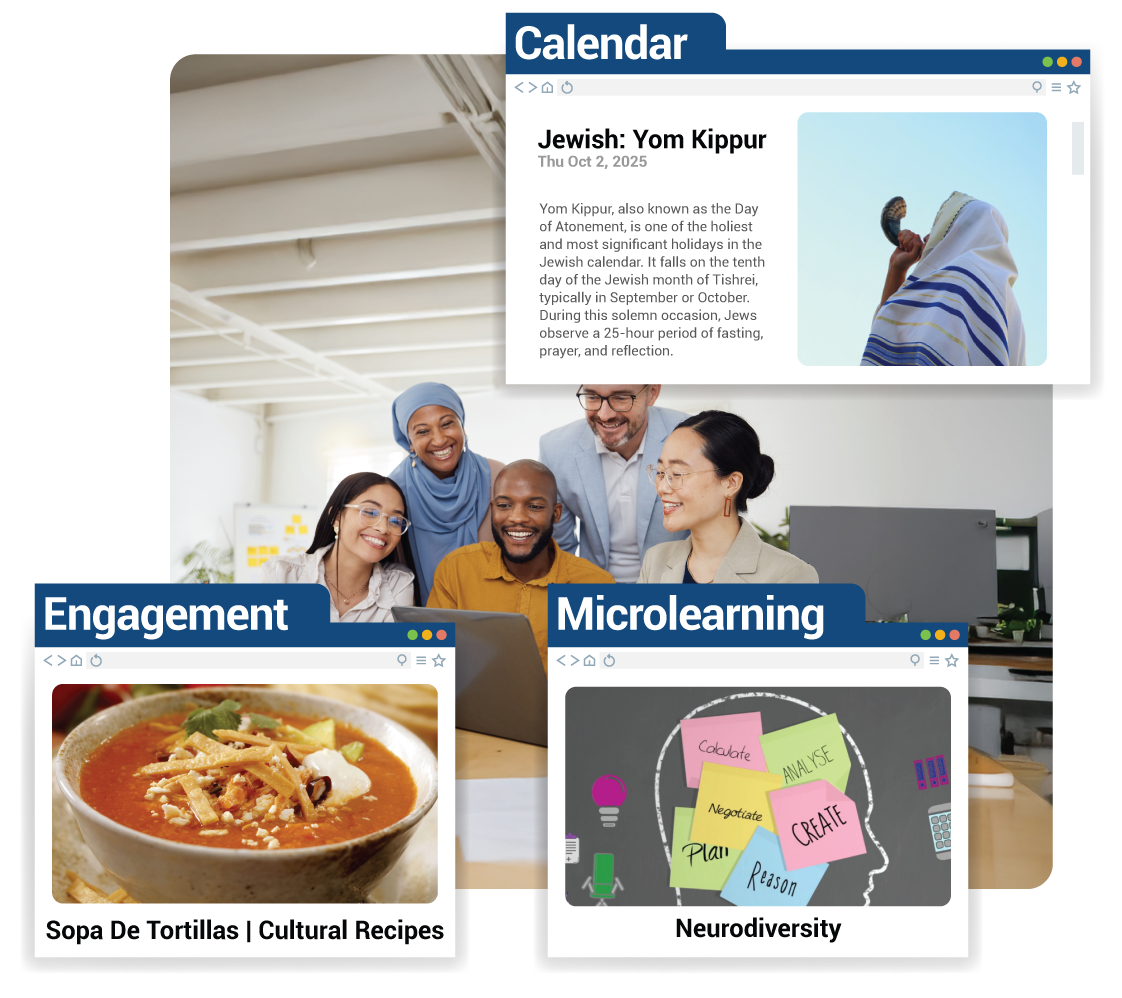
3) What Do You Say? Let’s say you find out the correct date for say, Yom Kippur. Now what? What is Yom Kippur? And what will you say to your Jewish colleagues or customers? Here’s a hint: don’t say happy Yom Kippur, unless you wish to embarrass yourself and your associates.

4. And more fact errors – Another website is very popular and ranks well, sometimes #1 in Google. Yet it’s full of mistakes. Below you’ll see the same event, listed two different ways, on two different dates, and both dates are wrong.

This expert blogger – and #1 Google hit – does not realize that Muslim and Islamic are the same thing, and has no clue that Hijri is the Muslim lunar calendar system. Islam is the world’s 2nd largest religion. If your senior leadership doesn’t mind wishing Muslims a Happy New Year roughly 11 or 21 days late (or both!), there’s no need for our product.

Conclusion

Amazon recently subscribed to our Diversity Calendar for all 1.5 million employees. Their subscription cost is high, much higher than yours. They could easily afford to hire an entire department to do this work. But they rely on us, because we are the world’s #1 experts on this topic.

If your leadership team has an abundance of time, they know what to Google, can afford spending all day Googling various diversity events, and don’t mind getting dates/facts/greetings wrong, great. You’ll save some money, perhaps equal to the cost of typical business lunch for your leadership. #Winning.

But if  your leadership team has higher priority work, and is interested in accuracy and saying the right thing at the right time, to people of different religion and cultures, we’re here to help. Enjoy a free trial of our Diversity Calendar suite.

August 2020 Diversity Calendar

Below you’ll find a small sampling of this month’s diversity events. To view all 100+ events and religious observances, see our Diversity Calendar suite.

Summer is hot – and so is diversity and inclusion! Our August 2020 diversity calendar features a variety of cultural diversity and religious events to keep you and your employees aware and inclusive throughout the month. Even simple observances of these celebrations can help expand awareness, inclusion and equality.

8/4 – Black Americans – Barack Obama

We start our August diversity events by wishing a Happy Birthday to the POTUS #44! Barack Obama quickly rose to fame with his Hope campaign during the 2008 presidential election, and was the first Black American elected president. As president, he was champion of LGBT rights and healthcare reform. He left office in January 2017 with a 60 percent approval rating. He and former First Lady Michelle Obama now run the Obama Foundation, which aims to inspire, empower, and connect young people to promote change in the world. Help promote equity and inclusion in your workplace with our Online Diversity Training.

8/15- Roman Catholicism: Feast of the Assumption

August multicultural holidays include this feast day. It marks the date that Roman Catholics celebrate the Virgin Mary, mother of Jesus, being assumed (body and soul) into Heaven. This was the end of her earthly life. It’s not a holy day of obligation within the Catholic Church, meaning mass is not obligatory.

8/20 – Islam: Islamic New Year

Our August multicultural calendar includes Hijri New Year or Arabic New Year. The Hijri is the era used in the Islamic lunar calendar, which was created during the reign of Khalifa Umar ibn al-Khattab. Hijri itself marks the new year, which starts the previous event. This year begins 1440. Discover more holy days with our 2020 Interfaith Calendar.

8/22 – Hinduism: Ganesh Chaturthi

One of the top August diversity celebrations, Hindus celebrate the start of the festival honoring the elephant-headed God. A 10-day festival of the god of prosperity and wisdom, it always begins on the fourth day of the month of Bhadrapada (the sixth month of the Hindu calendar). A worldwide celebration, and you can celebrate it at home.

8/24 – People With Disabilities: Marlee Matlin

Our August diversity topics also celebrate those with disabilities. Born on this day in 1965, Marlee Matlin became deaf at 18 months old, after an illness with high fevers. Matlin is a strong advocate for the rights of deaf people. In 1987, she won the Academy Award for Best Actress for her role in Children of a Lesser God. To date, she is the only deaf performer to win the award. She is also the youngest winner in the category at the age of 21.

8/25 – Jewish-Americans: Leonard Bernstein

Our August diversity month also includes a Happy Birthday to Leonard Bernstein! As a composer, conductor, and performer, he’s considered one of the “greats” in the music industry. His first big break was conducting the New York Philharmonic in 1943, and he became one of the first American-born conductors to lead world-class orchestras. He was also of Ukrainian-Jewish heritage, and this was reflected in his music.

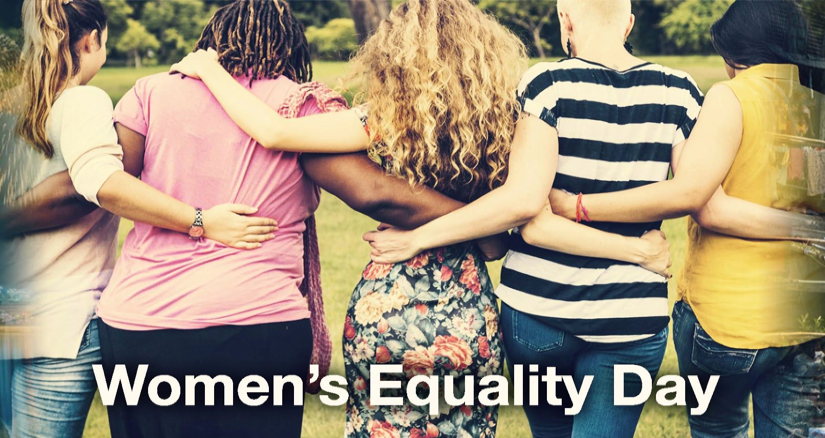
8/26 –  Women’s Equality Day

This August diversity day was created to commemorate the 19th Amendment to the Constitution. Today, organizations, workplaces, libraries, and other public places have begun to participate by holding events and programs. Be on the lookout for ways you can take part in your community. At the very least, do something special for a woman in your life today! And help build respect in your workplace with our Online Harassment Prevention Training

Final thoughts

Our August 2020 diversity calendar offers a little something for everyone. Even if one of these events doesn’t apply specifically to a group you’re a part of, you can learn about something new or engage with someone in your life or community. Diversity is a mindset: never stop learning and growing! And get head start on the next month with our September 2020 Diversity Calendar – and the rest of the year with our 2020 Diversity Calendar.

April 2020 Diversity Calendar

For the most current events, see our April 2021 Diversity Calendar

Below you’ll find a small sampling of this month’s diversity events. To view all 100+ events and religious observances, see our Diversity Calendar suite.

March can still be a bit chilly, but you can always count on April to bring more sunshine! The month brings the blooming of flowers – and the celebration of numerous religious holidays and recognition of diversity.

Our April 2020 diversity calendar focuses on a variety of significant religious holidays as well as some multicultural events. Here are some big dates to keep in mind.

Celebrate Diversity Month

One of the top April diversity celebrations! Our country would not be what it is if it weren’t for the diversity that defines us. The people all around you — your neighbors, best friends, classmates, fellow citizens, and coworkers — all come from various walks of life. April is the month to recognize and honor them. Looking for a good way to celebrate? Perhaps pick another holiday from the list below and learn more about it. And to help your employees be more aware and inclusive, check out our online diversity training.

4/4: Maya Angelou’s Birthday

“I’ve learned that people will forget what you said, people will forget what you did, but people will never forget how you made the feel.” Our April diversity days including the birthday of a true diversity leader, Maya Angelou. She’s remembered for being a writer, poet, civil rights activist, Renaissance women, and winner of the Presidential Medal of Freedom. As a Black American, Angelou gained international recognition and acclaim for her work. In her honor, search online for a poem or two of hers (or check out one of her books from the library!).

4/8: The Birth of Buddha

April diversity topics include a number of religious observances. Around the world, more than 535 million people are Buddhist. Yet it all started with a single prince who turned into a monk. Named Siddhartha Gautama, he realized that peace could be found through spiritual discipline. Thus he renounced his worldly life and sought a spiritual quest. For more interfaith events, see our religious calendar 2020.

4/9: Passover Begins

April diversity events also include Passover, a Jewish holiday that lasts for eight days. It marks the liberation of the Israelites from slavery in Egypt. Passover begins the previous evening with a Seder, or a meal, where the Haggadah (the book of Exodus and related writings) are recited in order. During this holiday, it is forbidden to eat leavened food products (think bread, pasta, etc.). If you’ve never tried matzah, give it a try during this week to recognize Passover! This is an unleavened bread that Jewish families often eat during this time.

4/12: Easter

Christians (except Greek Orthodox) will celebrate Easter on this day. This is the most important Christian holiday in the world’s largest religion. Easter always falls on Sunday, with the preceding Friday the day Jesus was crucified. Then, according to scripture, “On the third day He rose again from the dead.” The third day is Easter Sunday, and Christians rejoice!

4/24: Ramadan

Our April multicultural calendar includes the first day of Ramadan, which is considered the holiest month of the Muslim year. During this month, no water or food may be taken from sunrise to sunset. It is during this month that the Quran was first revealed to the prophet Muhammad by Allah. If you are curious about the fasting process that Muslims undertake during Ramadan, try it for a day!

4/23: Native American Gathering of Nations

Our April multicultural month concludes with this event, at which over 500 tribes will gather for three days to honor the culture of Native Americans. It is an annual gathering, and tribes travel from both the United States and Canada to participate. There are different events like dance competitions, Miss Indian World, knowledge of tribal traditions, and Indian Traders Markets for different crafts and art.

April is absolutely blossoming with diversity days and events! Our April multicultural calendar speaks to the variety of different topics and celebrations occurring this month. Get a head start on next month, with our May 2020 Diversity Calendar. If you’re curious for what else is coming up, check out our 2020 Diversity Calendar.

March 2020 Diversity Calendar

For the most current events, see our March 2021 Diversity Calendar

Below you’ll find a small sampling of this month’s diversity events. To view all 100+ events and religious observances, see our Diversity Calendar suite.

March marks the beginning of spring, bringing warmer weather, new growth, and a colorful variety of events celebrating diverse ethnicities, cultures and religions.

Our March 2020 Diversity Calendar commemorates influential individuals and multicultural festivities that make this month diverse and inclusive. Greater respect and inclusion is one of the benefits of diversity training in the workplace.

March – Women’s History Month

One of the key March diversity celebrations is Women’s History Month, honoring the powerful females that fought for equality, freedom and acceptance. Help ensure a respectful and safe workplace for women, with our online interactive harassment training.

March 3rd – Hispanic American/Women: Geisha Williams

March diversity topics highlight the accomplishments of women. Geisha Williams is the first Latina woman to run a Fortune 500 company. Immigrating from Cuba over 50 years ago, Williams received an engineering degree at the University of Miami, after which she climbed the ladder to success. She was named one of Fortune’s most powerful women in 2017 and, up until January of 2019, she was the CEO of the Pacific Gas and Electric Company.

March 6th – Black American/Muslim: Shaquille O’Neal

March diversity month includes the birthday of Shaquille O’Neal. An American NBA superstar, O’Neal revealed in 2010 that he’s a practicing Muslim, as was his step-father. He plans to to partake in the Hajj, the Islamic pilgrimage to Mecca in Saudi Arabia. O’Neal played professionally for the NBA for 19 years, before announcing his retirement.

March 9th – Hindu: Holi

One of the most colorful of March multicultural holidays, Holi is a traditional Hindu festival. Referred to as the “Festival of Spring”, it’s celebrated widely in India. This social event marks the beginning of the spring harvest and is a time for forgiveness, friendship, love, and a commemoration of personal and seasonal growth. For more interfaith events, see our religious calendar 2020.

March 10th – Black American: Harriet Tubman

One of the key March diversity days. Born into slavery in the early 1800s, Tubman escaped her captors in 1849 and became one of America’s best-known heroes. She aided hundreds of slaves to freedom through the complex tunnels in the Underground Railroad. She later dedicated her life to aiding former plantation workers and the elderly.

March 14th – Jewish German American: Albert Einstein

Albert Einstein was a theoretical physicist. He created the theory of relativity and received the Nobel Peace Prize for Physics in 1921 for his involvement in the development of quantum theory. His contribution to science is legendary, allowing for generations of education and technological advancements.

March 17th – Irish: St Patrick’s Day

One the more beloved March diversity events, this celebration honors the patron saint of Ireland, St. Patrick. Traditionally it’s held on March 17th, the official day of his death. Although a festive occasion for many, St. Patrick’s Day celebrates the arrival of Christianity in Ireland, and is a religious observance within many sects of Christianity and Catholicism.

March 31st – Mexican American: Cesar Chavez

Our March multicultural calendar concludes with Cesar Chavez.  A Latino American civil rights activist, Chavez fought for freedom and equality, and co-founded the “The United Farm Workers (UFW) Union.” His work within the community helped improve the lives of countless union labor workers.

March blossoms with celebrations, commemorating the people who made history and changed the world. Each diverse individual and holiday celebrated in March has shaped history and positively influenced generations that followed. Get a head start on next month, with our April 2020 Diversity Calendar. To discover more upcoming diversity events, see our 2020 Diversity Calendar

February 2020 Diversity Calendar

Get the most current information, with our February 2021 Diversity Calendar 

Growing up, you may have loved February for Groundhog Day, Valentine’s Day or Presidents’ Day that rewarded you with a day off from work or school.

But our February 2020 Diversity Calendar holds much more than a few nationally recognized days of celebration. It’s a month packed full of opportunities for diversity shouts-out: women, Blacks, Christians, Buddhists, and LGBTQ+, which is essential for diversity training in the workplace. Here are the events you should mark on your calendar in February 2020.

Black History Month

Get ready to celebrate February diversity month – all month long! Black History Month is part of a greater history of recognition. The theme for 2020 is “African Americans and the Vote.” The observance began in 1915 when historian Carter G. Woodson and minister Jesse E. Moorland started the Association for the Study of Negro Life and History. This group sponsored the very first “Negro Week.” It was held in February, coinciding with the birthdays of both Frederick Douglass and Abraham Lincoln. In 1976, the commemoration was expanded to a full month by President Ford.

2/11 –  LGBTQ+: Tammy Baldwin

Our February diversity days include Baldwin’s birthday. In 2012, Baldwin made headlines and history as she became the first openly LGBTQ+ politician elected to the U.S. Congress. She was also the first Wisconsin woman elected to the Senate. In an era when representation matters, she demonstrates to all the importance of diverse voices in government leadership. For more, check out our LGBTQ+ sensitivity training.

2/15 – Buddhist: Nirvana Day

February multicultural celebrations include Nirvana Day, or Parinirvana, an annual Buddhist festival. It commemorates Buddha’s death in 483 BC and his final nirvana. Many Buddhists celebrate Nirvana Day by visiting Buddhist temples or monasteries and meditating. Even if you’re not Buddhist, why not spend the day in reflection? The concept of nirvana speaks to death, rebirth, and spiritual enlightening until one is relieved of all suffering. For more religious holidays, see our 2020 Religious Holidays Calendar.

2/15 – Women: Susan B. Anthony Day

Happy Birthday to Susan B. Anthony – one of the key February diversity events! As one of the most revered women in the women’s suffrage movement, Anthony led the effort that enabled women play an active part in our government today. On this day, remember not only Anthony but the cause she stood for. Encourage those in your community (women or men!) to register to vote in the upcoming 2020 Presidential Election.

2/21 – Black, Women: Barbara Jordan

Our February diversity topics include firsts by Black women. Individuals like Barbara Jordan help us remember how far the U.S. has come in history. She was the first Black woman elected to the Texas State Senate and became known as an eloquent individual during the Watergate impeachment of President Nixon. Her emphasis on local issues illustrates to all of us that we can strive to make change in our communities on the issues that matter to us.

2/26 – Christian: Ash Wednesday

For Christians everywhere, Ash Wednesday is an important day that begins the Easter season. Our February multicultural celebrations include the start of this period: the 40 days (not including Sundays) of “Lenten” that lead up to Easter. You’ll often hear people refer to Ash Wednesday as the start of Lent. It’s customary for Christians to “give up” something during this time to show mourning and repentance for their sins. Why not do the same? Regardless of your belief system, perform random acts of kindness to others on this day. For more religious holidays, see our 2020 Interfaith Calendar.

And that wraps up the calendar for this month! Be sure to keep in mind each of these individuals and events, to reflect on how diversity has contributed to this country and your life. To plan out the coming year, see our 2020 Diversity Calendar

January 2020 Diversity Calendar

January is packed full of opportunities to celebrate influential people who shaped our country into a more accepting society. Bring in the new year by recognizing these great people, and share your pride in your own inclusion journey.

Respectful scheduling – and celebrating inclusion – are among the benefits of diversity training in the workplace. Here are seven events during our January diversity and inclusion calendar:

1/1 – Emancipation Proclamation
Slaves were granted freedom in 1863

One of the most important January diversity events. January 1, 1863, changed the history of America. With an ongoing Civil War, President Abraham Lincoln gave rights to slaves, and proclaimed that they should be set free. While our country still struggles with race issues today, celebrating this stepping stone toward ending racism helps us connect with each other.

1/8 – Stephen Hawking
Being disabled doesn’t have to stop you from reaching great heights
January diversity topics include people with disabilities. Stephen Hawking showed us that we all have different abilities and strengths, while sharing his great mind with the world. Not only was he a groundbreaking physicist, but his fundraising and research helped create worldwide change in the rights of disabled persons.

1/17 – Muhammad Ali
Celebrate the life of an American Muslim
This January diversity day is an opportunity for religious inclusion. We called him “The Greatest” because it was true both inside the ring and out. Muhammad Ali fought his way to the top in his boxing career and used his influence to fight for the rights of all people. His Islamic duty of charity expanded to help disadvantaged people of every religion, and created a greater understanding of Muslim culture.

1/20 – Martin Luther King Jr Day
National holiday celebrating pioneering leader in civil rights
The top January diversity celebration is Martin Luther King Jr Day, also called Civil Rights Day in some states across the nation, celebrates the life of one of the most influential Civil Rights activists. MLJK Jr paved the way for equality of all people, and inspires people of all backgrounds to work together to this day.

1/25 – Chinese New Year
A three-day celebration ringing in the Year of the Rat
Key January multicultural holidays include Chinese New Year, a time for family, celebration, and new beginnings. Red envelope gifts of “lucky money” are given to children from elders to ward off evil spirits while entering the new year. In this digital age, many who celebrate are sending virtual luck money to family members across the sea. Recognizing Chinese New Year means bringing in luck and letting go of negativity from the last year, something we could all practice more.

1/26 – Ellen Degeneres turns 62
Leading influencer on public attitudes toward LGBTQ+ rights
Another January diversity topic is LGBTQ+ leaders. Ellen DeGeneres has been inspiring people to connect with each other and create a better understanding of LGBTQ+ rights since the late ‘90s. She uses her wide platform of followers to showcase amazing talent from around the world, and connects us all through comedy. Her coming out on television in 1997 sparked a trend of acceptance and empowered others to come out as well.

1/29 – Oprah Winfrey turns 66
Often ranked the world’s most influential woman
Concluding our January diversity month, is the birthday of Oprah Winfrey. She has been inspiring people to reach for their goals for decades. Coming from humble roots and growing up in poverty, she shows us that we all have the power to change our circumstances. She is not just a powerful Black American woman, but a powerhouse of influence to all people.

That concludes our January 2020 Diversity Calendar. To plan out the coming year, see our 2020 Multicultural Calendar

Sign In

Sign in to Diversity Resources