Facebook Pixel

DEI Programs and the Importance of a DEI Mission Statement

Why are mission statements crucial for DEI Programs? Learn how they establish commitment, provide direction, and foster inclusive cultures.

Crafting a diversity, equity, and inclusion mission statement for DEI programs sets the foundation for your organization. It provides direction and clarity to organizations embarking on a DEI journey and helps DEI leaders develop their DEI strategy. A DEI statement reflects your values and illustrates your commitment to offering an equitable and inclusive workplace.

This statement shouldn’t just be something you put on your website, but an actionable plan for achieving your DEI goals. If your organization doesn’t already have one, it’s time to create it. Every decision should support this mission and create a positive workplace that celebrates diversity.
What is a DEI Program?

A DEI program is an initiative that promotes diversity in the workplace across various aspects, including gender, ethnicity, race, ability, religion, age, and sexual orientation. Teams with different backgrounds and experiences bring unique insights to your team, enhancing creativity, collaboration, and morale.

Some DEI program examples  include:

  • DEI Training
  • Employee Resource Groups
  • Mentorship Programs
  • Recruitment

Crafting DEI Statements for Successful DEI Programs

Begin this process by examining your company’s values. Decide how you want to express your commitment to DEI. Outline your DEI policy, goals, and steps to achieve a successful DEI program. Emphasize that it is everyone’s responsibility at your workplace to fulfill this commitment. This helps reinforce the idea that creating a positive work culture extends beyond leadership.

Set a tone that shows your organization values diversity and inclusion and looks for ways to continue to grow. Add important data or information about DEI outreach efforts to illustrate that your organization is doing what it claims it is committed to.

How to Use A DEI Statement

Once you’ve created this important statement, you will want to strategize how to display it. You can include it in your ‘About Us’ section, on your homepage, or in employee email signatures. Ensure the statement is accessible and incorporated into inclusive job descriptions. This allows candidates to understand that your organization mirrors their values.

Creating a statement with actionable steps makes it easy to measure success and how well your organization is doing with its DEI programs. Train leadership to incorporate these principles into the work culture and encourage employees to brainstorm better ways to achieve these goals.

Showcase Your DEI Commitment With Your DEI Statement

Sharing what DEI means to your organization demonstrates your pledge and accountability to these standards.

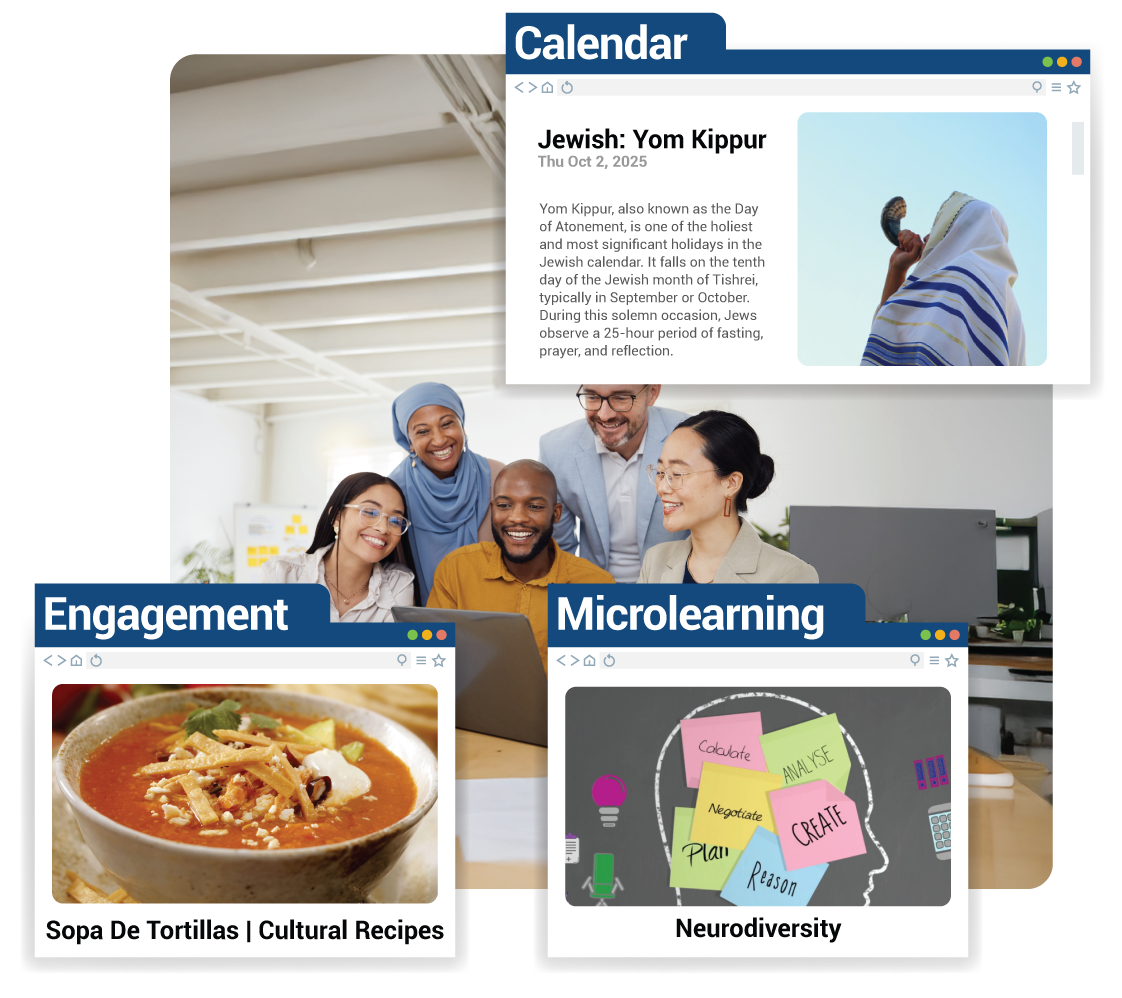
To further support your efforts in creating a diverse and inclusive workplace, consider using our essential DEI tool, the Diversity Calendar. It’s designed to help you learn about and celebrate the diversity of your team with different diversity days, heritage months, awareness months, or other medical awareness days.

FAQs

What should be included in a company mission statement?

First, you want to include your company’s mission how your DEI vision relates to this mission directly, the groups of people you’re focusing on, and some specific examples of things you will undertake. They are sometimes called DEI statements and are brief messages for customers to see how an organization positively impacts their employees.

What is the goal of a mission statement?

A mission statement ideally has a few sentences that explain how your organization is different from your competitors. It should define your principles and values and bring employees together with a common purpose of empowering all people and offering equal opportunities for promotion.

Why are DEI initiatives important?

DEI initiatives are crucial to an organization and have many benefits. They create a fair environment with equitable access to opportunities to advance. They also create inclusion, where employees feel a sense of belonging and are accepted, heard, and respected as they are. Best of all, they allow for new perspectives, which has been proven to lead to better innovation and more revenue.

What Is a DEI Strategy?

Wondering what is a DEI strategy? Here are the components of DEI strategies, why it’s important and common challenges you might face.

The corporate world is achieving diversity milestones, with more female CEOS at S&P 500 companies than ever before. Building a strong DEI strategy that ensures a diverse, equitable, and inclusive work experience for all employees remains a priority for organizations. This blog delves into why you should build this important framework, the best practices for building one, and tips on how to be the most successful.

What Does DEIB Mean?

DEIB stands for diversity, equity, inclusion, and belonging, key components of successful DEI strategies. These elements create a positive work culture where people from different backgrounds and diverse identities feel accepted, supported, and respected. This enables employees of any sexual orientation, ability, culture, or race to work productively without fear of exclusion or discrimination.

What is a DEI Strategy?

Also known as a DEIB strategy, this action plan is designed to reduce discrepancies impacting work culture. It sets objectives for increasing diversity and building an environment where everyone can collaborate freely and thrive.

An effective DEI strategy addresses systemic issues, such as harassment or discrimination, by providing resources for affected employees.

How Do You Create a DEI Strategy?

Your DEI strategy should address each component:

Diversity: Focus on representation within your organization by attracting underrepresented candidates through inclusive job descriptions.

Equity: Use performance reviews to monitor how employees develop, ensuring equal opportunities for promotions and fair compensation.

Inclusion: Assess how your employees feel about company policies and their freedom to express ideas.

Belonging: Create a work culture where employees feel a sense of connection and safety among team members.

Why Investing Time in Creating a DEI Strategy Is Important

Committing to diversity, equity, inclusion, and belonging isn’t simply what you should do; it has many benefits for organizations.

Attract Better-Quality Talent

When you show potential candidates that your brand values and supports diversity, it will expand the  talent pool that wants to work for you. This allows you to access a larger range of perspectives and secure top-tier candidates that help your business succeed.

Obtain and Retain More Customers

Many customers want to support others that reflect their values and beliefs. When companies prioritize DEIB, it shows that they respect all humans. The reward is that diverse companies have a higher revenue than others that are slower to commit to DEI.

Build a More Competitive Organization

Workforce diversity results in more creative ideas, better customer service, and greater engagement.

Common Challenges With Standard DEI Strategies

There are some roadblocks associated with implementing a successful DEI initiative:

#1 They Unintentionally Harm Employees

When an organization only half-heartedly approaches a DEI strategy, you can create more bias by only addressing certain groups in your team. It’s always better to commit fully to a comprehensive strategy.

#2 They Lack Any Clear Path

When you design a well-drafted DEI strategy, you also need the resources to execute it effectively. This allows your effort to be viable for the long term.

#3 They Lack Focus

You can create a DEI strategy, but without any clear goals or a way to measure DEI success, it will fail.

Best Practices for Implementing DEI Strategies

The best way to overcome these challenges is to develop a comprehensive, actionable DEI strategy with achievable, measurable goals.

Customize Your DEI Strategy

Your DEI strategy should be unique to your specific organization. Customization allows you to analyze your current strengths and weaknesses and where you can progress.

Establish Specific Goals

Selecting DEI strategy goals that are tailored to your organization allows you to track specific things. For example, you may have a goal to update your anti-discrimination policy by the end of quarter 1 or to create an employee resource group by year-end.

‍Establish A Clear Hiring Structure

Sourcing candidates from different backgrounds is an important part of hiring for DEIB. Countless biases may affect who is hired like affinity bias where interviewers are drawn to those like them or conformity bias.

Foster a Positive, Diverse, Inclusive, and Equitable Work Culture

Developing an ongoing DEI strategy involves the entire organization. To further support your effort in creating this work culture, consider integrating our Diversity Calendar into your best practices. This essential tool is designed to help you acknowledge and celebrate the rich diversity of your team all year. It also offers you a way to counteract conformity bias simultaneously.

FAQs

What is a DEI strategic plan?

A good DEI strategic plan helps organizations create a sustainable, equitable, and inclusive work culture and environment where all employees can thrive together. Workplace diversity can include employees of different abilities, races, ethnicities, religions, ages, and gender identities.

What are the 4 pillars of the diversity, equity, and inclusion strategy?

Diversity, Equity, Inclusion, and Belonging (DEIB) are the four main pillars of a successful Diversity and Inclusion (D&I) strategy. Diversity refers to employees’ backgrounds, skill sets, and abilities. Equity refers to the fairness of all team members and addresses these disparities in DEI programs. Inclusion forces create a positive work culture where all employees feel welcome. Belonging goes beyond inclusion and creates a sense of belonging that helps all employees thrive together.

What are some examples of good DEI initiatives?

Some significant examples of DEI initiatives to implement at your organization include diversity training, employee resource groups, policy changes, inclusive job descriptions, and hiring practices, open-door community policies, and a diversity calendar that helps you learn about those around you every day.

Conformity Bias & How It Affects Your Organization

Learn what is conformity bias, if it’s a negative factor, examples of it, and how it affects your organization.

Conformity bias is the tendency for people to align their beliefs and behaviors with those around them instead of thinking independently. This can have both positive and negative effects on the workplace. By following the same patterns of behavior, we contribute to the “following the herd” dynamic. Unlike all types of unconscious bias, such as those related to abilities or gender, which influence how we think of others, conformity bias significantly influences our interactions and decision-making processes.

Is Conformity Bias Always a Negative Factor?

Not necessarily. For many people, especially those from marginalized groups,  has served as a survival strategy across generations. However, this bias towards conformity can also stem from wanting approval from others. This potentially leads to exclusion, which deprives you of the benefits of inclusion in the workplace. The key to addressing conformity bias is about creating awareness of its impact on our decisions. With this knowledge, we can create a workplace that embraces more thoughtful  and inclusive decisions for all team members.

Examples of Conformity Bias at Work

There are many reasons why we are influenced by conformity. This bias can occur in many facets of a workplace, including:

Recruiting

Interviewers may form initial impressions of candidates based on superficial attributes such as physical appearance or last name, which influence their hiring decisions.

Work Culture

Employees might tolerate poor working conditions due to negative repercussions in the past when they asked for change. Having an open-door policy where employees can offer suggestions to DEI leaders allows your staff to feel heard and valued. Additionally, if management only promotes employees who work long hours, it may discourage staff from adhering to their regular hours due to fears of being overlooked for advancement.

Addressing conformity bias requires a deliberate effort to recognize and challenge our automatic responses. By promoting an environment that values individual insights and diverse perspectives, organizations can mitigate the negative impacts of conformity and enhance their capacity for innovation and inclusivity.

Embrace Inclusion with Our Diversity Calendar

To further support your efforts in creating an inclusive workplace, consider integrating our Diversity Calendar into your organization’s practices. This tool is designed to help you acknowledge and celebrate the rich diversity of your team throughout the year, providing a tangible way to counteract conformity bias and promote a culture of inclusion and respect.

FAQs

What are some of the main causes of conformity biases at work?

There are many causes associated with conformity bias, but social pressure ranks high as your peers and management may make you feel pressured to think a certain way. Fear of rejection is another cause as many people struggle with poor self-esteem and rather go with the crowd than stand up and speak out.

What is one example of conformity bias at work?

An example of conformity bias is when you are hired at a new job and go to work in casual clothes. However, you show up and notice everyone else is dressed more formally. Although it wasn’t a job requirement, you may feel obligated to change how you dress when coming to work to avoid standing out.

Arab American Heritage Month

Learn more about Arab American Heritage Month in the US and explore the different ways you can celebrate it.

April celebrates the diverse cultures and contributions of Arab Americans to society. About 3.7 million Americans of Arab descent originate from 22 countries across the Middle East and North Africa. Arab Americans live in every states, with two-thirds concentrated in 10 states: Michigan, California, Florida, New Jersey, New York, Illinois, Ohio, Texas, Virginia, and Pennsylvania.

Nearly a third live in greater Detroit, New York, and Los Angeles, with Lebanese Americans representing the largest subgroup. Dearborn, Michigan has the country’s highest percentage of Arab Americans in any US city, with 42% of its population identifying as Arab American. It is also home to the Arab American National Museum.

In April, take some time to learn about the unique cultures of the Arab community.

History of the Month

The history of Arab Americans and Americans of Middle Eastern descent dates back to the first wave of immigration in 1875. The second wave of immigrants arrived in the 1940s and later in the 1960s during the Lebanese civil war.

Thanks to the advocacy of Arab American organizations, Arab American Heritage Day was first nationally recognized in 1992.Although an initiative for its first national designation was launched in 2017, it didn’t pass. In 2019, House Representatives Debbie Dingell and Rashida Tlaib of Michigan introduced a resolution to Congress to proclaim April as National Arab American Heritage Month. It was first recognized in 2021 by President Joe Biden as a National month. Since then, many states have passed resolutions to celebrate it annually in April.

Ways to Celebrate National Arab American Heritage Month

There are many impactful ways to celebrate this important heritage month.

Read a book from an Arab American National Museum Book Award Winner

Some recommendations include Bride of the Sea by Eman Quotah or Don’t Forget Us Here by Mansoor Adayfe.

Explore the Smithsonian Institution’s Online Artifacts

Learn more about Arab American history by exploring unique exhibits that highlight Arab Americans.

Promote Diversity and Inclusion in Your Community

By acting as an ally against stereotyping and discrimination, you help create a more positive world. Empower your community to promote inclusion and equity by speaking up against microaggressions in the workplace or public.

Embracing Diversity

The Arab American community is a vital component of American society, contributing significantly across all sectors. While April is a great time to learn about cultures different from your own, it also offers Arab Americans a moment to connect with their roots through cultural events.

By engaging with and learning from diverse cultures, you contribute to a more accepting world and create a sense of belonging, respect, and value for all. In addition to Arab American Heritage Months, take the opportunity to learn about other April Awareness and Heritage Months.

Discover More with Our Diversity Calendar

Interested in learning more about Arab American heritage and other vibrant cultures? Dive deeper into global traditions and celebrations with our Diversity Calendar. It’s an essential resource for fostering understanding and appreciation across cultures, all year round.

Autism Acceptance Month Activities

Wondering about Autism Acceptance Month activities? Learn about what is Autism Acceptance Month and what you can do this month.

Autism Acceptance Month is a worldwide health awareness event that takes place in April. It aims to increase understanding and acceptance of autistic people. To create a more diverse and inclusive world, we encourage you to participate in Autism Acceptance Month activities. Dedicate this month to reducing the stigma surrounding autism by learning how autistic individuals communicate and interact.

The United Nations recognizes April 2 as World Autism Day. It’s a time to reflect on the advocacy for the rights of all autistic individuals across the world. It’s important to remember that Autism Acceptance Month is more than just a hashtag but is a chance to learn about those different from you.

What is Autism Acceptance Month?

Autism Awareness Week was first celebrated in 1973 when the Autism Society of America first raised awareness about this then-little-known developmental disability. Over the years, efforts have significantly increased public understanding of the challenges faced by autistic individuals throughout the world.

In 2011, the first Autism Acceptance Month was commemorated. Its goal is to promote acceptance and understanding while celebrating the unique strengths of people on the autism spectrum. Embracing neurodiversity highlights its importance to an inclusive workplace and world.

Why is Celebrating Autism Acceptance Month Important?

This month aims to promote a positive, inclusive message about autism. By having a dedicated month, we highlight not only the challenges, but also the unique abilities of those  with autism. It’s an opportunity to educate about the stereotypes and stigma surrounding autism spectrum disorder and is a time to draw attention to it in a more positive light.

Suggestions for Autism Acceptance Month Activities

Host a Fundraiser

Consider organizing a 5k autism awareness walk or run where your employees and their families can pledge money for their participation. Donations can be sent to the Autism Partnership Foundation.

Spread Kindness

A puzzle piece is a universal symbol of the autism spectrum. Encourage your staff to write kind messages on sticky notes or even on Post-It Custom Puzzle Pieces and spread them around the office.

Educate Your Team

Educating your staff about neurodiversity is a useful way to help them better understand those different from them. Ultimately, the best Autism Acceptance Month Activities are the ones that build unity and promote inclusivity. Encourage a neurodiverse employee to share their personal story.

Learn More About the Autism Community in April

By understanding neurodiversity in the workplace, whether Autism, ADHD, or Down Syndrome, among others, you create a better world. By fostering a positive work culture where everyone can thrive, your organization’s success will soar.

To dive deeper into this topic and to learn about other important DEI topics that impact your workplace, try a free trial of our online Diversity Calendar.

FAQs

What’s the difference between autism acceptance and autism awareness?

With acceptance, the focus is on understanding, celebrating, and being inclusive of neurodiversity in the workplace and beyond. Awareness, while still important, focuses more on the existence of the condition on its own.

What color represents Autism Acceptance Month?

While the rainbow is commonly associated with the Autism community, the color blue is often used as it represents calmness. Wear blue on April 2, World Autism Acceptance Day, to show your support for the autism community whether with a blue ribbon or your favorite blue shirt.

Neurotypical vs Neurodivergent Employees

Trying to understand neurotypical vs neurodivergent employees? Learn about the characteristics and communication styles of each.

In today’s diverse work environment, understanding the spectrum of neurodiversity among employees is crucial. Neurotypical refers to how a brain typically functions, while neurodivergent indicates a brain that functions differently due to various conditions such as ADHD, anxiety, autism spectrum disorder, dyslexia, OCD, and more. It’s important to recognize that neurodivergent employees may need accommodations or support, but their intelligence and work skills are not any less than those of neurotypical employees.

Creating a positive work environment enables staff to understand and work effectively with both neurotypical vs neurodivergent team members.

Characteristics of Neurotypical Employees

Neurotypical employees typically exhibit conventional social interaction and communication skills. They can easily understand expectations and can independently organize and manage their work to meet deadlines. They are generally not sensitive to environmental stimuli, such as sounds or activities around them, and have a structured thinking pattern.

What Constitutes a Neurodivergent Employee?

The characteristics of a neurodivergent employee vary depending on their specific type of neurodiversity, sometimes leading to unconventional responses to expectations or social norms. They may be extremely sensitive to sensory stimuli, including sights, sounds, or visuals. They have a more diverse thinking pattern.

Communication Styles of Neurotypical vs Neurodivergent Employees

The distinction between neurotypical and neurodivergent individuals extends into their communication styles, which can impact interactions within the workplace.

Neurotypical Communication: Often relies on verbal cues and traditional norms of social interaction, with a preference for direct and linear communication. Neurotypical individuals may more easily interpret non-verbal cues, such as body language and facial expressions.

Neurodivergent Communication: May include preferences for written over verbal communication, discomfort with direct eye contact, and taking statements more literally. Communication styles can vary widely, necessitating clear and explicit instructions and a flexible approach to interpersonal interactions.

Accommodating Neurotypical vs Neurodivergent Employees

Understanding and accommodating the differences between neurotypical and neurodivergent employees are key to fostering an inclusive and productive work environment. By acknowledging and supporting the unique contributions of each individual, organizations can harness a broad spectrum of talents and perspectives.

FAQs

What is a neurodivergent employee?

Neurodiversity is a term used to describe those with certain developmental or neurological differences or learning disabilities. They include Autism Spectrum Disorder, Attention deficit hyperactivity disorder (ADHD), Dyslexia, epilepsy, and Obsessive-compulsive disorder, to name a few. A neurodivergent employee is someone who has cognitive differences from neurotypical employees.

What are some ways to accommodate neurodivergent employees at work?

Because neurodivergent employees think differently than neurotypical employees, it can be helpful to offer reasonable accommodations to neurodivergent employees. Quiet workspaces, flexible work hours, and clear written instructions can help these team members work more efficiently.

Diversity, Equity, and Inclusion Jobs: Key Roles and Expertise

Are you wondering what are diversity, equity, and inclusion jobs? Here are some common roles and what their responsibilities include.

Diversity, equity, and inclusion jobs vary in titles and responsibilities. Organizations seeking the benefits of a diverse workplace establish roles that prioritize DEI. Supporting diversity is more than just hiring a wide range of employees. This blog explores some common DEI jobs.

Diversity Versus Inclusion

Diversity involves having employees from different backgrounds, including gender, race, religion, age, or ability. In contrast, inclusion focuses more on making people feel accepted, valued, and respected. Merely hiring diverse people doesn’t benefit anyone if you don’t support their unique backgrounds. For instance, a truly inclusive environment might offer a large range of cuisines in the corporate lunchroom or allow employees to speak their native languages with colleagues.

Creating opportunities for all groups to have a voice within your organization is beneficial. By supporting these underrepresented groups, you ensure they are more productive, collaborate effectively, and are likely to stay within your company longer.

Diversity, Equity & Inclusion Job Titles

These diversity, equity, and inclusion jobs are organized into middle and senior roles.

Senior DEI Leadership Roles

Examples: Chief Diversity officer, Senior Vice President of HR – Diversity, or Vice President of Diversity and Inclusion

These senior roles are responsible for DEI initiatives across the company, typically within the Human Resources department. Responsibilities may include:

  • Developing company-wide diversity and inclusion programs
  • Creating employee support groups
  • Streamlining the recruiting process to retain the best talent
  • Create diversity metrics that regularly measure the success of DEI initiatives
  • Oversee diversity training programs for all employees

Middle Management Diversity, Equity & Inclusion Jobs

Examples: Diversity Trainer, Coordinator or Analyst

These positions are similar to the senior roles but are typically filled by individuals with less experience and are tasked with supporting the senior diversity officers. Their responsibilities are similar but focus more on implementing programs, including diversity and inclusion activities, and following directives rather than developing strategies or making key decisions.

Qualifications Needed for Diversity and Inclusion Roles

Working in DEI requires a unique set of qualifications, blending educational background, professional experience, and personal skills:

  • Educational Background: A degree in human resources, psychology, sociology, or a related field is often beneficial. Some roles may require advanced degrees or specific certifications in diversity and inclusion training.
  • Professional Experience: Experience in HR practices, DEI program development, or related areas is crucial. Demonstrated ability to implement DEI strategies and measure their impact is highly valued.
  • Personal Skills: Strong interpersonal skills are essential, including empathy, communication, and the ability to foster understanding across diverse groups. A successful DEI professional must also possess a deep understanding of social justice issues, cultural competency, and the ability to navigate and resolve conflicts.
  • Commitment to Continuous Learning: The field of DEI is ever-evolving, requiring professionals to stay informed about the latest research, trends, and best practices in promoting workplace diversity and inclusion.

Enhance Your Commitment to Diversity with Our Diversity Calendar

To further support diversity, equity, and inclusion in your workplace, consider incorporating our Diversity Calendar into your DEI strategies. This valuable tool helps organizations recognize and celebrate diversity throughout the year, fostering an inclusive culture that values every employee’s unique background and experiences.

Educating Employees on Diversity: 6 Tips

Wondering how to educate employees on diversity? Here are 6 top tips to help you create an inclusive workplace.

Diversity is a vital component of who we are as a society, yet some businesses are still struggling. While it’s not uncommon for missteps to occur when it comes to inclusion and being sensitive to all communities, how a company goes about fixing its mistakes is what matters most.

For example, Starbucks once closed its stores for diversity training after an incident involving a Black male customer. This highlights the importance of educating employees on diversity for organizations aiming to thrive in today’s business world. It’s also essential for creating a sense of belonging and a positive work culture that accepts and respects all employees.

Strategies For Educating Employees on Diversity

Below are some tips on the importance of diversity in your workforce and how creating a diverse and inclusive workplace can positively affect your bottom line.

1. Have DEI Leaders Who Are Proactive

Ensure all employees understand the importance benefits of diversity and inclusion in the workplace are leads to training that equips everyone to handle specific situations effectively.

2. Appoint Diverse Leaders

Diversity in leadership – in terms of race, culture, gender, , age, abilities, or sexual orientation – yields creativity and a deeper understanding of your staff as a whole.

3. Keep the Conversation Going

DEI topics should be a part of regular discussions throughout the year, not only addressed when a problem arises. Ongoing dialogue and continuous diversity training opportunities for all staff are essential.

4. Hire a Diverse and Inclusive Team

Diversity can’t just be taught, it must be practiced too. A diverse and inclusive team ensures your organization benefits from all the different skill sets necessary for success.

5. Create a Positive Inclusive Work Culture

A positive work environment makes everyone feel welcome. While having a diverse staff is important, without ongoing education on diversity, you won’t have the essential sense of community and belonging.

6. Insist on Continuous Ongoing DEI Training

These important DEI topics must be explored regularly. Not only does it allow your staff to discuss difficult topics, but also gives them a better sense of how those around them feel and about their own personal experiences. It’s a great team-building exercise.

Celebrate Diversity by Educating Employees on DEI Topics

Investing in your staff’s understanding of diversity training topics and their implementation puts you ahead. While these topics will always be relevant in the workplace, knowing what to do when certain situations arise helps your staff be prepared.

Unlock the Full Potential of Your Workforce with a Diversity Calendar

Embrace the power of diversity in your workplace by integrating our comprehensive Diversity Calendar into your DEI initiatives. Discover the key to fostering an inclusive environment where every employee feels valued and understood. Our calendar is designed to highlight important diversity dates and provide actionable insights to celebrate inclusivity throughout the year.

FAQs

What are some tips for educating employees about diversity?

Some beneficial ways to help increase diversity education is to start at the top. When leadership is on board with increased diversity training, the entire team sees results. Mandatory training ensures that every team member is given the necessary tools and resources to understand those around them. Creating and maintaining a culture of diversity that accepts and values all team members helps your team thrive and become more productive.

How can I encourage my staff to embrace diversity?

The best way to encourage to embrace diversity is with DEI training. These training courses help teach them about different diversity topics and the benefits associated with creating and maintaining a diverse and inclusive workplace. By extending DEI to your hiring process, you can vet better-quality candidates with similar values and beliefs.

Diversity and Inclusion Questions

Explore some of the most frequently asked questions regarding religious holidays, awareness months, and major DEI observances.

Learning more about diversity, equity, and inclusion allows you to positively impact the world and your workplace. Here we will explore a variety of DEI frequently asked questions about religious holidays, awareness months and DEI observances.

Religion FAQs

What are the Catholic holy days of obligation?

According to the Code of Canon Law of the Catholic Church, the Catholic Church recognizes nine holy days of obligation besides Sundays. However, bishops may suppress or transfer some to a Sunday. The feast of Saint Joseph and the feast of Saints Peter and Paul have been suppressed as holy days of obligation. Also, the feast of Epiphany is always celebrated on a Sunday. This leaves us with six holy days of obligation:

  • Solemnity of Mary: January 1
  • Ascension of Jesus: 40 days after Easter
  • Assumption of the Blessed Virgin Mary: August 15
  • All Saint’s Day: November 1
  • Immaculate Conception of the Blessed Virgin Mary: December 8 or 9
  • Christmas: December 25

Is All Saints Day a holy day of obligation?

All Saints Day is recognized as a churchwide holy day of obligation, typically celebrated on November 1. If November 1 falls on a Saturday or Monday, the obligation to attend Mass is abrogated.

Is Good Friday a holy day of obligation?

Good Friday does not qualify as a holy day of obligation. It is a day dedicated to fasting and penance in remembrance of Jesus Christ’s Passion and crucifixion. While attendance at the Good Friday service is encouraged to fully prepare for Christ’s resurrection on Easter Sunday, it is not obligatory.

Is Holy Thursday a holy day of obligation?

Holy Thursday, which commemorates the Last Supper of Jesus Christ with the Apostles, is not a holy day of obligation. Participation in the Mass of the Lord’s Supper is encouraged but not required.

Is Ash Wednesday a holy day of obligation?

Ash Wednesday, marking the beginning of Lent, is not a holy day of obligation. It is a day of fasting and repentance, with the faithful encouraged to attend Mass and receive ashes.

What happens on the days of Holy Week?

Holy Week, the final week of Lent, includes several key events: Palm Sunday commemorates Jesus Christ’s triumphant entry into Jerusalem; Holy Wednesday is when Judas betrayed Jesus; Holy Thursday marks the last supper; Good Friday observes Jesus’ crucifixion and death; Holy Saturday is a day of reflection; and Easter Sunday celebrates Jesus’ resurrection.

What does it mean to keep the sabbath day holy?

Keeping the Sabbath day holy involves dedicating the day to rest and worship, as commanded in the Bible. This includes abstaining from work and spending time in prayer, reflection, and with family, recognizing it as a sacred day dedicated to spiritual renewal.

What holidays do Christians celebrate?

Christians celebrate several holidays, including Easter (the resurrection of Jesus), Pentecost (the descent of the Holy Spirit), Christmas (the birth of Jesus), and Good Friday (the crucifixion of Jesus).

What are the major festivals of Christianity?

The key holidays in Christianity include Christmas (celebrating the birth of Jesus), Easter (commemorating the resurrection of Jesus), Pentecost (celebrating the Holy Spirit descending upon the apostles), and Good Friday (observing Jesus’ crucifixion).

What is the most important holiday in Christianity?

Easter is the most important Christian holiday as it celebrates Jesus’ resurrection from Crucifixion. Christians believe Jesus died on the cross for their sins.

Is Christmas a religious holiday?

Christmas is a Christian holiday celebrating the birth of Jesus Christ. It also has become widely celebrated culturally outside of its religious context.

Is Thanksgiving a religious holiday?

Originally, Thanksgiving  had religious roots as a day of giving thanks to God for the harvest and blessings of the past year.  Today, it is celebrated more as a secular holiday focused on family and gratitude in the United States and Canada.

Is Halloween a religious holiday?

Halloween’s origins are in the ancient Celtic festival of Samhain, but it has evolved into a largely secular holiday. Some traditions are linked to Christian All Saints’ Day and All Souls’ Day observances.

Is St. Patrick’s Day a religious holiday?

Originally, St Patrick’s Day is a religious feast day of the patron saint of Oreland, St. Patrick. Irish Catholics have celebrated this day for over 1,000 years.. It has also become a secular celebration of Irish culture and heritage.

What holidays do Buddhists celebrate?

Buddhists celebrate several Buddhist holidays and observances, most notably Vesak, marking the Buddha’s birth, enlightenment, and death; Bodhi Day, commemorating his enlightenment; Dharma Day, marking the day when the Buddha first taught the Dharma to his disciples.

What are the three main Buddhist festivals?

Buddhist festivals vary significantly across different cultures and sects. However, some of the most universally recognized and significant festivals in Buddhism include: Vesak (Buddha Day), celebrating Buddha’s birth, enlightenment and death; Dharma Day, marking the beginning of Buddha’s teachings; Magha Puja Day, honoring the spontaneous gathering of 1,250 disciples of the Buddha to hear him preach.

What holidays do Muslims celebrate?

Muslims primarily celebrate Eid al-Fitr, marking the end of Ramadan, and Eid al-Adha, the  festival of sacrifice which commemorates the willingness of Ibrahim to sacrifice his son in obedience to God.

What Muslim holiday is in December?

Islamic holidays follow the lunar calendar and thus shift annually. The specific date varies by the Islamic lunar calendar.

What holidays do Hindus celebrate?

Hindus celebrate a variety of holidays, including Diwali (the festival of lights), Holi (the festival of colors), Navaratri (a festival dedicated to the worship of the Hindu deity Durga), and Makar Sankranti (the first Hindu holiday celebrated in January).

Is Diwali a religious holiday?

Diwali is a major religious festival celebrated by Hindus, Buddhists, Jains, and Sikhs, honoring the victory of good over evil and light over darkness.

What holidays do Jews celebrate?

Jews observe several Jewish holy days and religious holidays such as Passover (celebrating the Exodus from Egypt), Rosh Hashanah (the Jewish New Year), Yom Kippur (the Day of Atonement) and Hanukkah (the Festival of Lights).

Is Hanukkah a religious holiday?

Hanukkah is a Jewish holiday, also known as the Festival of Lights, that honors the rededication of the Second Temple in Jerusalem by lighting candles on each day of the eight-day festival.

What are the three main beliefs of Taoism?

The three main beliefs of Taoism are the concept of Tao (the Way, the ultimate reality), Wu Wei (non-action, living in harmony with the Tao), and Yin and Yang (opposite forces that are interconnected and interdependent in the natural world).

Awareness and Heritage Months FAQs

What are the awareness months?

Awareness months highlight various health conditions, social issues, and causes. They aim to educate the general public and enhance support and resources.

What  awareness month is in February?

February is known for Black History Month in the United States and Canada, dedicated to recognizing and celebrating the contributions of the Black community to society.

What awareness month is in March?

March is Women’s History Month, celebrating the contributions and achievements of women throughout history and modern society, and  Developmental Disabilities Awareness Month.

What awareness month is in April?

April is Autism Acceptance Month and Paralyzed Veterans Awareness Month is held in April.

What awareness month is in May?

May is Mental Health Awareness Month, focused on raising awareness about mental health issues and reducing the stigma surrounding them.

What awareness month is in June?

June is Pride Month, a major awareness month that honors the history and struggles of the LGBTQ+ community across the world.

What awareness month is in July?

July is recognized as Disability Pride Month, aimed at promoting visibility and mainstream awareness of the positive pride felt by people with disabilities.

What awareness month is in August?

In August, we celebrate Intersectionality Awareness Month. Intersectionality is when someone identifies with two or more different groups, whether gender identities or races.

What awareness month is in September?

September serves as National Suicide Prevention Awareness Month, aimed at raising awareness about suicide prevention, sharing resources and encouraging conversations about mental health.

What awareness month is in October?

October is Breast Cancer Awareness Month, a major awareness month honoring those who are living with breast cancer, who have survived it, and those who have lost their life to it.

What awareness month is in November?

November is National Alzheimer’s Disease Awareness Month, a time to remember the six million Americans living with the disease, and Movember, which raises awareness of men’s health issues.

What is the month of February known for?

There are several holidays and observances that February is known for, including Black History Month, Ethnic Equality Month, and LGBT+ History Month.

What is the month of March known for?

March is best known for Women’s History Month and International Women’s Day, a time dedicated to honoring the struggles and celebrating the achievements of women in history and in modern society.

What is the month of April known for?

April is known for Arab American Heritage Month, Celebrate Diversity Month and World Autism Month.

What is the month of May known for?

May has a variety of heritage months, including Asian American and Pacific Islander Heritage Month, Jewish Heritage Month, and Haitian Heritage Month.

What is the month of June known for?

June is celebrated as Pride Month, , acknowledging the LGBTQ+ community..

What is the month of July known for?

July is known for Disability Pride month and French-American Heritage Month, which honors the history between France and the United States.

What is the month of August known for?

Black Business Month is celebrated in August to honor these businesses and to better understand the challenges they face.

What is the month of September known for?

September is known for Hispanic Heritage Month and National Recovery Month, when stories from people living with an addiction are told for better understanding.

What is the month of October known for?

October is known for Breast Cancer Awareness Month and Global Diversity Awareness Month, dedicated to better understanding the different cultures, religions, gender identities, and more.

What is the month of November known for?

November is known for Native American Heritage Month and Movember, a time to brings awareness to men’s health issues such as prostate cancer .

What is the month of December known for?

December is known for Universal Human Rights Month, a time to reflect on the achievements of the year, but also remember the many injustices that we are still fighting against across the world.

Interested in celebrating diversity all year round? Explore our Diversity Calendar for an extensive collection of cultural and religious observances, national days, and awareness months from around the globe. It’s your comprehensive resource for staying connected, informed, and respectful of the diverse world we share.

Inclusive Job Descriptions and Why They Matter

Are you wondering if inclusive job descriptions matter? They certainly do. Here is why along with tips on creating inclusive job postings.

Finding the best candidate for the job starts with creating the right job descriptions. It’s essential to write job postings with inclusivity in mind. While a company’s culture can’t be forced and should develop organically, it requires deliberate effort. The success of your DEI initiatives depends on those responsible for them. This is why finding the right fit for each role is so important.

Why Using Inclusive Language Matters

The language of a job description significantly influences a candidate’s perception and their decision to apply. While there is more to your identity than a job listing description, many people use it to decide if a company is the right fit for them.

Incorporating diversity and inclusion best practices into your hiring process attracts diverse and talented candidates and reaffirms your commitment to building a diverse and inclusive workplace that accepts all people.

While these practices have always been important to corporate culture, it is one of the top hiring and recruiting DEI trends for 2024.

Tips for Writing Inclusive Job Descriptions

Writing inclusive job descriptions begins with mindful language choices to avoid making someone feel discriminated against or excluded. Here are some things to consider when writing inclusive job postings:

1. Avoid gender-coded words.

Gender coding happens when you use words that are associated directly with a specific gender. This can make potential candidates feel that a certain gender is preferred for this position.

2. Beware of age bias.

Refrain from using wording that implies a preference for a certain age. Focus instead on specific job requirements such as necessary skills or social media expertise.

3. Avoid racial or cultural bias.

Saying things like “native English speakers” may exclude proficient and highly-qualified candidates who are non-native speakers but fully capable of performing in an English-speaking environment. Additionally, avoid criteria that could indirectly favor certain racial or cultural groups, such as specifying unnecessary preferences for certain educational institutions, or cultural references that not all candidates might relate to.

4. Be mindful of candidates with disabilities.

Encourage candidates of all backgrounds and abilities to apply by using more inclusive language. For tasks requiring physical effort, such as moving equipment, specify that accommodations or assistance are available.  Instead of focusing on the need for physical abilities like lifting, walking, standing, bending, or crouching, highlight the core task requirements and the organization’s willingness to accommodate different ways of accomplishing them.

Creating Inclusive Job Postings That Welcome Everyone

The most effective job descriptions are those that are thoughtfully designed to be inclusive and consider every candidate. The time and effort invested in writing inclusive job postings results in a more diverse and inclusive workplace, filled with the right candidates for every role.

Enhance Your DEI Initiatives

Ready to take your diversity, equity, and inclusion efforts to the next level? Explore our Online Diversity Calendar and Online Diversity Training. These resources are designed to help your organization not only understand but also celebrate the diverse employees that make up your workforce.

FAQs

Why are inclusive job descriptions so important?

When it comes to diversity, equity, and inclusion (DEI) initiatives, job descriptions give candidates insight into a work culture. It also allows them to better understand your approach to DEI. If your job description is highly inclusive, they will assume your organization is too. When you write job descriptions properly, you will get better candidates applying to your positions.

How can you include diversity and inclusion in a job description?

When you’re writing your inclusive job descriptions, always make sure you mention that you are an Equal Opportunity Employer. Explaining your organization’s commitment to a diverse and inclusive work culture is also important. Focus on encouraging candidates of all abilities, gender identities, races, sexual orientations, religions, and cultures to apply.

Employee Empowerment Strategies: 5 Tips

Want to develop effective employee empowerment strategies? Here are 5 tips to help you foster a culture of collective growth.

Empowering employees means giving your team the authority to act and make decisions within your organization. This showcases your trust in their alignment with company goals, especially in diversity and inclusion. Staff empowerment is important for any business as it allows a company to grow collaboratively. A positive work culture ensures and creates a sense of belonging where every employee feels valued, seen, accepted, and respected.

Tips for Empowering Employees

Developing employee empowerment strategies shows your staff your commitment to collective growth. You also allow them to actively advocate for every employee and to learn and grow in all things related to diversity and inclusion.

Set Expectations: Clearly defining the scope of autonomy helps employees understand expectations without the need for micromanagement. You permit them to make decisions related to these important company values and goals.

Leverage Individual Strengths: Acknowledge that employees have unique approaches and strengths, and empower them to complete projects in ways that best suit their abilities.

Provide Diversity Training & Tools: Empower your staff with resources like a diversity calendar that can help them better understand diverse cultural and religious observances and provide inclusive scheduling.

Value All Team Members’ Input: By including your employees in decision-making, you allow them to feel heard.

Focus on Building With Your Team: When people feel like they are contributing to building something positive and working toward a common vision, you are empowering them to feel as if they’re making a difference while being productive.

Enable Employee Empower Strategies to Grow Your Business Organically

Staff empowerment helps your staff to feel more engaged, productive, and committed to company goals. By empowering employees, you create a sense of belonging that allows them to feel seen and heard. Diversity tools like a diversity calendar that incorporates diversity holidays, and diversity training help your team learn about important diversity topics that every workplace faces.

FAQs

What are the five main ways to implement an effective empowerment of your staff?

The best way to implement employee empowerment is to ensure that your staff feels that they can communicate their needs with leadership. Assess their needs regularly and provide the support and resources necessary. Always include your team in the decision-making and delegate responsibility so they have a voice in future policies.

What are the four key factors in creating effective and empowered employees?

For an employee to be the most successful, they will need to have the information necessary to perform their job responsibilities freely. They also need the resources and skills necessary to perform their job. Next, they will want to have a say in the next steps of projects and when necessary, will need to be held accountable, whether good or bad, for the outcome of projects.

Affinity Bias and Explicit Bias in the Workplace

Do you know about affinity bias and explicit bias? Learn more about each and how to reduce them in your workplace.

Cognitive biases affect everyone, even those who consider themselves rational and open-minded. We can still make mistakes when it comes to evaluating or reasoning due to beliefs we have unconsciously.

Affinity bias and explicit bias, in particular, can affect leaders in a workplace. This blog post will define each bias, provide workplace and offer steps on how to avoid these instances. Microaggressions in the workplace also play a role in how staff collaborate and work productively together.

What Is Affinity Bias?

Affinity bias happens when we favor people who share our interests, backgrounds, or experiences. This bias leads us to feel more comfortable with people who are “like” us and we may unconsciously reject those who act or look different than we do.

Examples of Affinity Bias

Examples of affinity bias in the workplace often start with the job interview and continue once an employee is hired.

Some examples of affinity bias include:

  • Preferring candidates with similar qualifications or educational backgrounds
  • Seeing someone as qualified or intelligent because they attended a specific university
  • Assuming someone is a good team fit because they are close to your age
  • Dismissing new ideas from people who hold different perspectives
  • Failing to acknowledge team members with different skill sets as much as those with traits similar to the leader’s.

‍What is Explicit Bias?

Explicit bias refers to conscious attitudes or prejudices towards different groups, which can manifest as  positive or negative judgements and cause us to treat those around us differently. Explicit bias can affect any aspect of someone’s identity,  including age, ethnicity, gender, sexual orientation, socioeconomic status, or even their ability.

When these biases aren’t addressed properly, they can affect productivity, work relationships, trust, and efforts to creat a diverse and inclusive workplace.

Examples of Explicit Bias

An example of explicit bias is the reluctance to hire older individuals due to misconceptions about their adaptability and tech-savviness.. Another is the belief that a specific gender is more suited for a specific role.

How to Reduce Incidences of Affinity Bias and Explicit Bias At Your Workplace

While it’s challenging to completely eradicate these biases, some steps can be taken to reduce the chance that decisions are severely influenced by them.

Learn about unconscious bias.

Awareness and diversity training help team members recognize and understand their biases, which limits their impact.

Determine where biases are likely to occur in your company.

Biases often start in the hiring processes but can also affect promotions and project assignments. Some companies look at resumes without names or genders to base their thoughts on merit alone.

Encourage your team to discuss bias.

Creating a work culture that encourages open communication about biases can positively influence how your team works together.

How Implementing a Diversity Calendar Helps An Organization Achieve Their Goals

Setting diversity and inclusion goals not only shows a commitment to welcoming people of all ages, genders, races, backgrounds, and abilities to work with you, but also creates a sense of belonging. This sense of belonging allows every team member to feel seen, valued, heard, and accepted, which means they are more productive and this leads to greater success for your business.

A diversity calendar, featuring multicultural events and religious holidays, helps leaders to schedule respectfully and be inclusive of all employees.

FAQs

How impactful is affinity bias?

Affinity bias occurs when someone favors people like them with similar backgrounds or interests. This means that we tend to feel more comfortable with people like us. This means that we have an unconscious bias toward those who may look or act differently than us. This can affect the type of people you hire as a DEI leader.

What is the difference between explicit and implicit prejudice?

Explicit prejudice refers to conscious, deliberate negative attitudes or beliefs towards a group or its members, often expressed openly through discriminatory actions or statements. In contrast, implicit prejudice involves unconscious, automatic negative associations or biases toward a group that can influence behavior and decisions without the individual’s awareness. While explicit prejudice can be directly observed and measured through overt expressions, implicit prejudice is more subtle, often assessed through indirect methods that reveal hidden biases.

Sign In

Sign in to Diversity Resources