


Microaggressions are subtle, often unintentional, offensive comments or behaviors that people experience regularly. These can come from well-intentioned people who may be unaware that they’re perpetuating negative stereotypes. Many of us have been in situations at work where someone did or said something that felt insensitive or hostile to our identity. These statements, questions, or assumptions are known as microaggressions.
Microaggressions may target various aspects of someone’s identity, including their socioeconomic status, mental health, race, gender, or sexuality. While they are usually aimed at marginalized groups, they can affect anyone in the workplace. Typically, microaggressions originate from generalized ideas—like assuming that if you belong to a particular group, you must have specific likes or dislikes. Such assumptions can significantly affect someone’s sense of belonging, both at work and beyond.

Workplace Microaggressions Training
Microaggressions are among the essential topics covered in diversity training in the workplace. While the comments or behaviors may not be malicious in intent, they can still insult or harm someone. Usually, the person making the comment is unaware of its biased or hurtful nature. For instance, a workplace might routinely schedule important meetings during religious or cultural holidays, unintentionally excluding employees who observe those days. This could create a sense of marginalization for people who belong to specific religious or cultural groups.
While some argue that society has become hypersensitive, the reality is that we must be sensitive to what we say as we can affect someone’s mental health. It is important to foster a culture of understanding and acceptance. To achieve this, workplace microaggression training can be performed which teaches your staff about them and how to disarm them.
How to Disarm Microaggressions
In addition to workplace microaggression training, there are other effective ways to disarm them. One approach is to ask the person why they said the comment, offering them context about how it could be related to someone’s background, gender, race, etc. Starting such a conversation can lead to greater understanding.
Although confronting microaggressions may feel uncomfortable, these moments are teachable opportunities. Many people don’t even realize they have these unconscious biases and addressing them directly makes them aware of how they’re making others around them feel.
Try out our Microlearning to get started.
FAQs
What are some helpful ways to address microaggressions at work?
Challenge stereotypes actively and have informed discussions. Promote empathy and take time to understand those differences around you. Implementing regular training on cultural sensitivity and unconscious bias can also help in reducing microaggressions. Creating a clear reporting mechanism for such incidents encourages accountability and fosters a safer workplace for everyone.
What is the best thing to do if you witness a microaggression at work?
Calling out microaggressions is important. Tell the person why it is unacceptable behavior. Consider reporting it if you are not a leader. Fostering a culture of open dialogue where people feel comfortable discussing these issues without fear of retribution is crucial. Supporting the affected person and guiding them through the process of reporting can also be a significant form of allyship.
What are the different types of microaggressions?
Microaggressions can be nonverbal or verbal and convey insensitivity or rudeness to someone’s identity, their religion, ethnicity, gender, age, ability, and more.
Microinsults: Verbal, nonverbal, and environmental communications that subtly convey rudeness and insensitivity that demean a person’s racial heritage or identity, such as asking a co-worker of color how they got their job, implying affirmative action or a quota system.
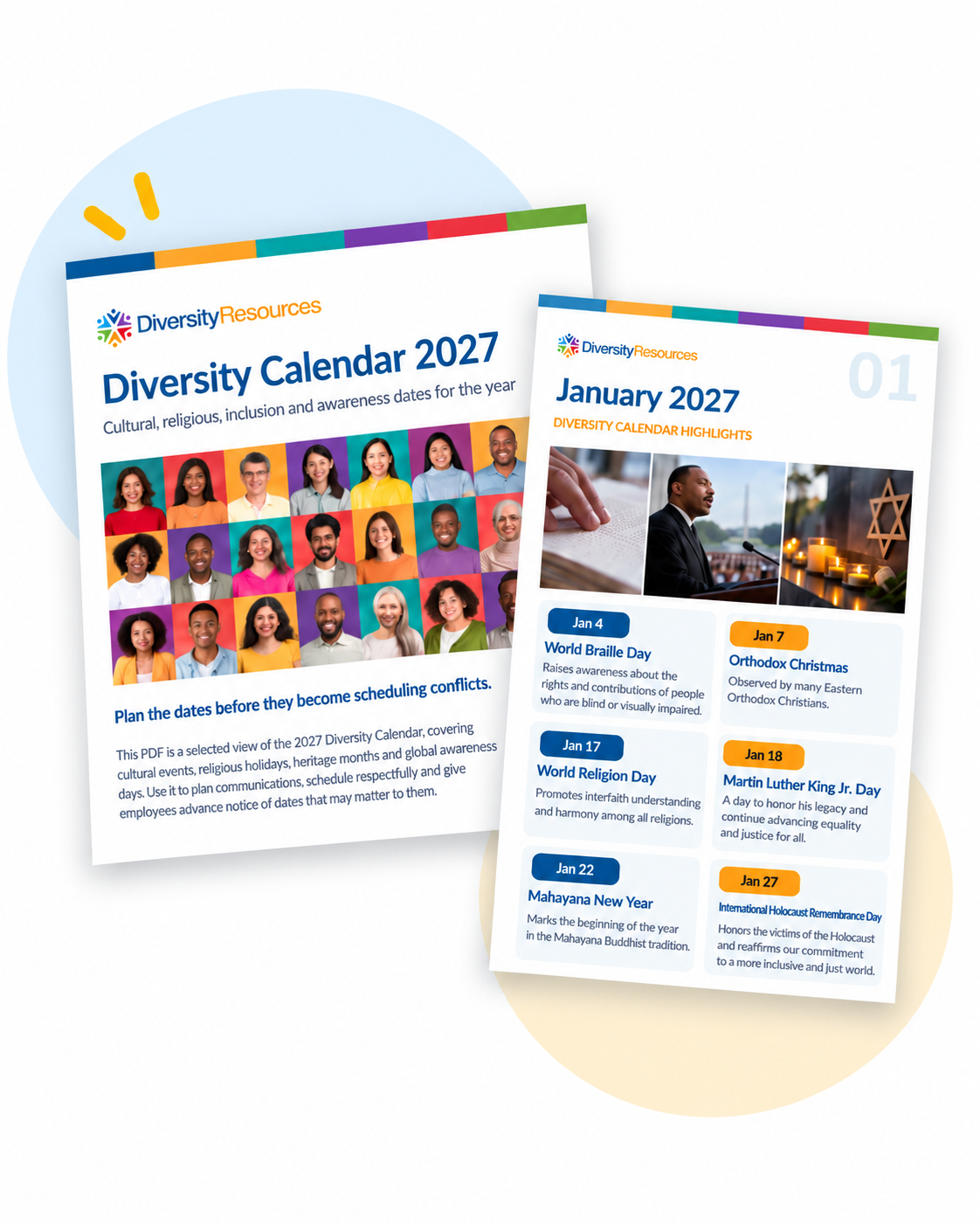

 12 months of selected dates
 Cultural + religious observances
 Heritage + awareness events