


Religious inclusion means respecting, welcoming, and celebrating different religions as part of every team’s values year-round. Significant religious observances occur throughout the year, spanning Christianity, Judaism, Islam, Eastern religions, spiritual traditions, and cultural practices. Taking steps to include everyone builds respect and creates a workplace where employees feel valued.
Religious inclusion starts with recognizing the diversity of practices and traditions employees may observe. In the U.S., the principle of freedom of religion has been foundational since the country’s founding, ensuring spaces that respect diverse beliefs. By incorporating these values into workplace culture, organizations can create an environment where employees feel their identities are acknowledged and respected.
The Legal Basis for Religious Inclusion
The Civil Rights Act of 1964 laid the groundwork for protecting religious equality in the workplace. It prohibits employers from hiring, firing, or compensating employees differently based on their religion. It also makes it illegal to “limit, segregate, or classify” employees in ways that negatively affect their employment status because of their religion. DEI efforts build on this legal foundation to create workplaces where religious inclusion and equity thrive.
Inclusive Language and Practices
Using inclusive language avoids assumptions and ensures no one feels excluded. For example, avoid phrasing that assumes employees observe specific holidays or traditions. Recognize that not everyone follows the same calendar or celebrates events at the same time.
Visual elements, decorations, and even event planning should reflect diverse traditions rather than focusing on one dominant practice. Acknowledging multiple perspectives shows respect for the variety of beliefs within your team.
Respecting Diverse Needs and Practices
A truly inclusive workplace recognizes and respects varied religious practices and accommodations. For instance, many Muslims observe daily prayer, and some Jewish employees may follow kosher dietary laws. During events or meal planning, consider these needs to ensure everyone feels included.
It’s also important to note that significant religious holidays which should be part of in an employee engagement calendar 2025 occur throughout the year, not just during commonly recognized holiday periods. For example, Ramadan in Islam often falls in the spring, while other key observances take place in the summer or fall. Acknowledging these variations ensures year-round inclusivity.
Improving Religious Inclusion
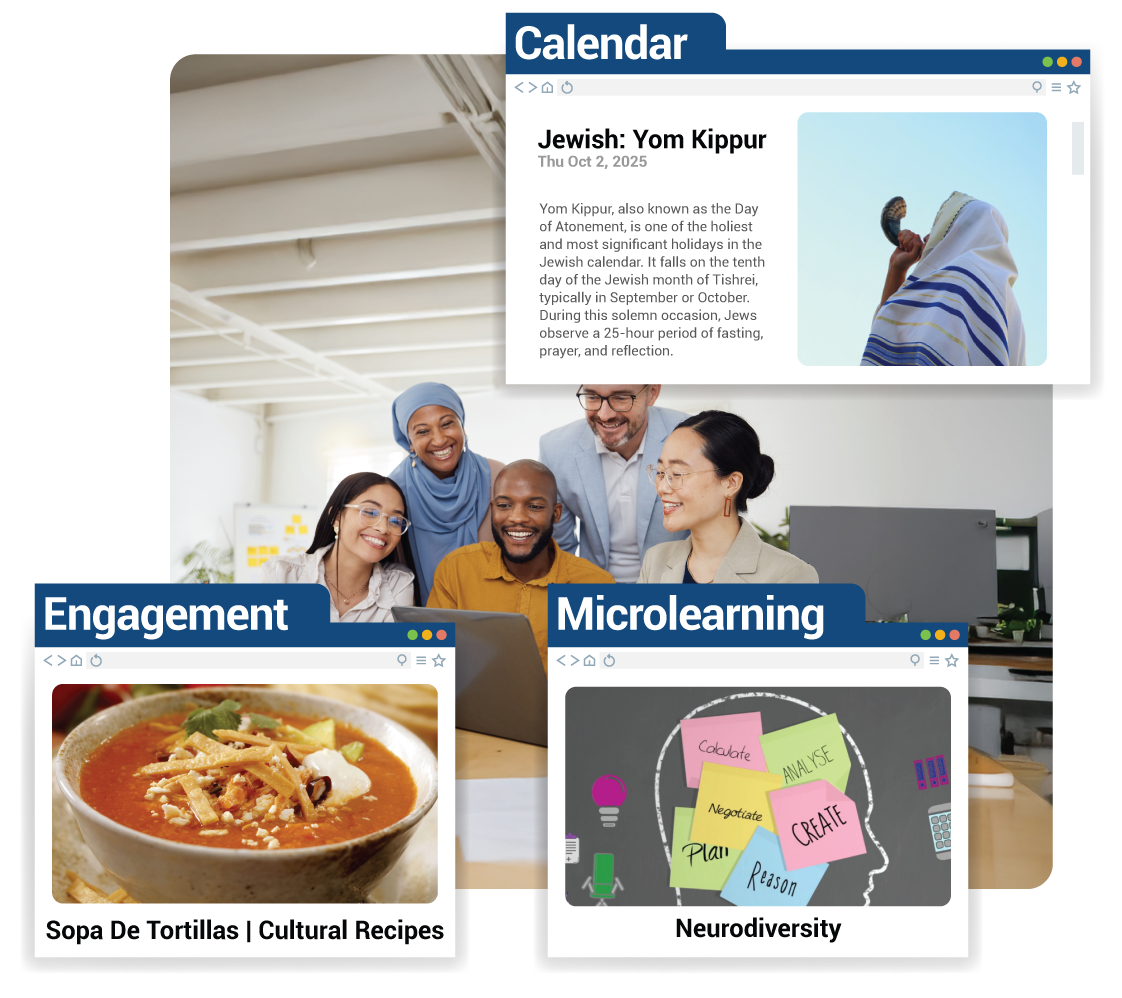
Cultivating awareness and understanding varied practices is the first step toward creating religious inclusion. If you’re looking for an easier way to incorporate this knowledge, the Online Diversity Calendar is a great tool. It provides quick, comprehensive insights into holidays, observances, and practices from around the world.