


For years, a Samsung employee listened to his coworkers ask about his wife. He was married to a man, but he never corrected them.
Stefanie Knights, Director, Talent Management at Samsung Electronics Canada, shared that story during a webinar we produced together. We have been talking about it internally ever since, because it explains our work better than anything on our website does.
He wasn’t a new hire. He had been there long enough that people knew him well. Every time someone said “your wife,” he made a quick calculation and let it stand. Then he did it again the next week, and the week after that.
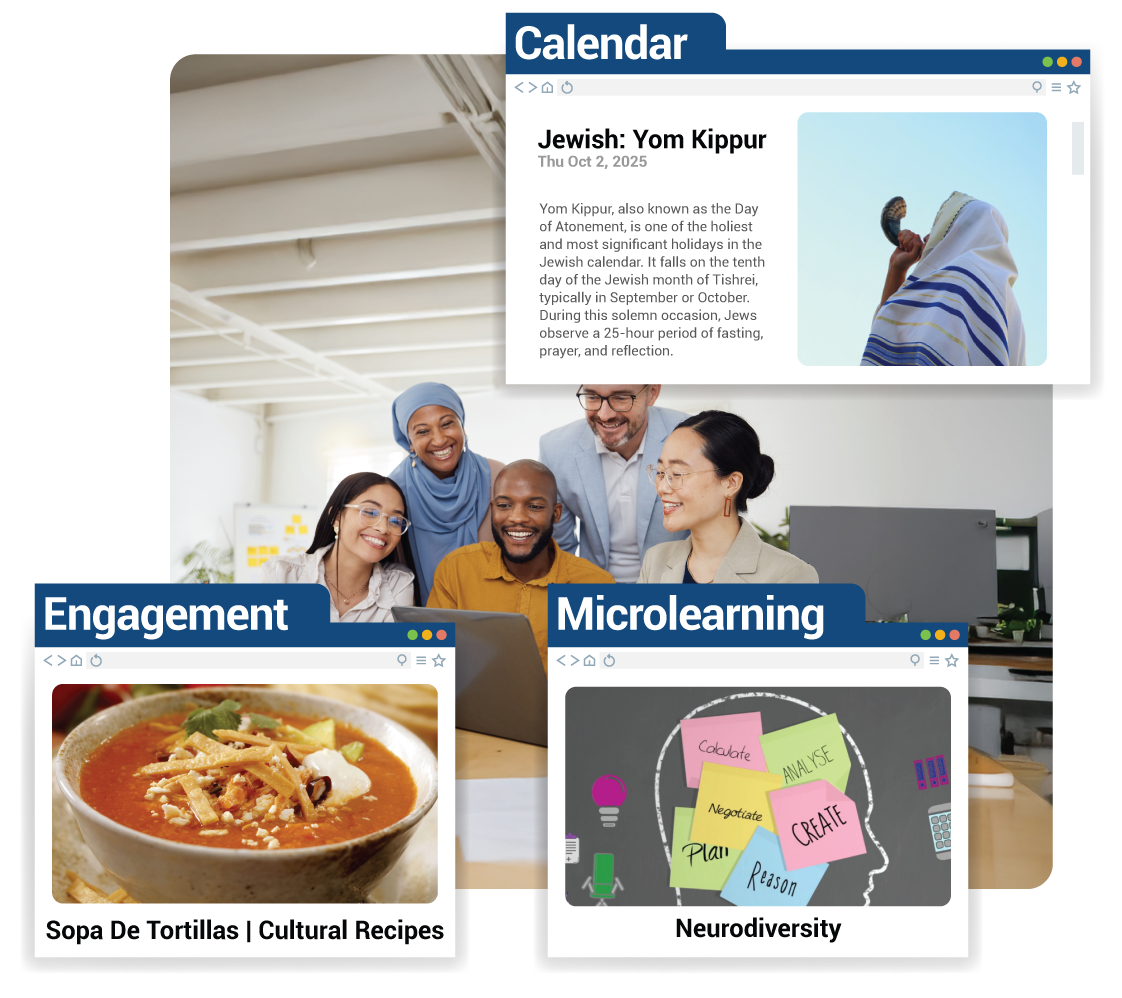
Something eventually changed. As he saw the efforts Samsung was making internally to be more inclusive, including the LGBTQ+ observances and learning resources on the Belonging Calendar, he reached a point where he felt comfortable saying it plainly. Husband, not wife.
His coworkers had one response: Why didn’t you tell us earlier?
The Thing Our Work Is Actually Aimed At
That question is why we exist. Nobody in that office had been hostile. Nobody had made a comment he needed to protect himself from. The people around him were ready years before he knew it, and none of them had thought to say so. What was missing was a signal, and in the absence of one he assumed the worst and paid for that assumption every single day.
That cost never appeared on a report. No policy was broken. No complaint was filed. Nothing in an engagement survey would have surfaced it, because the person carrying it had already decided that saying nothing was the safer move. It showed up instead in his energy, his sense of belonging, and probably in what he was willing to contribute.
This is the part of workplace culture our customers can’t reach with a handbook, and it’s the part we build for. Not the incident that reaches HR. The ordinary Tuesday where someone decides whether to be fully present or to edit themselves down to a safer version.
So That People Can Stop Editing
We do this work so that a man can mention his husband in a Monday morning conversation with the same ease his colleague mentions her weekend.
So that someone who chooses to talk about depression or anxiety doesn’t wonder whether it quietly changed how they get staffed.
So that a Muslim woman who dresses according to her faith walks into a client meeting and is evaluated on the work she brought with her.
So that a colleague whose third language is English is heard as someone operating across three languages while most of the room operates in one.
Why We Build What We Build
Policies matter. So do systems, protections and what leadership says it stands for. But people don’t decide whether they feel safe based on a policy alone. They decide based on what they can observe, repeatedly, over a long stretch of time. A statement of values sets an intention. A pattern of visible, specific, everyday behavior is what people actually read.
That’s the reasoning behind every product we make. The observances we mark on the Belonging Calendar aren’t there to fill a communications schedule. A date by itself changes nothing. What it does is give a team a legitimate reason to say something out loud, in public, before someone has to guess where their colleagues stand. The same goes for the resources we put in front of employees. They exist to make a position visible, early, to the person who is quietly trying to work out whether this is a place where they can be themselves.
We’re in the business of removing the guesswork. The Samsung story is the clearest example we have of what that is worth, and of how long someone will wait when the evidence never arrives.
What would someone on your team need to see before they stopped editing themselves?