


Employee Resource Groups have evolved far beyond informal communities inside organizations. Today, many companies rely on them to strengthen culture, support inclusion, and create meaningful connections across teams. But as ERGs grow, spreadsheets, scattered emails, and disconnected tools quickly become difficult to manage. That is why many organizations are now exploring a dedicated employee resource group platform.
The right platform provides structure, visibility, and support for ERG leaders while helping HR and People teams understand the real impact these communities are having across the workplace. As discussed in our article on the role of Employee Resource Groups, ERGs have become key contributors to culture, engagement, and belonging across organizations.
Below are the key capabilities leaders should look for when evaluating an employee resource group platform.
Why an Employee Resource Group Platform Improves Visibility Across ERGs
As ERGs multiply, it becomes harder to maintain a clear view of what is happening across the organization. Different groups may be running events, sharing resources, or launching initiatives at the same time without awareness of each other’s efforts.
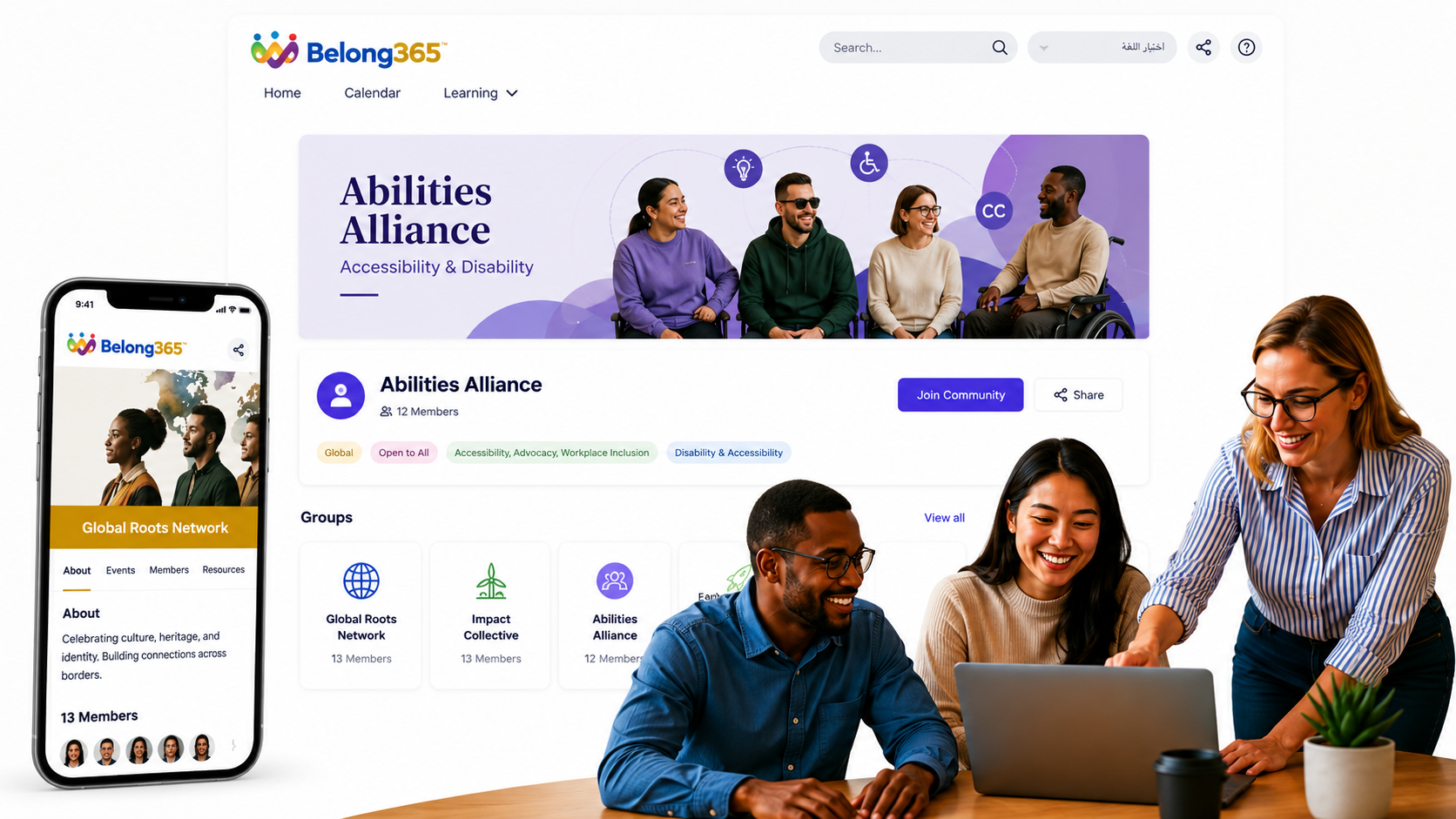
A strong employee resource group platform brings everything into one place. HR leaders should be able to see:
- All active ERGs and BRGs
- Upcoming events and initiatives
- Membership participation across groups
This centralized visibility makes it easier to support ERG leaders, avoid duplication of efforts, and ensure that initiatives align with broader company goals.
Governance and Moderation Controls That Protect Culture
ERG spaces should encourage open conversation, but they also need thoughtful structure. Without governance, well intentioned discussions can sometimes drift away from company values or brand expectations.
A reliable platform should include:
- Content review capabilities
- Guidelines and governance frameworks for ERG leaders
- Clear reporting structures for HR oversight
These controls do not restrict ERGs. Instead, they help ensure that communities remain safe, respectful, and aligned with organizational culture.
Clear Ownership and Role Management
Successful ERGs rely on dedicated leaders and volunteers. However, managing responsibilities across multiple groups can quickly become confusing without clear role structures.
An effective employee resource group platform allows organizations to define roles such as:
- ERG leads
- Regional chapter leaders
- Event organizers
- Moderators
With role based permissions, each leader understands their responsibilities while HR maintains appropriate oversight.
Event Management Features in an Employee Resource Group Platform
Events are often the heartbeat of ERGs. Cultural celebrations, learning sessions, panel discussions, and community conversations all help create engagement.
Instead of managing these events through separate tools, a strong platform should provide integrated capabilities such as:
- Event creation and promotion
- Registration management
- Automated reminders
- Post event communication and follow ups
Organizations evaluating ERG technology often highlight these features when comparing solutions, similar to what industry guides describe when discussing how to choose the right employee resource group platform.
Analytics and Reporting That Demonstrate Impact
One of the biggest challenges ERG leaders face is proving the value of their work. Many initiatives create meaningful cultural impact, but that impact is often difficult to measure without the right data.
A modern employee resource group platform should offer reporting that helps HR leaders track:
- Membership growth across ERGs
- Event attendance and engagement levels
- Participation trends across regions or departments
- Activity levels within communities
These insights help organizations connect ERG activity with broader engagement goals, retention efforts, and culture initiatives.
Integration With HR and Calendar Systems
For ERGs to thrive, participation must be simple. Platforms that operate in isolation often create issues for employees who already use multiple workplace tools.
Integration with existing systems is therefore essential. A well designed employee resource group platform should connect with HR information systems, company calendars, and collaboration tools so ERG initiatives can easily fit into the everyday workflow of employees.
Choosing an Employee Resource Group Platform That Scales With Your Organization
Many ERG programs start small, often with a handful of passionate employees. Over time, they expand into multiple communities operating across countries, departments, and time zones.
The right employee resource group platform must be able to grow alongside the organization. This means supporting multiple ERGs, global teams, distributed workforces, and increasing participation as communities expand.
Building the Infrastructure Behind Meaningful Communities
Employee Resource Groups have become important drivers of workplace connection, engagement, and belonging. But for ERGs to operate at scale, they need more than enthusiasm and volunteer effort. They need the right infrastructure.
A thoughtfully designed employee resource group platform helps organizations support their communities with clarity, visibility, and data. More importantly, it allows ERG leaders to focus on what matters most: creating spaces where employees feel seen, heard, and connected.
When the right employee resource group platform is in place, ERGs do more than organize activities. They become powerful contributors to a stronger, more engaged workplace culture.