


Knowing how to increase ERG participation is a common challenge for HR, DEI leaders, and ERG program managers. Many organizations have Employee Resource Groups in place, but participation stays low or unpredictable. The issue is rarely a lack of interest. More often, employees are busy, unaware of what is happening, unsure of the value, or not seeing events that feel relevant to their daily work.
Employee Resource Groups can be one of the most valuable parts of a workplace culture strategy, but they need more than good intentions and a few events on the calendar. To keep employees engaged, ERGs must be visible, easy to access, clearly supported, and connected to the real needs of the people they are meant to serve.
For HR teams, DEI leaders, and ERG program managers, the goal is not simply to get more people into a meeting. The goal is to make ERG participation feel useful, accessible, supported, and worth someone’s time.
Why ERG Participation Is Often Lower Than Expected
Many Employee Resource Groups begin with strong energy. A few passionate employees volunteer their time, leadership gives approval, and the organization celebrates the launch. But after the initial excitement, attendance can become inconsistent.
That drop off is usually a sign that employees are facing practical barriers. Some employees do not know the ERG exists. Others know it exists but are not sure whether they are welcome to join. Some may assume the group is only for people who share a specific identity, not realizing allies are encouraged to participate. Others may want to attend but feel they cannot step away from their workload.
There can also be a value gap. Employees may ask themselves, “What will I get from this?” That does not mean the ERG needs to be transactional. It means people need to understand the purpose. Will they build community? Learn something useful? Support colleagues? Contribute to workplace change? Connect with leaders? Gain development opportunities?
When the value is unclear, participation becomes easy to postpone.
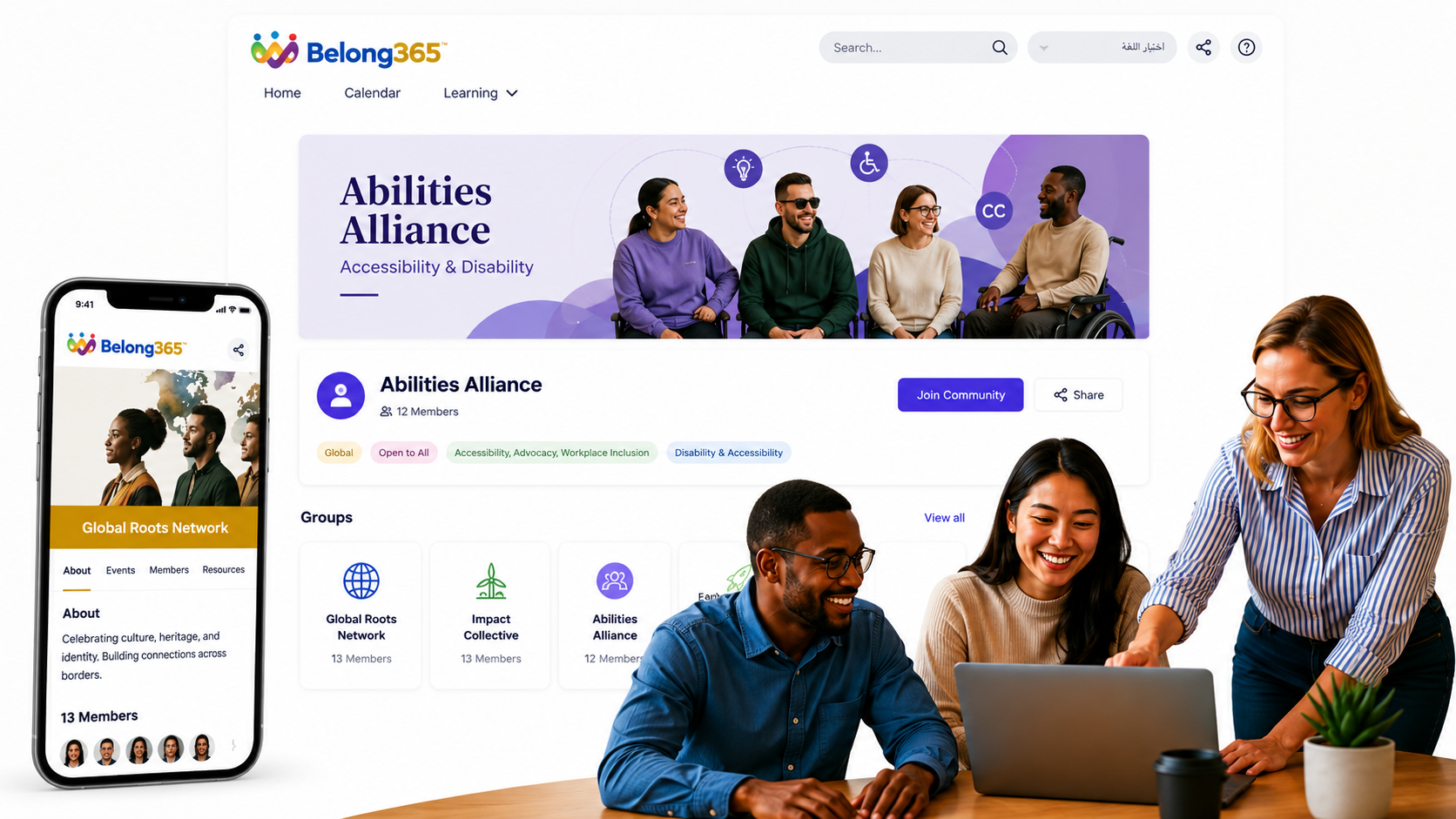
How to Increase ERG Participation Through Better Visibility
One of the simplest ways to increase ERG participation is to make ERG activities easier to see.
Too often, ERG updates are buried in a long newsletter, posted once on an internal channel, or shared only with people who are already involved. That creates a closed loop. The same people hear about the same events, while employees outside the group remain unaware.
ERG visibility should be consistent and simple. Employees should know where to find upcoming events, how to join, who the group is for, and what kind of topics the group covers.
This can include a central ERG calendar, a short monthly spotlight in internal communications, event reminders from managers or team leads, a dedicated section on the company intranet, clear links to join ERG mailing lists or channels, and mentions during new hire onboarding.
Visibility also means using plain language. Instead of promoting an event with vague wording like “Join us for a meaningful conversation,” explain what the session is actually about and why it matters.
For example, “Join the Parents and Caregivers ERG for a discussion on managing school breaks, workload planning, and support systems at work” gives employees a clearer reason to attend.
The easier it is to understand, the easier it is to say yes.
Make ERG Events Feel Relevant to Employees
Employees are more likely to participate when ERG programming connects to topics they care about. That does not mean every event has to be heavy, formal, or centered around a major issue. It means the content should feel connected to real life.
One practical way to increase ERG participation is to connect events to topics employees already care about.
An ERG event can explore career growth, cultural awareness, financial wellness, caregiving, mental health, workplace communication, accessibility, leadership pathways, or community building. The strongest programming often connects identity, belonging, and everyday workplace experiences.
For example, a women’s ERG might host a session on sponsorship and career visibility. A veterans ERG might organize a conversation on translating military experience into leadership skills. A multicultural ERG might explore how holidays, food, language, and family traditions shape workplace connection.
The point is to move beyond one time celebrations and create programming that feels practical, thoughtful, and connected to people’s lives.
ERG leaders should also ask employees what they want. Short surveys, listening sessions, and informal feedback can help shape better programming. Participation improves when employees see their interests reflected in the calendar.
How to Increase ERG Participation With Leadership Support
Leadership support plays a major role in how to increase ERG participation. When leaders actively support ERGs, employees receive a clear message that participation is valued, not just permitted.
That support should go beyond a launch announcement or a quote during heritage month. Leaders can sponsor ERGs, attend events, promote programming, recognize ERG leaders, and connect ERG insights to broader business goals.
Managers also matter. Even when senior leaders support ERGs, employees may hesitate to attend if their direct manager treats participation as an inconvenience.
Manager encouragement can be simple. A manager might say, “This event is during work time, and you are welcome to attend if it is relevant to you.” That one sentence can remove a lot of uncertainty.
Organizations should make expectations clear. If ERG participation is encouraged, employees need to know they will not be judged for taking part. ERG leaders also need time, resources, and recognition for the work they are doing.
Without that support, ERG participation can become another responsibility carried quietly by a small group of employees.
Reduce Barriers to Join or Attend
Sometimes participation is low because the process is too difficult.
Employees may not know where to sign up. Events may require too many steps to register. Meeting times may conflict with busy periods. Remote employees may feel excluded. Frontline employees may not have access to the same communication channels as office employees.
Reducing obstacles means looking closely at the employee experience.
An easy process should answer a few simple questions.
- Can people join in one click?
- Do events appear on their calendars automatically?
- Can employees watch a recording if they miss the live session?
- Does the schedule account for different time zones?
- Do the formats work for remote, hybrid, and frontline employees?
- Can people attend without feeling put on the spot? Do managers know the schedule in advance?
Small barriers add up. A complicated registration process or unclear event description can be enough for someone to skip it.
Reducing these small barriers can increase ERG participation without adding more work for ERG leaders.
ERG participation should feel easy, not like extra administrative work.
Create Year Round Programming, Not One Time Moments
Many organizations see ERG activity rise during heritage months, awareness days, or major cultural moments. Those moments can be meaningful, but they should not be the entire strategy.
Consistent, year round programming helps ERGs stay visible and relevant. It also prevents ERG engagement from feeling like a temporary campaign.
A strong ERG calendar might include a mix of community conversations, professional development sessions, cultural learning moments, networking opportunities, volunteer initiatives, leadership discussions, resource sharing, and informal social events.
The calendar does not need to be packed. In fact, too many events can overwhelm both organizers and employees. What matters is consistency. A predictable rhythm helps employees build the habit of participating.
It also gives ERG leaders room to plan with more intention, instead of scrambling to create something around one major date.
Show Employees the Impact of ERG Participation
People are more likely to stay engaged when they can see that participation matters.
ERG impact can be shared in simple ways. Highlight a successful event. Share a short recap. Explain what feedback was received and what action followed. Recognize ERG leaders and contributors. Show how ERG insights helped improve policies, benefits, communication, or employee experience.
This helps employees understand that ERGs are not just social groups or calendar events. They are spaces where people connect, learn, and influence workplace culture.
Impact does not always need to be dramatic. Sometimes the value is a new relationship, a better understanding of a colleague’s experience, or a conversation that helps someone feel less alone at work. Those outcomes matter.
When employees can see the impact of their involvement, it becomes easier to increase ERG participation in a way that feels meaningful and sustainable.
Support ERG Leaders So Participation Can Grow
ERG participation depends heavily on the people leading the groups. Many ERG leaders are volunteers, balancing this work with their regular jobs. If they are unsupported, participation will eventually suffer.
Organizations should provide ERG leaders with clear expectations, planning resources, communication support, budget guidance, and access to leadership sponsors. They should also recognize the time and skill involved in leading an ERG.
Running an ERG requires facilitation, event planning, communication, emotional intelligence, and strategic thinking. Treating that work as invisible labor is one of the fastest ways to burn people out.
When ERG leaders are supported, they can create better programming, communicate more clearly, and build stronger participation over time.
Supporting ERG leaders is one of the most practical ways to increase ERG participation over time because it gives them the structure, confidence, and resources to build stronger programs.
Make Participation Welcoming for Members and Allies
Some employees may hesitate to join an ERG because they are unsure whether the space is meant for them. This is especially common for allies.
Organizations can help by clearly explaining who can participate and what participation looks like. For example, employees can join as members, allies, learners, mentors, sponsors, volunteers, or occasional attendees.
Not everyone will engage in the same way, and that is fine. Some employees may attend events regularly. Others may participate in one discussion, share resources, or support a campaign. The goal is to create multiple entry points.
A welcoming ERG culture makes it easier for people to take the first step.
Measure What Matters
To improve participation, organizations need to track more than attendance numbers.
Attendance matters, but it does not tell the full story. A small event with meaningful conversation can be more valuable than a large session where people are disengaged.
Useful measures can include event attendance trends, repeat participation, new member growth, employee feedback, manager support, ERG leader experience, participation across locations or employee groups, and impact on policies, programs, or culture initiatives.
The goal is not to turn ERGs into a numbers game. The goal is to understand what is working, what is not, and where employees need better support.
Building ERGs People Actually Want to Join
Increasing participation is not about pushing employees to attend more meetings. It is about making ERGs easier to access, easier to understand, and more connected to the real needs of employees.
When ERGs are visible, relevant, supported by leadership, and built into a consistent year round strategy, participation becomes much stronger. Employees are more likely to engage when they see the value, feel welcomed, and know their organization respects the time they spend contributing to workplace culture.
Over time, these small improvements can increase ERG participation and make ERGs feel like an active part of workplace culture.
Organizations that want to increase ERG participation should start by removing barriers, listening to employees, and giving ERG leaders the support they need to build meaningful programs. That is how ERGs move from existing on paper to becoming active spaces for connection, learning, and belonging.