


Employee Resource Groups are often some of the most active and meaningful parts of workplace culture. But planning events across multiple groups can quickly become complex without structure. An ERG calendar helps organizations bring clarity, coordination, and visibility to ERG event planning.
An ERG calendar is one of the simplest and most effective ways to bring clarity to that process. When used well, it helps organizations move from scattered planning to a more coordinated, visible, and intentional approach.
Why ERG Event Planning Often Feels Harder Than It Should
In many organizations, ERGs operate with a lot of independence. That autonomy is valuable, but it also creates challenges.
Events are often planned in silos. One group may not know what another is organizing, dates overlap, internal communications compete for attention, and HR or People leaders are left trying to piece together what is happening across the organization.
Without a shared system, even the most well intentioned efforts can lead to challenges. Many organizations address this by using employee resource group platforms to centralize planning, improve visibility, and better coordinate ERG activity.
- Conflicting events that reduce attendance
- Missed opportunities to collaborate between groups
- Limited visibility into participation and impact
- Last minute planning that creates stress for organizers
An ERG calendar helps solve these problems by creating a single source of truth.
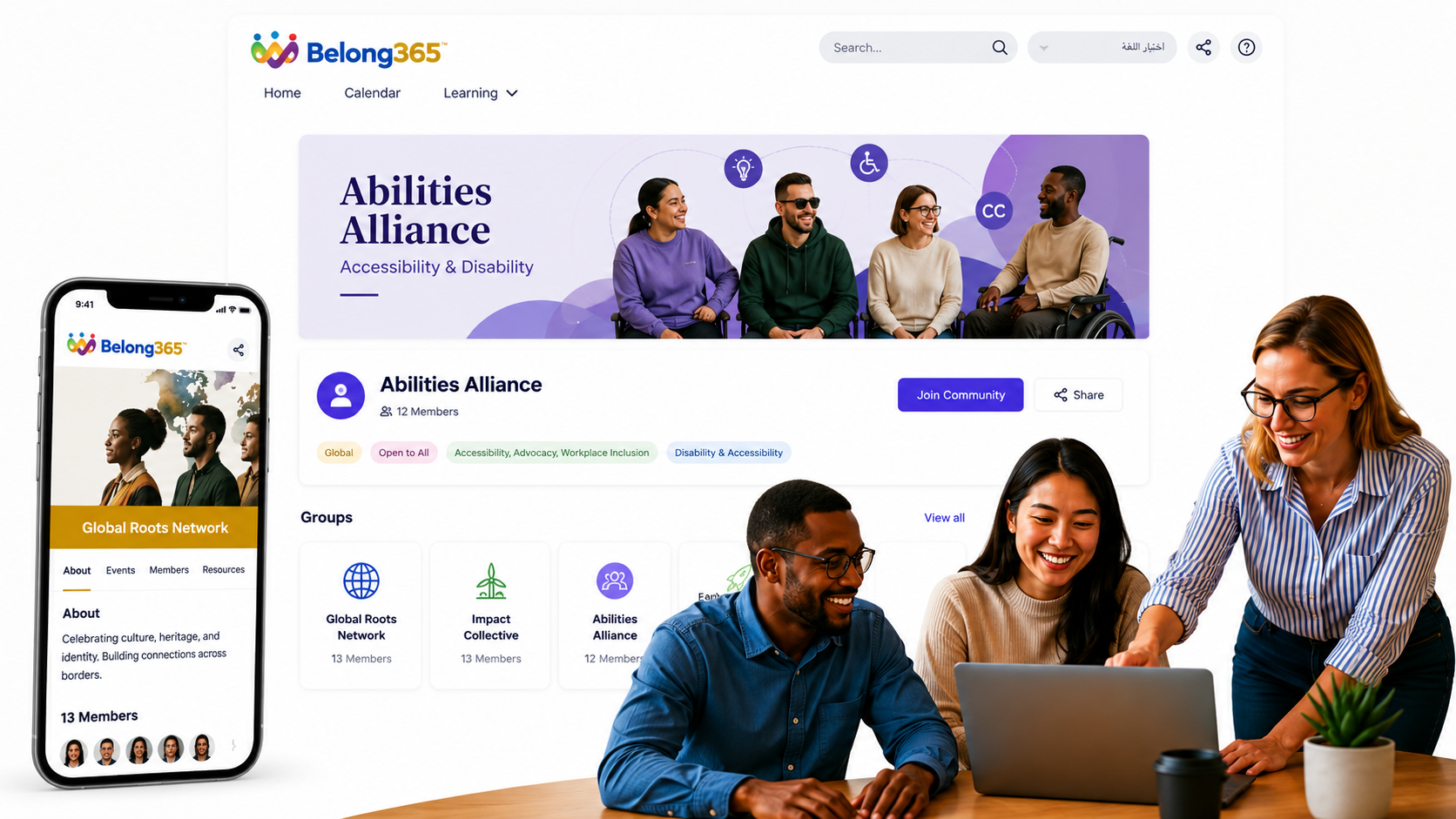
Using an ERG Calendar to Plan Across Multiple Groups and Regions
As organizations grow, so do their ERGs. What might start as one or two groups can quickly expand into several, often spread across different locations or time zones.
An ERG calendar makes it possible to see everything in one place. Instead of each group managing their own isolated schedule, all events are mapped out together.
This allows teams to:
- Plan events with awareness of what others are doing
- Adjust timing based on regional differences
- Identify opportunities for global or cross regional collaboration
- Balance the overall cadence of events across the year
For HR and People leaders, it becomes much easier to support ERGs when the full picture is visible.
Using an ERG Calendar to Avoid Scheduling Conflicts and Overlap
One of the most common frustrations in ERG programming is overlap. Two important events happen at the same time, forcing employees to choose. Both groups see lower turnout, even though interest was high.
With an ERG calendar, conflicts become visible early.
Instead of discovering overlaps after announcements are sent, organizers can:
- Check existing events before confirming dates
- Space out major initiatives to avoid fatigue
- Coordinate joint events when topics align
This small shift can significantly improve attendance and overall engagement. This is a common challenge across organizations, and using a shared calendar makes it easier to identify overlaps early and create a more balanced event schedule.
How an ERG Calendar Improves Visibility into ERG Activity
Leaders want to support ERGs, but they often lack a clear view of what is happening.
When events are tracked informally through emails or spreadsheets, it is difficult to answer basic questions:
- How active are our ERGs this quarter
- Which events are driving participation
- Where are we seeing strong engagement or gaps
An ERG calendar provides a straightforward way to track activity across the organization.
It gives leadership:
- A clear overview of upcoming and past events
- Insight into how ERGs are contributing to culture and engagement
- The ability to align support, budget, and recognition with actual activity
This visibility also reinforces the value of ERGs as a core part of the employee experience.
Aligning ERG Events with Cultural Observances and Company Initiatives
Many ERG events are tied to cultural moments, awareness days, or heritage months. Without a shared planning tool, these connections can be missed or duplicated.
An ERG calendar helps organizations plan more intentionally.
It allows teams to:
- Align events with relevant cultural observances
- Avoid duplicating similar topics across groups
- Connect ERG programming with broader company initiatives
- Build a more cohesive and thoughtful annual plan
Instead of reacting to dates as they come up, teams can plan ahead with purpose.
Creating a Centralized Place for Employees to Engage
From an employee perspective, one of the biggest barriers to participation is simply not knowing what is happening.
If ERG events are announced in different places or at different times, people miss them.
An ERG calendar creates a centralized, easy to access view of all upcoming activities. Employees can quickly see:
- What events are happening this week or month
- Which groups are hosting them
- How to join or participate
This makes it easier for employees to engage beyond their own ERG and discover new communities within the organization.
Making ERG Planning More Sustainable
ERG leaders are often volunteers balancing these responsibilities alongside their primary roles. When planning is disorganized, it adds unnecessary pressure.
An ERG calendar reduces that burden.
It provides structure without removing flexibility. It helps leaders plan ahead, coordinate with others, and feel more confident in their programming.
Over time, this leads to:
- More consistent event quality
- Better collaboration between ERGs
- A more sustainable approach to planning
Bringing It All Together With an ERG Calendar
An ERG calendar is not just a scheduling tool. It is a way to bring alignment, visibility, and intention to ERG programming. It helps organizations move away from fragmented planning and toward a more connected experience for both organizers and employees.
For HR, People leaders, and ERG program managers, adopting an ERG calendar is one of the most practical steps you can take to support your resource groups and strengthen engagement across the organization.
Using an ERG Calendar to Plan Across Multiple Groups and Regions
As organizations grow, so do their ERGs. What might start as one or two groups can quickly expand into several, often spread across different locations or time zones.
An ERG calendar makes it possible to see everything in one place. Instead of each group managing their own isolated schedule, all events are mapped out together.
This allows teams to:
- Plan events with awareness of what others are doing
- Adjust timing based on regional differences
- Identify opportunities for global or cross regional collaboration
- Balance the overall cadence of events across the year
For HR and People leaders, it becomes much easier to support ERGs when the full picture is visible.
Using an ERG Calendar to Avoid Scheduling Conflicts and Overlap
One of the most common frustrations in ERG programming is overlap. Two important events happen at the same time, forcing employees to choose. Both groups see lower turnout, even though interest was high.
With an ERG calendar, conflicts become visible early.
Instead of discovering overlaps after announcements are sent, organizers can:
- Check existing events before confirming dates
- Space out major initiatives to avoid fatigue
- Coordinate joint events when topics align
This small shift can significantly improve attendance and overall engagement. This is a common challenge across organizations, and using a shared calendar makes it easier to identify overlaps early and create a more balanced event schedule.
How an ERG Calendar Improves Visibility into ERG Activity
Leaders want to support ERGs, but they often lack a clear view of what is happening.
When events are tracked informally through emails or spreadsheets, it is difficult to answer basic questions:
- How active are our ERGs this quarter
- Which events are driving participation
- Where are we seeing strong engagement or gaps
An ERG calendar provides a straightforward way to track activity across the organization.
It gives leadership:
- A clear overview of upcoming and past events
- Insight into how ERGs are contributing to culture and engagement
- The ability to align support, budget, and recognition with actual activity
This visibility also reinforces the value of ERGs as a core part of the employee experience.
Aligning ERG Events with Cultural Observances and Company Initiatives
Many ERG events are tied to cultural moments, awareness days, or heritage months. Without a shared planning tool, these connections can be missed or duplicated.
An ERG calendar helps organizations plan more intentionally.
It allows teams to:
- Align events with relevant cultural observances
- Avoid duplicating similar topics across groups
- Connect ERG programming with broader company initiatives
- Build a more cohesive and thoughtful annual plan
Instead of reacting to dates as they come up, teams can plan ahead with purpose.
Creating a Centralized Place for Employees to Engage
From an employee perspective, one of the biggest barriers to participation is simply not knowing what is happening.
If ERG events are announced in different places or at different times, people miss them.
An ERG calendar creates a centralized, easy to access view of all upcoming activities. Employees can quickly see:
- What events are happening this week or month
- Which groups are hosting them
- How to join or participate
This makes it easier for employees to engage beyond their own ERG and discover new communities within the organization.
Making ERG Planning More Sustainable
ERG leaders are often volunteers balancing these responsibilities alongside their primary roles. When planning is disorganized, it adds unnecessary pressure.
An ERG calendar reduces that burden.
It provides structure without removing flexibility. It helps leaders plan ahead, coordinate with others, and feel more confident in their programming.
Over time, this leads to:
- More consistent event quality
- Better collaboration between ERGs
- A more sustainable approach to planning
Bringing It All Together With an ERG Calendar
An ERG calendar is not just a scheduling tool. It is a way to bring alignment, visibility, and intention to ERG programming. It helps organizations move away from fragmented planning and toward a more connected experience for both organizers and employees.
For HR, People leaders, and ERG program managers, adopting an ERG calendar is one of the most practical steps you can take to support your resource groups and strengthen engagement across the organization.