


Organizations trying to understand how to build an inclusive culture often begin by searching for the comprehensive answer. They want the framework, the roadmap, leadership commitment, budget, metrics, and a fully resourced strategy before they move. Yet organizations that make durable progress often begin somewhere much more practical. They choose something small enough to deliver, important enough to matter, and visible enough to create momentum.
Let’s start with the basics. What is an inclusive culture? An inclusive culture is a workplace where employees, regardless of background, identity, role, seniority, or location, consistently experience safety, respect, and a genuine sense of connection to the organization. That definition matters because inclusion can sound abstract until people experience it in daily working life. Meetings, managers, decisions, access to opportunities, communication, feedback, and the way colleagues handle disagreement all shape workplace culture.
The practical lesson is straightforward. Organizations don’t need to solve inclusion in full before they begin improving it. In many cases, a stronger strategy becomes possible only after people start doing the work.
How to Build an Inclusive Culture in Everyday Work
What does building an inclusive culture require in practice? First, inclusion has to reach employees during normal working life. Awareness days, speaker events, and annual campaigns can contribute, but ordinary interactions shape culture far more often. Who gets heard in a meeting? Who receives useful feedback? Which employees gain access to senior leaders? How do teams handle mistakes? Does a manager notice when someone has stopped contributing? Those moments determine whether employees experience the organization as inclusive.
Managers also need to become involved early. Most employees encounter organizational culture through their team, and the manager shapes much of that experience. Policies can set expectations, but managers determine how consistently teams put those expectations into practice.
Every manager doesn’t need to become an inclusion specialist, but they do need practical tools. A capable manager should know how to run meetings where participation is shared more evenly, respond when someone faces exclusion, give fair feedback, handle sensitive conversations, and recognize when established team habits work better for some employees than others.
Organizations also need the confidence to begin before every condition feels ideal. A company may understand the importance of inclusion and still spend months waiting for the right budget, executive sponsor, research, operating model, or global framework. While leaders wait, employees continue experiencing the same problems.
Learning how to build an inclusive culture starts with identifying something specific that can improve now.
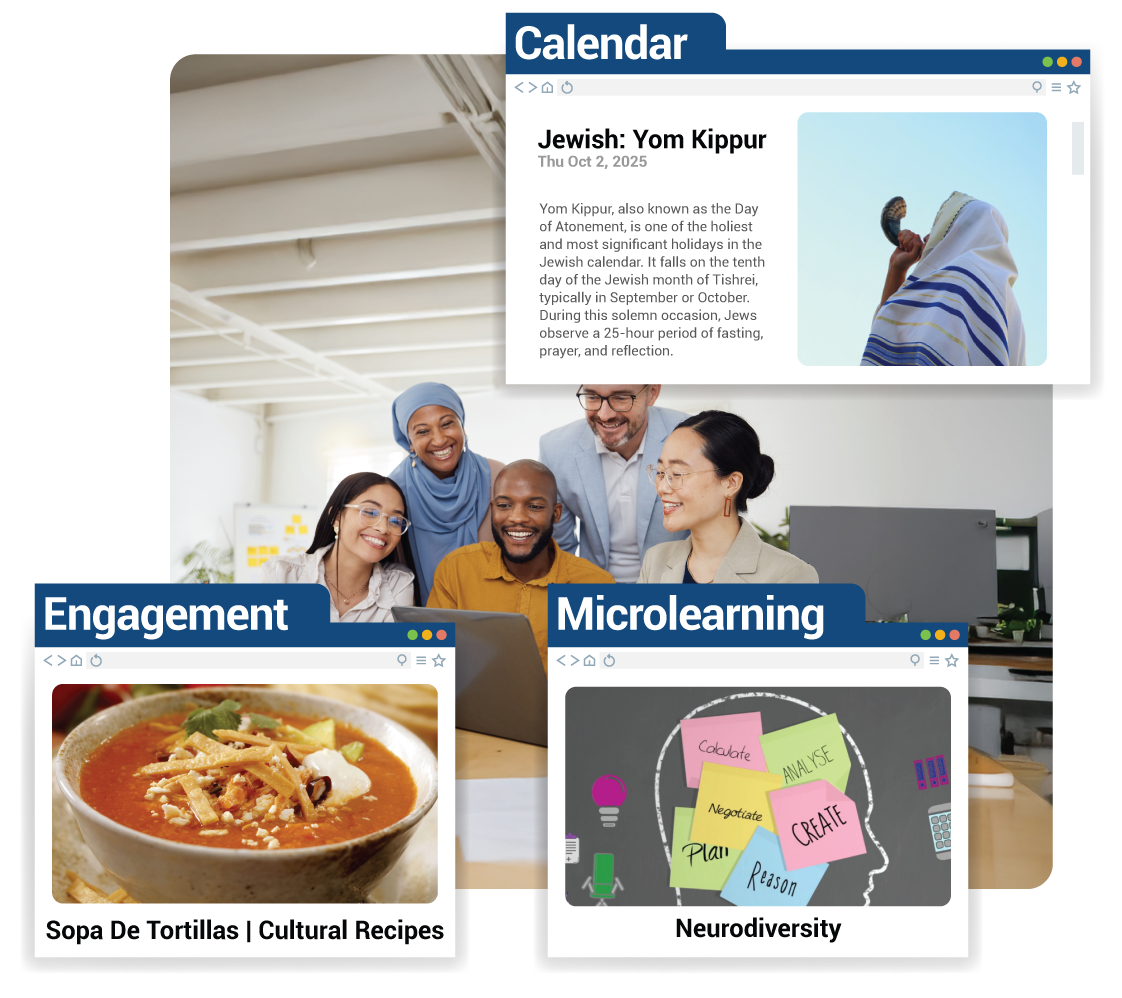
How to Build an Inclusive Culture Without a Full Strategy
One of the more useful examples discussed at the d&i Leaders Global Workplace Inclusion Forum in London in May 2026 came from a global food company.
The company didn’t begin with a sophisticated inclusion strategy. Employees felt frustrated because they had limited opportunities to learn from one another, share knowledge, and better understand colleagues across the organization. The response was a Learning Week.
Start with a problem employees can recognize
The idea was deliberately simple: Rather than create an expensive external program, the company used knowledge and talent already inside the organization. Employees shared expertise, experiences, and perspectives during a structured period of learning. The Learning Week addressed a problem employees could identify immediately.
People participated. Interest grew across the organization. Leaders gained evidence that employees wanted more opportunities to connect and learn across traditional organizational boundaries. A contained initiative soon generated enough momentum to support further work.
The sequence matters. A practical first step created momentum. Growing interest increased demand, which gave the organization stronger conditions for something more sustained.
What does this teach organizations about how to build an inclusive culture? It shows that strategy can emerge from action. A small initiative gives leaders information that planning alone cannot provide. They can see what employees respond to, where participation is strongest, which barriers appear, how managers engage, and what people ask for next. Those signals can guide the next investment.
For HR and Inclusion teams working with limited resources, this matters. The first initiative does not need to represent the final model. Its job is to address a real need and give the organization something useful to learn from.
Principles for Building an Inclusive Culture That Lasts
Across industries, organizations that sustain progress tend to follow a similar sequence. A useful starting point is often smaller than the ambition of the overall goal. That can feel uncomfortable. Inclusion affects the entire organization, so leaders may assume the response must begin at the same scale. In practice, a focused initiative can produce stronger evidence than a broad program that employees barely experience. Measurement should also begin early.
Measure progress before you scale
Measurement doesn’t require an elaborate survey every time something changes. Teams can begin with direct questions.
- Did more people participate?
- What did employees find useful?
- Have managers changed any specific behaviors?
- Were new connections created across teams?
- Is there enough interest to continue the initiative?
- How did participation vary between locations, levels, or functions?
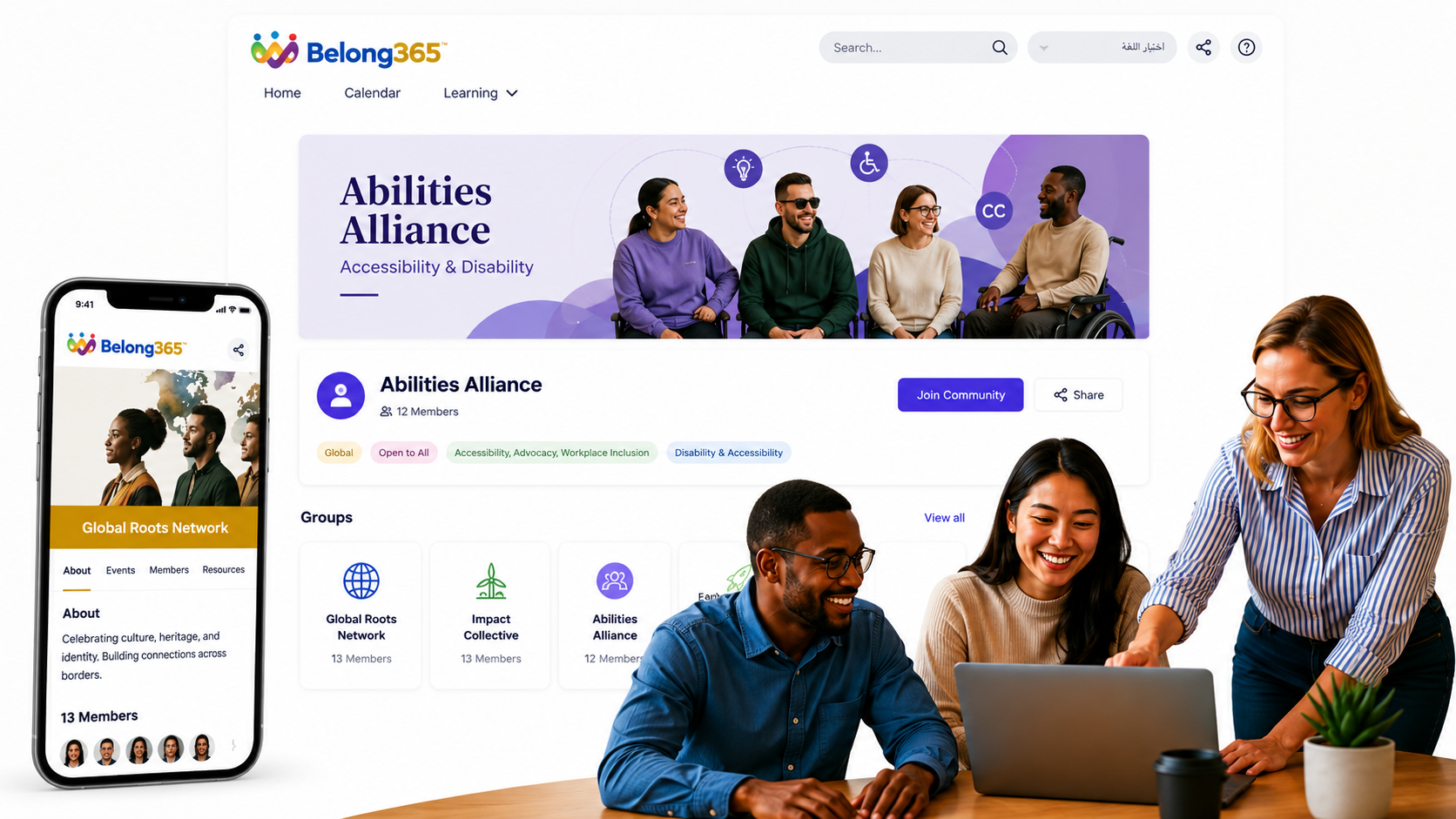
For organizations learning how to build an inclusive culture, measurement helps show whether an initiative changed anything and what should happen next.
Manager involvement matters just as much. Culture becomes credible when employees experience similar standards across different teams and situations. Repeated behavior gradually turns individual practices into expectations.
That raises another useful question: How do you know when an inclusive culture is becoming established?
Look for patterns rather than isolated events. Employees understand how to raise concerns. Managers respond more consistently when problems arise. Participation widens across teams and levels. More people gain access to development opportunities beyond their immediate networks. Inclusion also begins to influence operating decisions rather than remaining limited to dedicated programs.
Progress usually follows a simple sequence: start, learn, adjust, and build.
As organizations gather better evidence about what employees actually need, the work can become more focused and sophisticated.
What Stops Organizations From Building an Inclusive Culture
The most common barriers are familiar. Budget is one of them. Organizations often wait for additional funding even though meaningful inclusion work can begin with limited resources.
Leadership alignment can create another delay. Some teams postpone action until a global strategy is complete. Others spend too long designing a program comprehensive enough to satisfy every stakeholder before testing whether employees actually need it.
Each delay may sound reasonable on its own. Together, those delays can produce long periods in which employees see little meaningful change.
There is also a practical problem with waiting for resources. Organizations often need to generate evidence before leaders will approve larger investments.
Small pilots create useful evidence
Consider an HR team requesting significant funding for a new organization-wide inclusion program without any internal proof of demand. Senior leaders may hesitate because they cannot yet see how employees will respond or what the organization will gain.
Now consider the same team after a low-cost pilot attracts hundreds of employees, generates participation across functions, improves a specific measure of connection, and leads managers to request additional tools. That evidence changes the conversation.
Organizations working out how to build an inclusive culture should therefore think carefully about the role of proof. Early activity can create the credibility needed for larger investment.
Starting small just means sequencing the work so each stage produces information, trust, and support for the next one.
Another risk appears when organizations run one successful initiative and declare progress too quickly. Employees usually judge culture over a much longer period. One strong event can create optimism, but repeated behaviour gives people confidence that change will last.
For HR and Inclusion leaders, that distinction matters. The goal goes beyond generating participation in a program. Employees need enough consistency to begin expecting inclusive behavior as part of how the organization operates.
The global food company didn’t have a complete answer when it started. It had an identifiable problem and a willingness to act on it. The Learning Week became a practical first step that created evidence, demand, and momentum for what followed. For organizations asking how to build an inclusive culture, that is one of the most useful lessons. Durable inclusive cultures grow through consistent action, careful learning, and a series of decisions that make the next step possible.