


For many organizations, the conversation around employee resource group benefits starts with culture. That makes sense. ERGs can strengthen connection, belonging, and visibility across the workplace. But if that is where the conversation ends, leaders miss the bigger picture. Well-run ERGs do far more than support employee experience. They can influence retention, leadership pipelines, recruiting outcomes, market understanding, and day to day performance in ways that matter to the business.
That shift in perspective matters right now. HR leaders, DEI professionals, and executives are under pressure to show how people investments connect to measurable results. In that environment, ERGs cannot be framed as side projects or goodwill initiatives. They need to be understood as part of the organization’s operating strength. When they have clear goals, executive sponsorship, and the right level of support, ERGs can contribute to business outcomes that leadership teams already care about.
Employee resource group benefits are not limited to culture alone. They also affect business performance in measurable ways.
Employee Resource Group Benefits Show Up in Retention and Engagement
Retention is one of the clearest places where ERGs can make a real business impact. Employees are more likely to stay when they feel seen, supported, and connected to the organization in a meaningful way. ERGs help create that connection, especially for employees who may otherwise feel isolated, overlooked, or uncertain about long term growth within the company.
That sense of connection has practical value. Turnover is expensive. Replacing employees takes time, disrupts teams, and drains institutional knowledge. When ERGs help employees build stronger relationships, access peer support, and navigate workplace challenges more effectively, they can reduce the conditions that often lead people to disengage or leave.
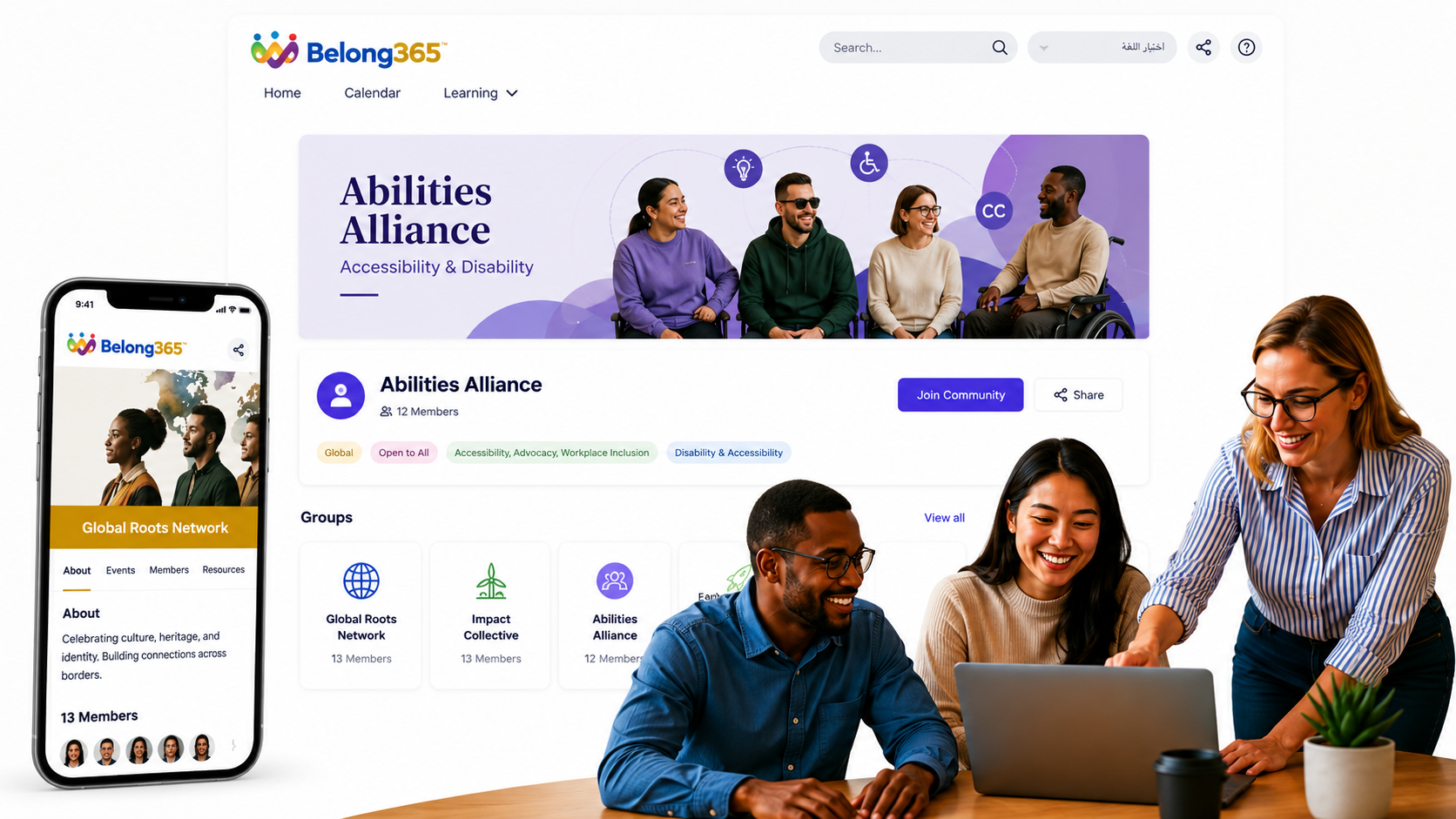
Engagement follows a similar pattern. Employees who feel invested in the workplace are more likely to contribute ideas, collaborate across functions, and stay committed during periods of change. ERGs often create spaces where employees can raise concerns, surface barriers, and build trust. That kind of feedback loop is useful to leadership because it provides insight that might not emerge through surveys alone.
The key point is this: engagement affects effort, discretionary contribution, and consistency. When ERGs strengthen the employee experience in a structured way, they support the conditions that help people do better work and stay longer. These are some of the most practical employee resource group benefits for organizations trying to reduce turnover.
Employee Resource Group Benefits Strengthen Talent Development
One of the most overlooked business advantages of ERGs is their role in developing talent. In many organizations, ERGs give employees opportunities they may not get in their formal roles, including project leadership, event planning, communication, stakeholder management, and cross functional collaboration. Those experiences help employees build skills that translate directly into stronger performance and future leadership readiness.
This matters for succession planning. Companies often say they want stronger internal pipelines, but those pipelines do not build themselves. ERGs can serve as leadership incubators, especially for employees whose potential may not always be fully recognized through traditional talent systems. Leading an ERG committee, presenting to senior sponsors, or organizing programs across departments gives employees real experience in influence and execution.
There is also value in visibility. ERGs can help emerging leaders build relationships outside their immediate teams and gain exposure to senior decision makers. That can widen access to mentorship and sponsorship, which improves the odds that high potential employees are not overlooked.
When organizations invest in ERGs as part of a broader talent strategy, they are not just supporting participation. They are creating more pathways for employees to grow, lead, and contribute at a higher level. One of the strongest employee resource group benefits is the ability to strengthen internal leadership pipelines over time.
Employee Resource Group Benefits for Recruitment and Employer Credibility
Employers often talk about differentiation in a competitive talent market, but candidates are increasingly looking past polished messaging. They want proof that an organization supports its people in real ways. ERGs can help provide that proof.
Candidates pay attention to whether employee communities exist, whether they are active, and whether leadership takes them seriously. A visible, well supported ERG program signals that the company understands workforce diversity as an operational reality, not just a brand statement. That can influence how candidates evaluate trust, opportunity, and long term fit.
This matters most when competition for talent is high. Strong candidates have options, and they are making decisions based on more than salary. They are looking at development opportunities, leadership credibility, and workplace conditions. ERGs can help reinforce all three.
There is another layer here as well. ERGs can directly support recruitment efforts by participating in outreach, helping shape employer branding, and sharing insight into candidate concerns. Their involvement can make recruitment strategies more informed and more authentic. That kind of input is especially valuable when organizations are trying to attract talent from underrepresented groups but do not want their messaging to feel generic or disconnected from reality. For many employers, employee resource group benefits also show up in recruitment outcomes and employer reputation.
Employee Resource Group Benefits for Market Insight
One of the strongest arguments for ERG investment is that these groups can help organizations make better decisions. Employees bring lived experience, community knowledge, and practical perspectives that can sharpen how companies understand customers, markets, and risk.
That insight can show up in many ways. ERGs may identify issues in customer messaging, flag cultural blind spots in campaigns, point out accessibility concerns, or raise questions about product design that others missed. They can also help companies think more carefully about how services, communications, and policies land with different audiences.
This is where ERGs move firmly into business value. They are not simply internal communities. In the right structure, they can act as informed partners who help organizations avoid mistakes and see opportunities earlier.
For companies operating across diverse markets, that perspective is not optional. Products and messages do not succeed in a vacuum. They succeed when organizations understand the people they are trying to reach. ERGs can contribute to that understanding in ways that improve relevance and decision quality. Among the more strategic employee resource group benefits is market insight that improves decision making.
Employee Resource Group Benefits for Productivity and Performance
The connection between inclusion and performance is often discussed in broad terms, but the business case becomes clearer when you look at how work actually gets done. Productivity depends on focus, trust, communication, and the ability to contribute without unnecessary obstacles. ERGs can help reduce that friction.
Employees who feel unsupported or excluded often spend energy managing workplace strain instead of doing their best work. ERGs can help address that by creating stronger peer networks, surfacing barriers, and giving leaders better visibility into employee experience. In practical terms, that can improve collaboration, reduce avoidable conflict, and strengthen team effectiveness.
There is also a performance benefit in problem solving. ERGs often bring together employees from different functions, levels, and backgrounds. That kind of network can support better information sharing and broader thinking across the organization. When employees are connected beyond their immediate teams, they are often better positioned to solve problems faster and work more effectively across silos.
None of this happens automatically. Productivity gains come when ERGs are linked to real business priorities, not when they are treated as informal communities with no mandate, no support, and no path to influence. At a practical level, employee resource group benefits can support stronger collaboration, focus, and performance.
The Misconception That Limits ERG Impact
A common misconception is that ERGs are mostly social groups. That view is one reason many programs underperform. Social connection can be part of an ERG’s value, but it should not be the whole story. When organizations stop there, they miss the broader return these groups can generate.
The problem is not that ERGs are optional spaces for connection. The problem is when companies expect business impact without providing business structure. If ERGs have no goals, no budget, no executive sponsor, and no clarity on how their work connects to organizational priorities, their influence will remain limited.
Support, structure, and accountability matter. Organizations that want stronger outcomes from ERGs need to define what success looks like, create leadership pathways, compensate or recognize ERG labor appropriately, and build mechanisms for insights to reach decision makers.
Without that foundation, ERGs often rely too heavily on employee goodwill. That creates inconsistency and burnout, especially for the people doing the most work behind the scenes. If leaders want meaningful returns, they need to treat ERGs as part of the business infrastructure, not as extracurricular activity. To unlock real employee resource group benefits, organizations need structure, support, and clear business alignment.
Treating ERGs as Business Assets
The strongest ERG programs are not disconnected from business strategy. They are part of it. They support retention by improving connection and trust. They strengthen talent development by creating leadership opportunities. They improve recruitment by adding credibility to the employer brand. They contribute market insight that can sharpen decisions. And they support productivity by helping employees contribute more fully and effectively.
That is the real conversation organizations should be having about employee resource group benefits. Not whether ERGs are nice to have, but whether companies are willing to invest in them in a way that matches the value they can create. When ERGs are structured, supported, and aligned with business goals, the employee resource group benefits extend far beyond culture. They show up in the bottom line.