


In recent school board elections across the United States, a clear pattern has begun to emerge. Voters in states from Pennsylvania to Texas to Ohio are stepping away from culture-war politics and signaling a renewed focus on the fundamentals of public education. Rather than rewarding candidates who center their campaigns on ideological battles, many communities are choosing leaders who prioritize academics, fiscal responsibility, and the everyday work of running effective schools. This shift reflects growing voter fatigue with culture-war politics at the local level, particularly when political conflict overshadows effective school governance.
According to recent reporting on the 2025 school board elections, Democratic-backed candidates reclaimed numerous seats after years of partisan takeovers driven by disputes over curriculum, book bans, and transgender rights. The shift does not suggest that cultural issues no longer matter to voters. Instead, it points to growing fatigue with conflict-driven governance and a desire to return school boards to their intended role.
Why Voters Are Turning Away from Culture-War Politics
For many voters, school boards stopped feeling local. Meetings became heated, decision-making slowed, and national talking points increasingly replaced community dialogue. What were once operational bodies responsible for budgets, staffing, and educational outcomes became symbolic battlegrounds in larger political struggles.
Over time, this tension came at a cost. Teachers faced burnout, administrators struggled to move initiatives forward, and parents saw less attention paid to learning outcomes and student support. In 2025, voters appeared ready for a reset. Candidates who emphasized stability, collaboration, and practical problem solving gained traction over those focused on confrontation.
This shift reflects less a rejection of values and more a rejection of constant escalation. Voters are signaling that effective governance matters and that ideological intensity is not a substitute for competence.
How Culture-War Politics Turned School Boards into National Flashpoints
The transformation of school boards into national flashpoints did not happen overnight. As debates over curriculum content, inclusion, and identity grew stronger across the country, local education systems became convenient arenas for broader cultural arguments. Topics like how schools teach history or support LGBTQ+ students became focal points in national debates, framed as extreme issues rather than practical policy discussions.
Media attention and organized political campaigns amplified these dynamics. In many districts, nuance disappeared, replaced by all-or-nothing rhetoric. As a result, boards spent disproportionate time managing conflict rather than improving educational quality. As culture-war politics intensified, many school boards became less focused on academic outcomes and more consumed by political signaling.
The recent election results suggest that communities are reconsidering this approach. Voters appear to be asking whether prolonged conflict actually serves students or strengthens trust in public institutions.
What This Means for Leaders and Organizations
For HR, communications, and DEI leaders, this moment offers an important insight. The rejection of culture-war politics in education mirrors sentiments increasingly visible in workplaces. Employees want clarity, fairness, and respect, but they are often wary of messaging that feels overly ideological or disconnected from daily realities.
Election outcomes often reflect a broader desire for pragmatic leadership and clear priorities. The same principle applies inside organizations. When inclusion efforts are framed around shared goals, operational impact, and lived experience, they are more likely to build trust. When they feel abstract or combative, engagement tends to decline.
This does not mean avoiding difficult conversations. It means approaching them with intention, context, and an understanding of how people experience change on the ground.
Looking Ahead to 2026
Whether this shift marks a lasting realignment remains to be seen. Still, the recent school board elections suggest that many communities are seeking a lower temperature and a higher standard of governance. They are prioritizing results over rhetoric and collaboration over conflict, signaling growing fatigue with culture-war politics in local decision-making.
For organizations planning for 2026, the implications are significant. Culture, inclusion, and belonging remain essential, but how they are discussed matters more than ever. Leaders who emphasize transparency, practical impact, and respect for differing perspectives are better positioned to maintain trust and momentum in an environment shaped by ongoing debates around culture-war politics.
If the move away from culture-war politics continues, it may create space for more constructive engagement around inclusion both in schools and in workplaces. That space, grounded in clarity and care, is where sustainable culture and meaningful connection are most likely to grow.
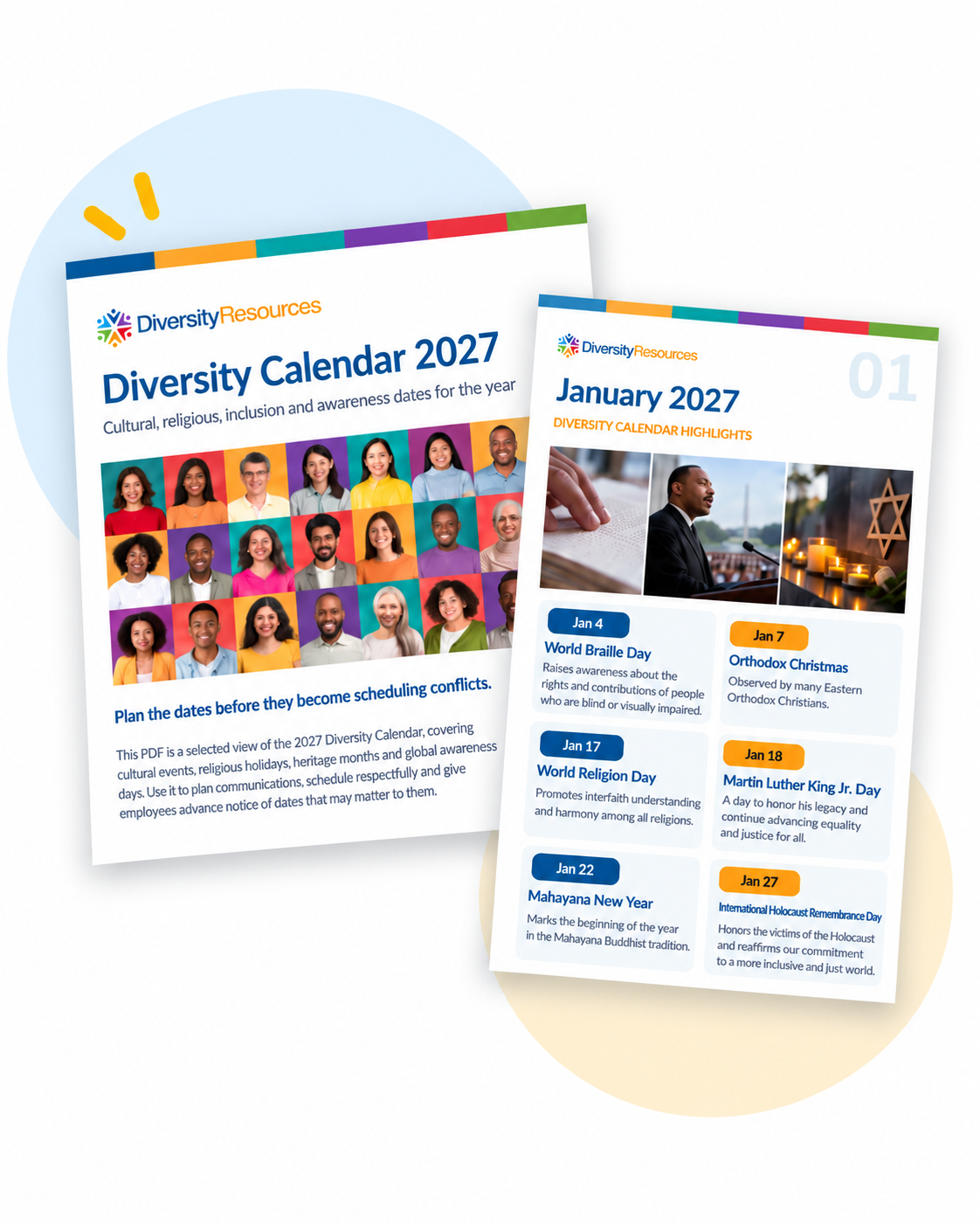

 12 months of selected dates
 Cultural + religious observances
 Heritage + awareness events