


Employee resource group best practices are not about adding another meeting to the calendar. They are about giving employees a clear, supported way to connect, share experiences, build community, and help the organization better understand what people need at work.
When ERGs are effective, they do more than host events. They support belonging, career growth, leadership development, employee engagement, and better decision making. They give employees a voice, but they also need structure, resources, and real support from the organization.
A strong ERG should feel useful, not symbolic. People should understand why it exists, how to get involved, and what kind of impact it is trying to create.
What Makes Employee Resource Group Best Practices Effective
Effective ERGs usually have three things in common: purpose, trust, and support.
Purpose means the group has a clear reason for existing. For example, an ERG for women in leadership might focus on mentorship, career development, and helping the company identify barriers to advancement. A disability inclusion ERG might focus on accessibility, inclusive meetings, and workplace policies that affect employees with disabilities.
Trust means employees feel safe participating. If people worry that their comments will be judged, ignored, or used against them, the ERG will not grow. Employees need to know the group is a respectful space where honest conversations can happen.
Support means the organization does not leave ERG leaders to carry everything alone. ERGs may be employee led, but they should not be employee abandoned. They need time, budget, communication help, and access to leaders who are willing to listen.
Many organizations look at employee resource group examples and best practices to understand how ERGs can support mentoring, connection, development, and workplace belonging in practical ways.
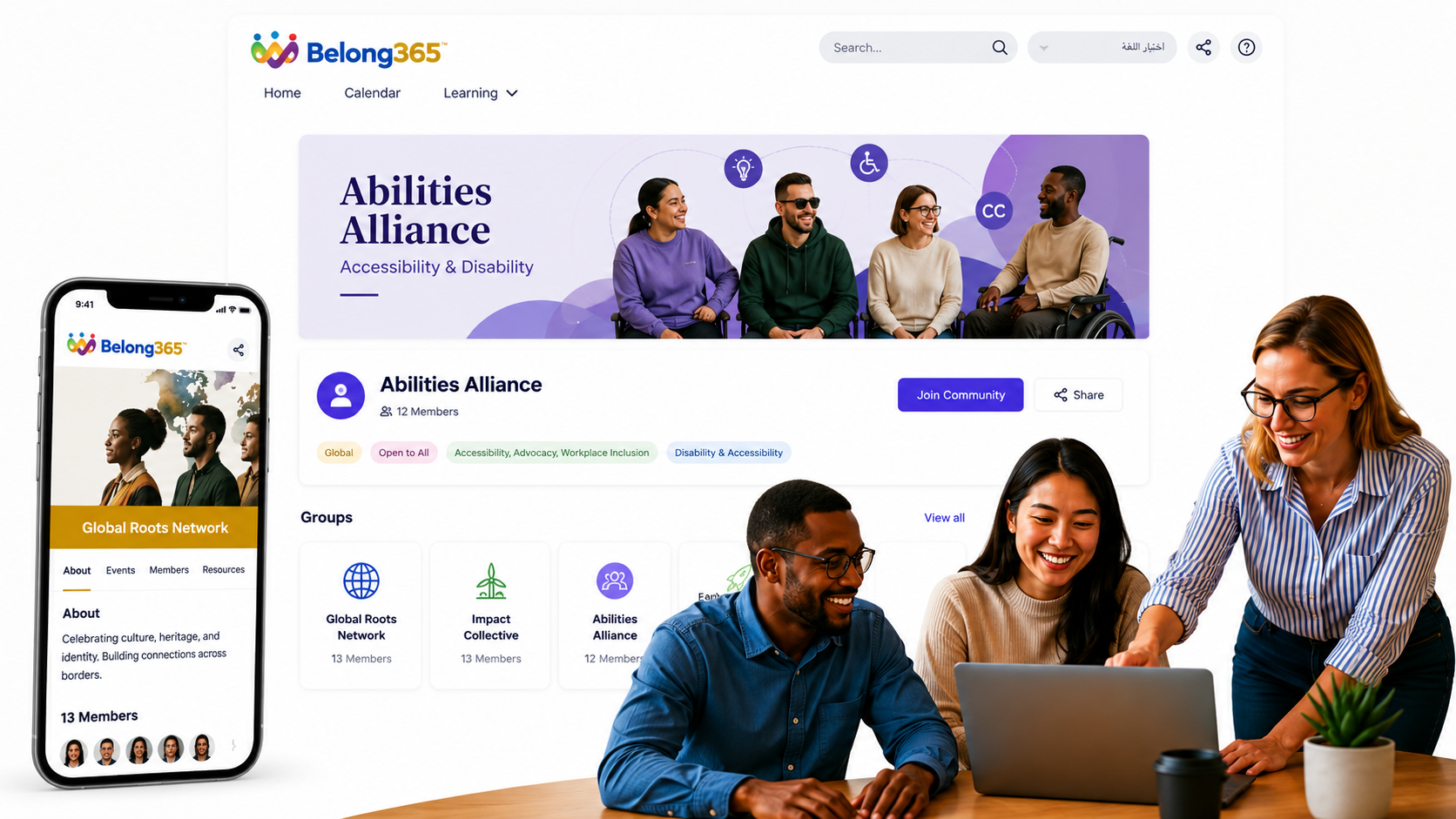
Employee Resource Group Best Practices for Structure
Good structure helps an ERG stay focused and sustainable. Without structure, the same few people often end up doing all the work, and the group can lose momentum quickly.
Start with a simple charter. It should explain the purpose of the ERG, who it supports, its goals for the year, how often it meets, who leads the group, and what kind of support it needs from the company.
A clear leadership structure also helps. Instead of having one person manage everything, create shared roles. For example, one person can lead programming, another can handle communication, another can welcome new members, and another can manage feedback or reporting.
An executive sponsor can also be valuable, but the role needs to be clear. The sponsor should not control the ERG. Their role is to advocate, remove barriers, connect the group with leadership, and help the company understand what the ERG is hearing from employees.
For example, if an ERG raises concerns about career growth, the sponsor can help bring those themes to HR or senior leadership in a constructive way.
Employee Resource Group Best Practices for Better Participation
Participation should feel open, not forced. Employees should never feel pushed to join an ERG to prove they care about inclusion or to represent a whole community.
The best way to increase participation is to make the ERG useful and easy to access.
Offer different ways to take part. Some employees may want to attend events. Others may prefer to read shared resources, join a mentoring circle, help plan one activity, or quietly follow updates. Not everyone wants to speak in a group setting, and that should be respected.
Make invitations clear. If allies are welcome, explain what that means. Ally participation should be about listening, learning, and supporting, not taking over the conversation.
Managers can also help by making space for employees to attend ERG events when possible. But managers should not pressure employees to join or ask why they are not participating.
Useful programming can also increase engagement. Good examples include a panel on career growth for first generation professionals, a conversation about inclusive holiday planning, a mentoring session for early career employees, or a practical workshop on accessibility in hybrid meetings.
People are more likely to participate when the ERG feels relevant to their real work life.
Aligning ERGs With Business Goals
ERGs should not be treated as separate from the business. They can support real business goals while still protecting their community purpose.
This does not mean turning ERG members into unpaid consultants. It means recognizing that ERGs can offer valuable insight into employee experience, talent development, recruiting, retention, and workplace culture.
For example, if a company wants to improve retention among early career employees, a young professionals ERG may help identify common challenges, such as unclear career paths, limited mentorship, or lack of visibility.
If an organization wants to improve accessibility, a disability inclusion ERG may help review meeting practices, event planning, internal communication, and workplace tools.
If a company wants to strengthen leadership development, ERG leadership roles can give employees experience in planning, facilitation, communication, and strategy.
The key is balance. ERGs can support the business, but they should not be used only when the company needs a panel, a campaign, or quick feedback before a launch.
Employee Resource Group Best Practices for Avoiding Common Mistakes
One of the biggest ERG mistakes is expecting employees to lead important culture work without time, support, or recognition. ERG leadership takes effort. It should be acknowledged as meaningful work, not treated as a side task.
Another mistake is launching too many ERGs too quickly. It is better to build a few strong groups with proper support than to create many groups that struggle to stay active.
Companies also make mistakes when they overcontrol ERGs. If every topic needs approval and every event has to sound perfectly polished, employees may stop trusting the group.
Another common issue is only paying attention to ERGs during heritage months. Recognition months can be meaningful, but ERGs should not only be visible when the company needs a calendar moment.
A practical tip is to check in with ERG leaders at least twice a year. Ask what is working, what feels heavy, what support is missing, and what the group needs to keep going. Then take action on what they share.
Employee Resource Group Best Practices for Measuring Impact
Measuring ERG impact does not mean reducing everything to numbers. Some of the most important value comes from connection, trust, and honest conversation. Still, measurement helps show whether the ERG is supported and making progress.
Useful metrics can include membership growth, event attendance, repeat participation, mentoring matches, leadership opportunities, and employee engagement survey results related to belonging.
Qualitative feedback matters too. ERGs can collect stories, themes from listening sessions, member feedback, and examples of workplace improvements influenced by the group.
For example, an ERG might report that it hosted four events, launched a mentoring circle, helped improve accessibility guidelines, and received feedback from members saying they felt more connected across departments.
The goal is not to prove that every ERG activity creates immediate financial return. The goal is to understand whether the group is helping employees feel connected, supported, and heard.
How a Belonging Calendar or Centralized Hub Can Support ERGs
ERG leaders often spend a lot of time planning, organizing, and communicating. A belonging calendar or centralized hub can make that easier without replacing the human work of the ERG.
A belonging calendar can help ERGs plan around cultural dates, awareness months, religious observances, and learning moments throughout the year. This gives leaders more time to prepare thoughtful programming instead of rushing at the last minute.
A centralized hub can give employees one place to find ERG events, discussion guides, learning resources, meeting notes, and ways to get involved. This is especially helpful when information is usually scattered across emails, chats, and shared folders.
For example, if an ERG is planning a session for National Indigenous Peoples Day in Canada, a shared hub could include background information, event details, suggested discussion questions, and related learning resources. The ERG still leads the conversation, but the tool helps keep everything organized and easier to access.
The best tools support ERGs quietly. They help with planning, visibility, and consistency without turning ERG work into a checklist.
Final Thoughts
Employee resource group best practices come down to clarity, trust, structure, support, and follow through. ERGs work best when employees have room to lead, leaders are willing to listen, and the organization treats ERG work as part of building a stronger workplace. When done well, ERGs help people connect, grow, and feel a stronger sense of belonging at work.