Facebook Pixel

Target DEI Boycott: Impact on Business

Target began 2025 facing an unexpected reality. After years of positioning itself as a visible corporate champion of inclusion, the company abruptly ended its DEI initiatives early in the year. What followed was a prolonged Target DEI boycott that reshaped public sentiment, internal culture, and financial stability.

Early Target DEI fallout had already highlighted structural risks and widening value gaps inside the company. And by late 2025, Target announced approximately 1,800 corporate layoffs driven by market pressures and the compounded reputational damage fueled by the Target DEI boycott.

How the Target DEI Boycott Triggered a Sustained Consumer Backlash

When Target eliminated its DEI programs, leadership expected the change to relieve political pressure. Instead, the move created a vacuum of clarity about what the decision meant for employees, customers, and long-standing community partners. That confusion helped fuel the Target DEI boycott, which quickly became one of the most visible and enduring consumer responses of the year.

External reporting amplified the fallout. A widely circulated Forbes investigation detailed how Target’s DEI pullback contributed to leadership instability and more than $12 billion in investor losses.

For many business leaders, that report became a defining warning about how sudden DEI reversals carry long-term strategic risk.

How the Target DEI Boycott Shifted Customer Trust

Target built its brand around accessible design, affordability, and community connection. But the retreat from inclusion fractured customer trust.

  • For many shoppers, the Target DEI boycott symbolized a break in alignment between the company and its values-driven audience
  • Gen Z, Millennials, and diverse households felt the shift most strongly
  • Social media amplified narratives of mistrust, accelerating the reputation damage

This wasn’t a minor change in purchase behavior. It was a decline in full-basket shopping, which is essential for big-box retail profitability.

The Financial Consequences of the Target DEI Boycott

Target was already navigating a challenging economic landscape. But the Target DEI boycott added reputational drag that intensified every financial pressure.

  • Analysts connected revenue softness to demographic groups most affected by DEI decisions.
  • Investors grew concerned about the company’s long-term strategy and cultural positioning.
  • The eventual layoffs approximately 1,800 employees reflected the compounding effect of operational and reputational instability.

Shareholders closely tracked these outcomes throughout 2025, and many questioned whether leadership underestimated the cost of retreating from inclusion.

Internal Culture and Employee Morale: The Silent Fallout

Inside Target, the removal of DEI programs had immediate cultural consequences.

  • Employees reported losing psychological safety and confidence in leadership
  • ERGs, mentorship programs, and development pathways weakened
  • Turnover rose, especially among underrepresented groups and high-performing talent
  • Operational consistency across stores suffered as engagement dropped

The Target DEI boycott highlighted deeper internal cracks that were already forming.

What Leaders Can Learn from Target’s Fallout

Target’s experience offers several strategic lessons:

1. Abrupt DEI changes require clear communication.
Silence creates distrust and confusion.

2. Customers reward value alignment.
Brands that shift values without explanation risk losing their most loyal consumers.

3. DEI supports internal culture and retention.
Removing it leads to disengagement one of the most expensive operational risks.

4. Investors prefer stability, not sudden reversals.
DEI pullbacks signal deeper issues in leadership decision-making.

5. Recovery requires transparency and renewed commitment.
Trust can be rebuilt, but not without consistent, long-term action.

The Target DEI boycott stands as one of the clearest examples of how inclusion decisions directly affect financial performance, workforce stability, and long-term brand trust. As companies head into 2026, Target’s year of fallout demonstrates that retreating from DEI carries measurable economic and operational costs not just cultural ones.


Multicultural Calendar 2026

A multicultural calendar is more than a list of dates. It’s a way to recognize and honor the diversity of our world. This resource helps you stay informed about key cultural, religious, and identity-based observances, making it easier to create inclusive environments at work or educational institution.

What Makes a Multicultural Calendar Essential?

A multicultural calendar ensures you’re aware of important days across various traditions. By including these dates in your planning, you can:

  • Show respect for cultural and religious practices
  • Plan events that avoid conflicts with significant observances
  • Create opportunities for learning and celebrating diversity

How to Use a Multicultural Calendar

Recognize Diversity: Include observances in your organization’s announcements or newsletters to show you value inclusion.

Plan Thoughtfully: Avoid scheduling major events on holidays that might prevent participation from certain groups.

Educate and Engage: Use these observances as opportunities to educate your team or community about different traditions.

Key Dates to Note

Some events, such as awareness months, recur annually and are easy to include in your planning:

Martin Luther King Jr. Day (Third Monday in January)
Black History Month (February)
International Women’s Day (March 8)
World Autism Acceptance Day (April 2)
Asian American and Pacific Islander Heritage Month (May)
Pride Month (June)
National Disability Independence Day (July 26)
Women’s Equality Day (August 26)
Hispanic Heritage Month (September)
Indigenous Peoples’ Day (Second Monday in October)
Native American Heritage Month (November)
International Day of Persons with Disabilities (December 3)

However, many important dates vary each year, including Ramadan, Yom Kippur, and Diwali. That’s why relying on a resource that updates regularly can keep you informed.

Multicultural Calendar in Action

Employers can use a multicultural calendar to:

  • Offer flexible scheduling around religious holidays
  • Highlight cultural observances in internal communications
  • Foster a workplace culture that celebrates inclusivity year-round
  • Teach about different cultures and traditions
  • Create inclusive activities tied to cultural celebrations

Why It Matters

Using a multicultural calendar demonstrates that you value diversity and inclusion. It’s a simple yet impactful way to ensure everyone feels seen, respected, and included. Celebrate diversity every day with the Multicultural Calendar.

3 Difficult Conversations at Work That Managers Avoid

If there’s one skill that separates decent managers from truly trusted leaders, it’s how they handle the difficult conversations at work. The ones that make your stomach drop a little. The ones that could go sideways if you say the wrong thing or worse, if you say nothing at all.

But avoidance is quiet erosion. When leaders sidestep hard truths, teams notice. Over time, silence becomes a message of its own one that says comfort matters more than honesty, and harmony more than growth.

Avoiding these moments doesn’t just affect culture. It also impacts performance, engagement, and retention.

Let’s look at three difficult conversations at work that many managers avoid and how facing them with empathy and clarity can build trust faster than any policy or training.

1. Performance and Accountability: One of the Most Common Difficult Conversations at Work

No one likes telling someone they’re not meeting expectations. It’s awkward, emotional, and easy to put off. But delaying it only magnifies the damage.

When feedback is withheld, employees fill in the blanks themselves: “Maybe they don’t notice.” or “Maybe I’m doing fine.” Then, when a performance issue finally explodes, it feels unfair and blindsiding.

Giving feedback is one of the most common difficult conversations at work managers face. The key isn’t to make it painless but to make it purposeful. Start by separating the person from the problem. “I’ve noticed deadlines slipping and want to understand what’s getting in the way,” lands very differently from “You’re falling behind.”

Specific examples, curiosity, and a shared plan forward turn what could be a hit to morale into an investment in someone’s growth. Good managers don’t sugarcoat; they humanize. They remind people that accountability isn’t punishment; it’s care in action.

2. Behavior and Bias: When Inclusion Gets Uncomfortable

Few conversations are trickier than addressing someone’s comment or behavior that crossed a line. It’s tempting to hope it blows over. But silence, in these moments, speaks louder than any words.

Whether it’s a joke that made someone uncomfortable or an offhand remark about gender, race, or culture, brushing it aside tells your team that belonging is conditional. And that’s how trust fractures.

This kind of difficult conversation at work determines whether inclusion is real or just talked about. Address it directly, but with humanity. “Hey, I wanted to talk about what was said in the meeting. It might not have been your intention, but it landed in a way that excluded others.”

You don’t need to have all the right vocabulary. You just need to care enough to call people in, not out. When leaders handle bias with empathy and courage, they show that respect isn’t just a value on the wall but a living expectation.

3. Belonging and Burnout: A Difficult Conversation Managers Can’t Avoid

Every manager can sense when someone’s checked out. The spark’s gone. They’re quieter, less engaged, maybe even resentful. But asking why feels intrusive. So we skirt around it “How’s everything going?” hoping they’ll open up. Most don’t.

Checking in on disengaged employees is another difficult conversation at work many leaders postpone. But here’s the truth: checking in on someone’s well-being isn’t overstepping; it’s leadership. Saying, “I’ve noticed you seem a bit distant lately, and I just want to make sure you’re okay,” tells them they’re seen as a person, not a performer.

When people feel safe to be honest, burnout becomes something to navigate, not hide. And belonging becomes a lived experience. That’s the foundation of what researchers call psychological safety, a culture where people trust that speaking up or being vulnerable won’t cost them their job, dignity, or reputation.

The Real Cost of Avoidance

Avoiding difficult conversations at work might protect short-term comfort, but it corrodes long-term culture. People stop trusting that leaders will speak up when it counts. They stop bringing their full selves to work. They stop believing the talk about inclusion, feedback, and care.

The best leaders know that discomfort is part of the job. Not because they enjoy confrontation, but because they care enough to have it.

Empathy doesn’t mean avoiding hard truths it means delivering them with heart.
And when that happens, difficult conversations at work stop being moments of dread and start becoming moments of growth.

Target DEI Fallout: How Value Gaps Cost Billions

Target’s rollback of diversity, equity, and inclusion (DEI) efforts continues to reveal hard business lessons about leadership accountability, investor confidence, and consumer trust. The story isn’t about politics; it’s about performance, brand integrity, and the measurable cost of inconsistency.

As explored in DEI Backlash or Commitment: What Costco and Target Reveal, the contrast between Costco and Target shows how consistency in values strengthens loyalty, while retreating from them erodes it.

Leadership Consequences

In August 2025, Target announced that long-time CEO Brian Cornell will step down in February 2026, transitioning to Executive Chair, with Michael Fiddelke set to succeed him.

This leadership change is more than routine succession. It reflects accountability for a series of strategic missteps, including reputational decline following the DEI rollback.

Boards are now signaling that values alignment is part of leadership performance. Cornell’s transition highlights how modern CEOs are judged not only by profits, but by how authentically their companies uphold their stated purpose.

Target DEI Investor Fallout and Market Impact

The financial damage is undeniable. Target’s market value has dropped 65%, representing more than $20 billion in shareholder losses and about $12 billion directly tied to backlash around DEI decisions.

This erosion didn’t come from operations alone. Costco’s steady commitment to inclusion built investor trust, while Target’s inconsistency sent mixed signals that markets quickly translated into risk.

The Target DEI fallout shows that markets no longer separate social credibility from financial performance. They value consistency as a form of stability.

How DEI Decisions Affected Consumer Trust

The biggest hit came from Target’s customers. According to Investopedia, the retailer has faced months of declining foot traffic, ongoing boycotts, and sales softness since scaling back DEI. Its market capitalization fell from $129 billion in 2021 to roughly $41 billion by late 2025, proving how directly consumer trust shapes financial results.

Consumers once viewed Target as a brand that “saw them.” Reversing that perception fractured loyalty not because of politics, but because of inconsistency between message and action.

This consumer shift demonstrates how Target DEI choices directly influenced everyday purchasing behavior.

Legal and Reputational Risks from the Rollback

The Target DEI backlash has extended into legal and governance arenas. The Riviera Beach Police Pension Fund filed a class-action lawsuit accusing Target of misleading investors about the financial risks tied to its diversity decisions. Meanwhile, shareholder activists are pushing for greater board independence as Cornell transitions to Executive Chair.

These developments make one point clear: DEI decisions are now a governance issue. When inclusion is tied to brand promise, stepping back becomes a matter of fiduciary and reputational risk a lesson the Target DEI fallout highlights for all large corporations.

Rolling Back vs. Abandoning Values in the Target DEI Strategy

There’s a critical difference between adjusting DEI strategies and abandoning them altogether. The first reflects evolution; the second signals contradiction.

Target’s actions have been perceived as abandonment. In contrast, Costco remained consistent in its commitments earning trust across employees, investors, and consumers alike. The contrast illustrates how walking away from declared values creates confusion and long-term risk.

This aspect of the Target DEI strategy underscores how corporate values must be operationally and publicly aligned to maintain stakeholder confidence.

The Trillion-Dollar Diversity Opportunity

As Forbes described, diversity remains a “trillion-dollar blind spot.” Inclusive markets are growth opportunities. The Target DEI retreat didn’t just harm brand reputation; it narrowed its reach to the diverse consumer segments driving future market expansion.

Companies that maintain long-term inclusion strategies, like Costco, show that stability, trust, and purpose coherence are not just ethical they’re profitable.

Strategic Takeaways from the Target DEI Fallout

1. Leadership accountability is expanding
Executives are now judged by how well they sustain alignment between purpose, performance, and trust.

2. Investors price in purpose
Social credibility directly affects share value and perceived stability.

3. Consumers expect coherence
Consistency between marketing and action builds loyalty faster than discounts ever could.

4. DEI is business infrastructure
The Target DEI fallout proves that walking away from inclusion isn’t neutral it’s a measurable risk with long-term impact.

The Real Cost of the Target DEI Retreat

The Target DEI episode proves that retreating from inclusion carries real financial, reputational, and leadership consequences. In today’s business landscape, consistency between purpose and practice isn’t idealism it’s smart economics.

Visible Inclusion: San Antonio Spurs Keep Inclusion in the Game

In a time when many organizations are quietly scaling back their DEI initiatives, the San Antonio Spurs are taking the opposite approach. They’re keeping inclusion visible, center court. Through ongoing cultural theme nights Filipino Night, Hispanic Heritage Night, Pride Night, and Black Heritage Night the Spurs continue to send a clear message: inclusion isn’t temporary. It’s part of their brand, their identity, and their connection to the community.

The Power of Visible Inclusion in Culture and Sports

There’s been growing debate about whether symbolic gestures like themed events, pride flags, or cultural celebrations still make a real difference. But visible inclusion continues to matter. Public recognition reminds people that they belong, that their culture and identity are valued.

When inclusion becomes invisible, when organizations “play it safe” and avoid public acknowledgment, people notice. The silence can feel like absence. The Spurs understand that inclusion isn’t just a statement it’s a visible commitment that people can experience and rally around.

How the Spurs Align Brand and Culture Through Inclusion

Public inclusion efforts like theme nights are not just PR tactics. When done well, they reinforce internal values and strengthen trust with employees and the wider community.

As Diversity Resources highlighted in Corporate Sponsorship DEI: Lessons from Indy Pride, organizations that align their external sponsorships and events with authentic internal practices create more meaningful impact. When the outside reflects the inside, visible inclusion becomes more than a marketing message it becomes a living part of the organization’s culture.

The Spurs are following that same playbook. Their events aren’t just celebrations; they’re expressions of who they are, both on and off the court.

Keeping Visible Inclusion Alive When Others Go Quiet

Many organizations have recently toned down visible DEI work out of fear of controversy. But when inclusion retreats from view, so does trust. Visible inclusion keeps accountability alive. It reminds everyone employees, fans, and partners that inclusion isn’t a trend to follow; it’s a value to uphold.

The Spurs’ decision to keep inclusion front and center shows the power of standing firm in identity, even when public conversations around DEI get complicated.

Leadership Lessons That Strengthen Visible Inclusion

For leaders, communicators, and DEI teams, the Spurs offer a few valuable lessons:

  • Be intentional. Visibility should never be performative. Every event or campaign should connect directly to your organization’s purpose and community.
  • Prepare for pushback. Inclusion work will attract differing opinions. Be clear about why it matters to your brand and stand by it.
  • Keep it human. Focus on belonging, not buzzwords. Tell stories. Celebrate people.
  • Link the external to the internal. Every public moment should have a private mirror workshops, recognition, dialogue, and policy. That’s how visible inclusion translates into change.

Keeping Inclusion in the Game

The San Antonio Spurs aren’t just hosting theme nights they’re showing the world what visible inclusion looks like in action. Their message is simple but powerful: when you make belonging visible, you make it real.

For organizations everywhere, the takeaway is clear: don’t let inclusion fade into the background. Keep it seen, felt, and lived on every team, in every community, and yes, even on the court.

Psychological Safety at Work: The ROI of Building Trust

When leaders talk about performance, they often focus on strategy, execution, and technology. Yet one of the most powerful performance drivers is less tangible: psychological safety at work. It’s the belief that employees can voice ideas, concerns, or mistakes without fear of embarrassment or retaliation. Far from being a “soft” skill, psychological safety is increasingly recognized as a measurable lever for business results.

What Psychological Safety Means in the Workplace

Psychological safety creates an environment where people feel respected and supported, even when they take interpersonal risks. This doesn’t mean avoiding conflict or sugarcoating feedback it means building trust so employees know their contributions will be heard.

In practice, this looks like team members raising process improvements without hesitation, employees asking clarifying questions instead of staying silent, and managers encouraging diverse viewpoints rather than defaulting to consensus.

The Link Between Psychological Safety and Performance

The research is clear: teams with higher psychological safety consistently outperform those without it. Google’s Project Aristotle found that psychological safety was the single most important factor driving effective teams.

More recent studies reinforce this:

  • Teams with strong psychological safety see 27% higher productivity
  • They experience significantly lower turnover, as employees are more likely to stay in environments where their voices matter
  • Innovation rates climb, since employees feel free to experiment and share bold ideas without fear of failure

The takeaway? When employees feel safe to speak up, organizations don’t just retain talent, they unlock performance gains that translate directly to the bottom line. Fear in the workplace, however, undermines this progress. The article Fear at Work: 5 Ways to Support Your Employees highlights practical steps leaders can take to reduce fear and increase trust.

ROI Examples Leaders Can’t Ignore

Case studies across industries prove that psychological safety at work directly influences measurable business outcomes:

  • Productivity: A tech company study showed psychologically safe teams completed projects faster and with fewer errors, saving millions in rework
  • Engagement: Gallup data links psychological safety to higher engagement scores, which correlate with reduced absenteeism and stronger customer loyalty
  • Retention: Lower turnover in psychologically safe teams avoids costly recruitment and onboarding cycles, often representing hundreds of thousands of dollars in savings annually

Organizations that invest in psychological safety at work not only boost productivity but also reduce costs tied to turnover and disengagement. These outcomes aren’t abstract they are financial, measurable, and replicable.

How Leaders Can Embed Psychological Safety into Culture

To make psychological safety at work part of the culture, leaders must set the tone from the top. Building this kind of trust starts with consistent behaviors and clear expectations:

  • Model vulnerability: Admit mistakes and show that learning is valued over perfection
  • Encourage all voices: Proactively invite input, especially from quieter team members
  • Respond constructively: Reward candor with curiosity, not criticism
  • Train managers: Equip leaders with skills to facilitate inclusive, respectful discussions

Building psychological safety at work is an ongoing leadership practice that must be modeled and reinforced consistently.

A Strategic Investment in Performance and Talent

Too often, psychological safety is dismissed as a “soft skill.” The evidence proves otherwise. High-performing organizations recognize that trust is not just nice to have it is a core business asset.

When organizations frame psychological safety at work as a business strategy, they see lasting results in both performance and retention. Executives who champion this approach treat it as a strategic asset rather than a soft skill. For HR leaders and managers, the business case is clear: investing in environments where employees feel safe to contribute pays measurable dividends in productivity, retention, and innovation. By making psychological safety part of the culture, leaders are investing in the resilience and long-term success of their organizations.

Portland State Defies the Trend and Adds DEI Leadership

Across the United States, universities and organizations are pulling back on diversity, equity, and inclusion (DEI) programs in response to political pressure and shifting budgets. Reports show that DEI roles are disappearing and the risks are mounting. Yet, in a moment when many are retreating, DEI leadership at Portland State University has taken the opposite path. By appointing a new Chief Diversity Officer, PSU is sending a clear message: DEI leadership isn’t a trend to abandon when challenged as it’s a cornerstone of resilient, future-focused institutions.

Why DEI Leadership at Portland State University Matters

DEI leadership roles are disappearing at an alarming rate in higher education and beyond. According to national reports, dozens of universities have cut staff, reduced budgets, or even dissolved DEI offices altogether. Against this backdrop, PSU’s decision to create a Chief Diversity Officer post is not just unusual; it’s courageous.

By elevating a Chief Diversity Officer, PSU is affirming that inclusion isn’t a temporary initiative but a long-term commitment to the health of its community. It positions the university to better support underrepresented students and faculty, strengthen cultural competency across campus, and build an environment where all voices are heard.

A Contrast to National Cutbacks

At a time when some institutions see DEI as a liability, PSU views it as an asset. This contrast highlights two different paths leaders can take:

  • Reactive organizations scale back under pressure, risking loss of trust, credibility, and belonging
  • Proactive organizations, like PSU, double down on DEI leadership to signal that  inclusion is central to their mission and long-term sustainability

Amid these shifts, DEI leadership at Portland State University demonstrates that inclusion goes beyond being just a policy. This makes it clear that DEI leadership at Portland State University is not just symbolic but a core driver of long-term resilience. Strong DEI leadership Portland State underscores how values can drive strategy even when others retreat.

Lessons from DEI Leadership at Portland State

For education leaders, HR professionals, and corporate executives, DEI leadership at Portland State University offers three key takeaways:

  1. DEI leadership is a strategic investment. It strengthens culture, improves retention, and builds organizational reputation in ways that short-term cuts cannot.
  2. Leadership means setting the tone. When an institution appoints a Chief Diversity Officer, it communicates priorities not just internally, but to the wider community.
  3. Courage attracts commitment. Employees and students are more likely to give their best when they see their institution stand firm in its values.

Strong DEI leadership Portland State provides a roadmap for universities, nonprofits, and corporations seeking to balance values with external pressures. Courageous choices inspire loyalty, while retreat often leaves organizations vulnerable.

Looking Ahead

DEI leadership at Portland State University during a time of national retrenchment is more than a headline. It shows that even in challenging times, organizations can choose to lead with conviction rather than compromise.

For any institution wondering how to balance external pressures with internal values, PSU’s move is a reminder: resilience and long-term success are built not by cutting back, but by reinforcing the foundations of belonging. DEI leadership is not optional.

DEI Risk Management: 83% of C-Suite Leaders Say It’s Essential

For years, many organizations framed diversity, equity, and inclusion (DEI) as a “nice-to-have.” Leaders would invest in it during strong economic cycles and cut back during downturns. But new data shows that this perspective is not only outdated, it’s risky. A joint report from Catalyst and the NYU Meltzer Center for Diversity, Inclusion, and Belonging reveals that leaders now see DEI as a core element of DEI risk management and business resilience.

DEI Risk Management as an Executive Imperative

According to the study, 83% of C-suite leaders and 88% of legal leaders believe that maintaining or expanding DEI initiatives is essential to mitigating legal and reputational risk. This is a powerful signal. Executives are no longer treating DEI as a compliance checkbox or a branding exercise. Instead, they recognize it as a safeguard against lawsuits, public backlash, and stakeholder mistrust.

When organizations embed DEI risk management into governance and risk frameworks, they reduce the likelihood of costly crises. They also strengthen their ability to respond quickly when challenges arise.

DEI Risk Management and Business Performance

The same study found that 77% of executives directly link DEI to improved financial performance. Strong inclusive risk management practices foster better decision-making. They also broaden talent pipelines and help retain engaged employees. A diverse, trusted workforce is better positioned to innovate, anticipate risks, and serve a global customer base.

And retention matters. 76% of employees overall and an even higher 86% of Gen Z say they are more likely to stay with an employer that actively supports DEI. In fact, research shows that scaling back DEI directly undermines talent retention and increases organizational risk, making DEI a vital part of workforce strategy.

DEI Risk Management and Corporate Resilience

The business case is clear: DEI is no longer an optional cultural initiative. It is a structural necessity for business continuity. When companies cut DEI programs, they risk reputational harm and weaken employee trust. These two factors are difficult to rebuild once lost.

By contrast, organizations that embed inclusive DEI practices into their risk strategy are more resilient. Moreover, they are prepared to weather social, legal, and market shifts. They achieve this resilience by building credibility, transparency, and equity into the fabric of how they operate.

Practical Takeaways for DEI and HR Leaders

For DEI and HR professionals, this shift represents an opportunity to reframe internal conversations:

  • Position DEI risk management as essential, not discretionary. Use the Catalyst + NYU Meltzer data to show that executives and legal leaders already view DEI as integral to resilience.
  • Integrate DEI into governance frameworks. Partner with compliance and legal teams to embed equity into codes of conduct, risk assessments, and board reporting.
  • Link DEI risk management to retention and engagement metrics. Show how it reduces turnover costs and builds a talent advantage, especially with younger generations.
  • Communicate DEI as value creation. Move beyond moral or reputational arguments. Emphasize the role DEI plays in financial performance and long-term stability.

The Path Forward

The message is clear: DEI risk management is an indispensable part of resilience and corporate continuity. Executives know that neglecting DEI leaves organizations vulnerable. As a result, investing in it strengthens trust, protects reputation, and enhances long-term performance.

For leaders tasked with steering their organizations through uncertainty, managing risk through DEI is not optional. It’s a strategic necessity.

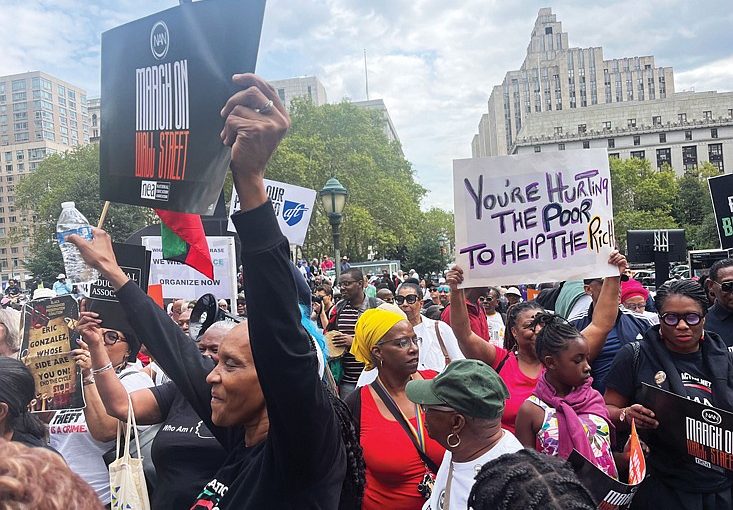
What the March on Wall Street Protest Means for Corporate DEI

When Rev. Al Sharpton led the recent March on Wall Street protest, timed to honor the anniversary of the 1963 March on Washington, the message was unmistakable. Community, labor, and civic leaders stood shoulder-to-shoulder, urging corporate America to resist growing federal and state efforts to dismantle DEI programs. As faith and civic leaders stressed during the march, this is not a moment to retreat it is a call for companies to meet pressure with principled leadership.

For executives, communicators, and DEI strategists, the Wall Street protest was not just another news cycle. It was a reminder that public activism remains a vital check on corporate behavior and that silence in times like these is itself a decision.

Why the Wall Street Protest Matters for Business Leaders

The protest highlighted a truth that many in corporate suites already know but sometimes hesitate to say aloud: companies are not neutral players in the fight for equity. Employees, customers, and investors are watching. They expect more than polished statements; they expect commitments lived out loud.

Just as the 1963 march forced America to confront the gap between its ideals and its realities, the Wall Street protest asked companies to look in the mirror. Are you standing firm on inclusion or quietly retreating as DEI becomes politicized?

Public Pressure After the Wall Street Protest

Activism and corporate responsibility are more intertwined than ever. Movements in the streets can and do shape boardroom decisions. Consider:

  • Reputation Risk: Employees and customers increasingly link brand trust to values alignment. Backpedaling on DEI can trigger backlash that erodes loyalty.
  • Talent Competition: The most skilled workers, especially Gen Z and Millennials, gravitate toward organizations that model inclusion authentically.
  • Regulatory Signals: Even as federal efforts question DEI, states, municipalities, and global markets are leaning into inclusive practices. Companies that stay ahead build resilience.

The Wall Street protest signaled that activists are not backing down. Neither should corporate leaders.

A Playbook for Corporate DEI in Turbulent Times

So how should organizations respond not just defensively, but boldly? Here’s a practical playbook:

1. Reaffirm Your Commitment Publicly
Do not let silence imply retreat. Issue a clear statement of commitment tied to your company’s values and mission. Reference milestones and progress made, and outline what comes next.

2. Link Inclusion to Business Strategy
Frame DEI not as a compliance function, but as a growth driver. Show how inclusive teams fuel innovation, capture market share, and strengthen resilience in global markets.

3. Support Activism with Action: Lessons from the Wall Street Protest
Engage with movements like the Wall Street protest by aligning philanthropic giving, matching employee donations, or providing space for civic dialogue. Corporate responsibility is not about charity it’s about solidarity.

4. Equip Leaders with Language and Training
Executives and managers must be able to speak credibly about DEI, especially in polarized environments. This includes recognizing that rebranding DEI, as some companies attempt to do by changing the language to “belonging” or “culture,” is not enough if the underlying commitment is diluted. Language alone does not drive progress substance does.

5. Measure and Share Progress Transparently
Commitments without accountability ring hollow. Regularly publish DEI metrics, share case studies, and be honest about where progress is slow. Transparency builds trust.

Looking Ahead

The Wall Street protest was more than a symbolic march it was a call to action. For corporate America, the question is not whether DEI is under scrutiny; it’s whether leaders will stand tall when values are tested.

History shows us that silence is rarely remembered kindly. By affirming their commitments, companies can do more than weather the storm; they can help bend the arc toward justice. Now is the time to show that inclusion is not negotiable it’s non-optional.

Photo credit: Fiona André/RNS

Target DEI Retreat: Shopper Slowdown and Leadership Lessons

When Target recently announced the resignation of its CEO after a prolonged sales slump, the headlines told a deeper story than corporate turnover. The slowdown wasn’t just about market forces or inflationary pressures it was tied directly to the Target DEI retreat.

After the company scaled back its diversity, equity, and inclusion initiatives in response to political backlash, it sparked customer anger, protests, and boycotts. Even the daughter of one of Target’s co-founders publicly condemned the move as “a betrayal.” In its own earnings call, Target admitted the retreat damaged sales.

For executives, HR leaders, and DEI practitioners, Target’s experience highlights a stark reality: walking back on inclusion is not a neutral or “safe” strategy. In fact, it carries real financial, cultural, and brand image costs.

Why the Target DEI Retreat Hit Harder Than Others

Not every company that hedges on DEI faces the same level of backlash. So why did Target feel it so sharply? Three factors stand out:

1. A progressive customer base
Target’s shoppers, particularly in urban and suburban markets, are younger and more socially progressive than many of its competitors. Therefore, these customers don’t just expect inclusive messaging, they see it as part of the brand promise.

2. A long history of visible inclusion
From LGBTQ+ Pride campaigns to supplier diversity programs, Target built a brand image as one of the most inclusive major retailers. For years, the company positioned itself as a leader, not a follower. That meant any sign of retreat looked like backtracking on its DNA.

3. The perception of betrayal
Customers and employees weren’t just disappointed; they felt misled. Pulling back from DEI wasn’t seen as neutral. It was seen as abandoning values. As a result, once trust breaks, it’s far harder to repair than to maintain.

In the end, the Target DEI retreat didn’t just signal a policy shift. It changed how loyal shoppers and employees viewed the company’s identity.

The Business Risks of a Target DEI Retreat

The Target DEI retreat shows the risks leaders must weigh before scaling back inclusion efforts:

  • Sales declines and boycotts: Customers increasingly expect brands to align with their values. Instead, backtracking invites protest from both sides.
  • Employee disengagement: Workers, especially younger generations, want to feel included and supported. DEI retreat signals that belonging is negotiable.
  • Brand image damage: Once a company is seen as inconsistent or opportunistic, rebuilding trust with stakeholders takes years.

Pulling back on DEI can seriously hurt talent retention and weaken organizational culture.

Many analysts now see the Target DEI retreat as one of the most major corporate missteps of 2025, showing how brand identity and customer trust can unravel overnight.

What Leaders Should Do Instead

Instead of retreating, leaders should take steps to reframe and embed DEI into how their organizations operate:

  • Be consistent and transparent. If you adapt initiatives, explain why and reinforce the long-term commitment to inclusion. Silence creates suspicion.
  • Embed DEI into governance. Move beyond campaigns by linking DEI outcomes to board oversight, executive goals, and accountability structures.
  • Adapt the language, not the values. If political climates shift, leaders can recalibrate messaging without abandoning principles. Inclusion should be a constant.
  • Focus on belonging. Employees and customers alike respond to workplaces and brands that help people feel seen, safe, and respected.

Moreover, learning from the Target DEI retreat, leaders should understand that adapting language is acceptable, but abandoning inclusion is not.

The Target DEI retreat also shows how even slight backtracking can create outsized risks, from alienating employees to eroding community trust.

Organizations that learn from the Target DEI retreat can strengthen governance, adapt language, and keep inclusion embedded in strategy.

The Target DEI retreat is a cautionary tale for leaders everywhere. For organizations with inclusive legacies and progressive customer bases, the risks multiply: alienated employees, lost sales, and a damaged brand image. The Target DEI retreat proves that even trusted brands face steep costs when inclusion efforts are rolled back. Therefore, once you’ve built trust through inclusion, the only sustainable path is to honor it with consistency. Retreating doesn’t make the storm go away it often makes it worse.

Quiet DEI: S&P 500 DEI Oversight Is Actually Increasing

Quiet DEI is reshaping business today. For anyone tracking corporate disclosures, it might seem like DEI is fading. Mentions in S&P 500 filings dropped 68% in 2025 compared to 2024. But in reality, board-level oversight of DEI has risen from 72% in 2024 to 79% in 2025, according to a new report by The Conference Board and ESGAUGE.

That’s a powerful signal. Despite political pressure and shifts in public language, governance of diversity, equity, and inclusion is becoming more deeply embedded at the highest levels of corporate leadership.

Quiet DEI: From Words to Structures

The decline in public references to DEI reflects a shift in communication strategy. Some companies are choosing different terms or minimizing the use of the acronym to avoid politicization. But that doesn’t mean the work is disappearing. Instead, it is being reframed into something more durable.

This is quiet DEI in action: less about what companies say, more about the structures they build.  Changing the language doesn’t mean abandoning the work. It can actually help protect it by embedding it in broader conversations about culture, belonging, and business performance.

Why Oversight Matters

Board-level accountability elevates DEI from a programmatic effort to a matter of governance and resilience. When directors take explicit responsibility, the work becomes part of how companies manage risk and long-term strategy. That changes the types of questions leaders ask:

  • How does leadership diversity affect succession planning?
  • How do equity gaps influence retention and reputation risk?
  • How does inclusion support innovation, engagement, and customer trust?

By embedding oversight, organizations strengthen the durability of their DEI commitments, even if the terminology shifts.

The Opportunity for DEI Leaders

For DEI leaders, the rise of quiet DEI creates an opening to reframe their work. Instead of leaning on slogans or one-off campaigns, leaders can present DEI as:

  • Structural: rooted in governance systems, measurable goals, and accountability frameworks
  • Strategic: directly tied to risk management, talent development, and innovation
  • Resilient: capable of withstanding shifts in politics or culture because it’s tied to governance, not branding

For example, a mentoring program can be positioned as part of leadership pipeline development rather than only a DEI initiative. Reporting on pay equity gaps can be framed as risk disclosure. These approaches not only safeguard DEI but also strengthen credibility with employees, investors, and the public.

Building Trust Through Quiet DEI

Trust grows when employees see inclusion as more than a talking point it becomes a leadership responsibility. Quiet DEI is less about public statements and more about transparent governance, consistent accountability, and strategies that link belonging to business success.

As oversight rises at the board level, DEI leaders have an opportunity to show that the work is maturing, not vanishing. Quiet DEI is the next stage of progress: embedding inclusion into the very structures that make organizations resilient, adaptable, and human.

AI Bias: Why DEI Belongs in the AI Conversation

AI bias is shaping headlines again, as a major tech company recently appointed external “bias advisors” to oversee its AI systems after facing lawsuits and political pressure. On the surface, this might look like accountability. But the irony is clear: bias oversight can itself be biased if advisors are chosen for political optics instead of expertise.

Many organizations are racing to adopt AI without giving Diversity, Equity, and Inclusion (DEI) professionals a seat at the table. That’s shortsighted. Because AI systems reflect the data they’re trained on and the humans who build them they inevitably mirror existing inequities. Ignoring DEI expertise in AI governance risks automating discrimination rather than dismantling it.

For more context, see Inclusive AI Practices: Why AI Is Not Neutral, which shows why AI cannot be treated as objective and why DEI perspectives are essential.

Why AI Bias Oversight Needs DEI at the Center

AI bias doesn’t just come from faulty code. It arises from who shapes the questions, selects the training data, and validates outcomes. Oversight groups chosen for political safety over real expertise risk shielding the company’s reputation more than protecting fairness.

DEI leaders add what technical and legal advisors often miss: the lived realities of systemic inequities in recruiting, promotions, and workplace culture. Without them, organizations overlook blind spots that fuel biased results and unintentionally reinforce AI bias.

How to Ensure Oversight Teams Are Diverse and Credible

  • Build multidisciplinary teams. Include DEI experts alongside technologists, ethicists, and legal advisors
  • Audit who gets to advise. Ask: Does this oversight group reflect diverse racial, gender, and socioeconomic backgrounds or just political convenience?
  • Insist on transparency. Publish members’ qualifications and disclose how conflicts of interest are managed

Without diversity, even well-intentioned oversight teams can reinforce AI bias instead of correcting it.

Questions to Ask Vendors to Prevent AI Bias

If your organization is adopting AI in HR, recruitment, or workplace tools, don’t settle for vague answers. Ask:

  • Where does the training data come from? Does it represent different genders, ethnicities, and abilities?
  • How is fairness defined and measured and who decides the benchmarks?
  • What testing is done for disparate impact, especially in hiring and promotion scenarios?
  • How often is the AI retrained, and who validates updates?

The answers reveal whether vendors treat AI bias as a marketing buzzword or as a real responsibility.

Why DEI Perspectives Must Remain Central

Excluding DEI from AI governance is not just a technical flaw. It’s a reputational and legal risk. Courts, regulators, and employees are paying attention.

As AP News reports, political agendas are reshaping how “bias” in AI is defined, shifting the focus away from equity toward ideological battles. This is exactly why DEI professionals must remain at the center of AI governance.

Because at its core, AI bias is not only about machines. It reflects human choices, values, and power. And the people best equipped to identify and challenge those biases are the DEI professionals too often left out.

The appointment of politically aligned “bias advisors” should serve as a warning. If organizations want AI to enhance not erode equity, DEI must guide governance. Otherwise, attempts to fix AI bias risk becoming one more example of the very problem they claim to solve.

Sign In

Sign in to Diversity Resources