


Organizations have made meaningful progress on diversity over the past decade. Representation has improved across many industries and levels, and hiring practices now reach broader talent pools. Yet belonging in the workplace remains difficult to achieve. Employees can see more diversity around them and still feel overlooked, cautious, or disconnected. Diversity and belonging are related, but they are produced by different conditions. Representation changes who is present. Belonging depends on whether people feel trusted, understood, and valued once they arrive.
Why Belonging in the Workplace Doesn’t Follow Automatically from Diversity
Many organizations assume that stronger representation will naturally lead to stronger relationships. In practice, the connection is far less automatic. Research on workplace inclusion has shown that inclusion itself may still fall short of creating belonging.
People can work in the same building, attend the same meetings, and contribute to the same projects without developing trust. Proximity creates opportunities for contact, but it does not guarantee understanding. Employees may know who their colleagues are without knowing how those colleagues experience the workplace.
Belonging is shaped through repeated interactions. A person notices whether their ideas receive serious consideration, whether questions are welcomed, and whether mistakes are treated fairly. They also notice who receives informal support, who is invited into influential conversations, and whose perspective is treated as credible.
When those experiences are uneven, representation cannot close the gap. Belonging in the workplace grows through relationships, not headcount alone.
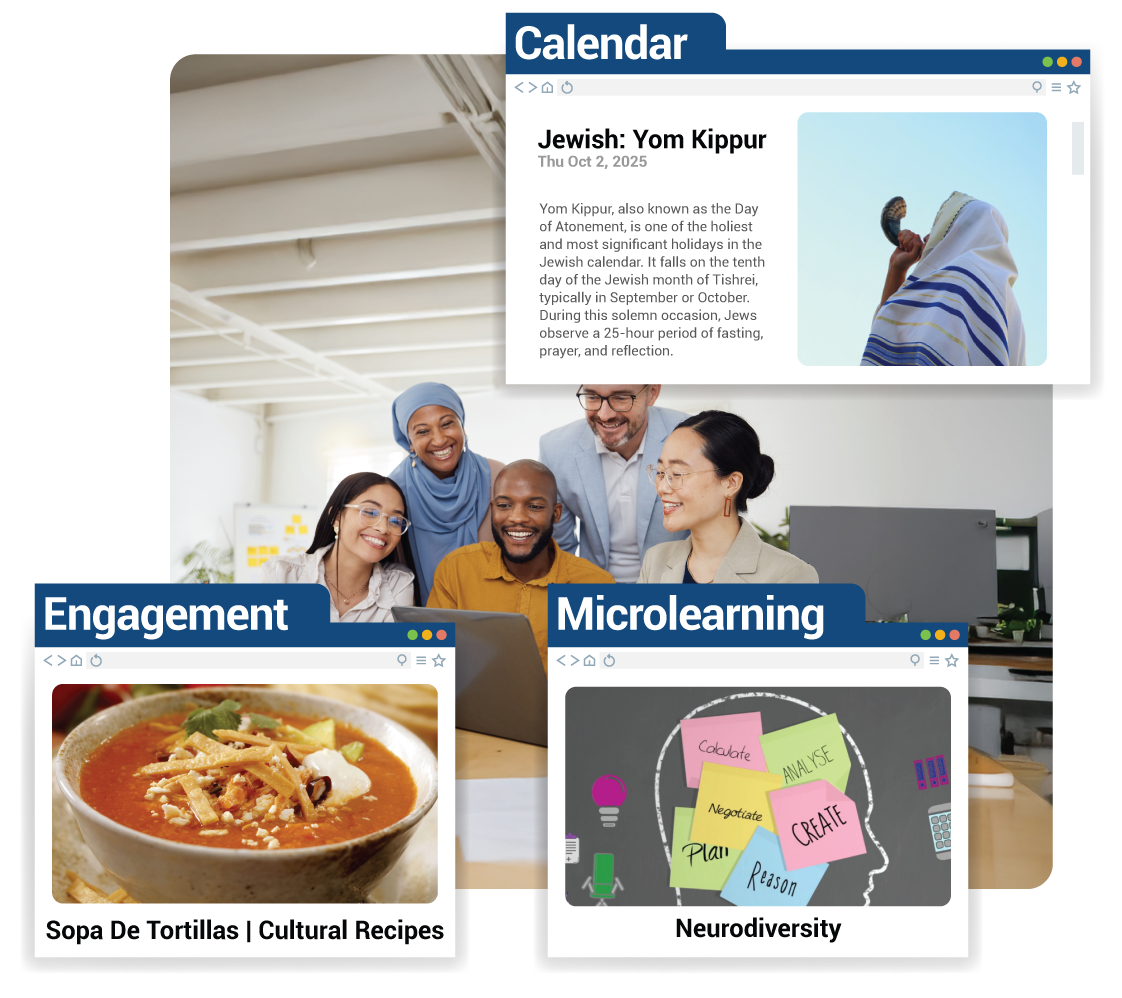
Representation Changes Who Is Present
Diversity strategies often focus on recruitment, promotion, and leadership representation. These are essential areas of work because access and opportunity remain uneven. Still, the employee experience does not end when a hiring target is met.
A more diverse workforce can expose unresolved cultural habits. Informal networks may still determine who receives information first. Managers may continue to rely on familiar communication styles when judging confidence or potential. Team norms may reward employees who already understand how influence works inside the organization.
This creates a difficult experience for employees who were invited in but still feel pressure to adapt before they can participate fully. They may be visible in workforce data while remaining peripheral in everyday decisions.
For belonging in the workplace to develop, organizations must examine what happens after representation improves. The key question is whether people are able to participate without constantly proving that they fit.
The Structures Most Organizations Are Missing
Most large organizations already have inclusion infrastructure. Employee resource groups connect people with shared experiences. Learning programs build awareness. Cultural campaigns create moments of recognition. Leadership commitments establish expectations.
Each effort has value. Understanding the distinction between inclusion and belonging helps explain why participation and access do not always lead to genuine connection.
Much of this infrastructure serves people within groups rather than across them. ERGs offer trusted communities, which can be essential for support and advocacy. Training can improve individual awareness. Campaigns can bring attention to experiences that have often been ignored.
What is often missing is a consistent way for employees from different communities to build understanding together. Without that structure, people may become more informed while their relationships remain largely unchanged.
This gap surfaced repeatedly at the d&i Leaders Global Workplace Inclusion Forum in London in May 2026. Across sectors, organizations described strong programs but fewer reliable mechanisms for building connection across difference. That pattern helps explain why belonging in the workplace often remains fragmented, even where inclusion activity is extensive.
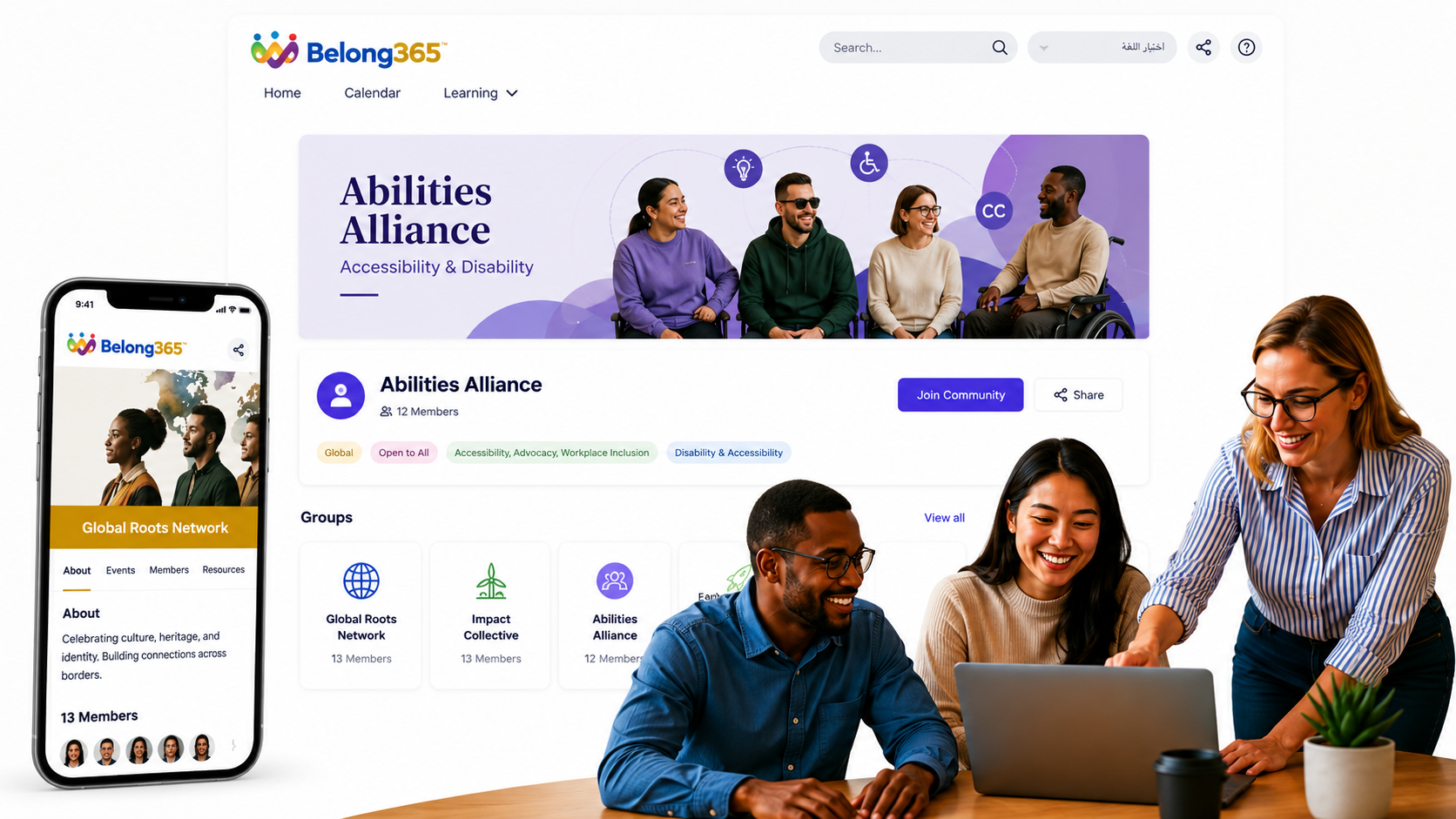
Designing Connection Across Difference
Connection across groups needs more than an open invitation. It needs a reason to engage, enough structure to support honest exchange, and repeated contact over time.
ERG partnerships can help when groups work together on shared business questions rather than meeting only for awareness events. Joint projects allow employees to learn how colleagues approach risk, communication, leadership, and decision making. The relationship develops through useful work rather than forced disclosure.
Mentoring and sponsorship can also widen connection. Many programs pair people within familiar professional or social networks. Deliberate matching across differences can give employees access to perspectives and relationships they would not otherwise encounter. Strong programs prepare both people for the relationship instead of assuming that difference will produce insight by itself.
Team routines matter as well. Managers can make context sharing part of regular work by asking how decisions may affect different employees, inviting alternative interpretations, and rotating who leads discussion. These practices make belonging in the workplace part of daily operations rather than a separate cultural initiative.
How Leaders Shape Everyday Belonging
Senior commitments matter, but employees experience culture mainly through managers, meetings, and decisions. Leaders influence whether people speak openly by how they respond when someone disagrees, raises a concern, or describes an experience the leader does not share.
Curiosity is important, but it must be paired with action. Employees lose trust when leaders invite input and then ignore it. They also notice when certain people are repeatedly asked to explain an entire community or when personal stories are welcomed only during designated awareness periods.
Leaders can strengthen belonging by making expectations visible. They can explain how decisions are made, credit ideas clearly, challenge interruptions, and ensure that access to opportunities does not depend on informal closeness. Reviewing whose voices are missing before a decision is final can also prevent familiar perspectives from dominating the conversation.
These behaviors may appear small, but they accumulate. Belonging in the workplace is often decided through ordinary moments that signal who is taken seriously.
Why Belonging in the Workplace Is Worth Designing For
Belonging has direct consequences for performance. Employees who feel connected and respected are more likely to share ideas, raise risks, and contribute context that others may have missed. That matters in organizations where decisions are complex and the cost of blind spots is high.
Retention is also affected. Employees are more likely to stay where they have credible relationships, access to support, and confidence that their contribution is recognized. Compensation and advancement remain important, but neither fully offsets a workplace where someone feels socially or professionally peripheral.
Innovation depends on the same conditions. Diversity creates access to different perspectives. The organization benefits only when those perspectives are voiced, heard, and used. When employees expect dismissal or personal cost, many valuable ideas never enter the conversation.
Organizations that build connection across difference are also better prepared for change. Trust allows teams to handle disagreement without treating it as disloyalty. Shared understanding helps people interpret uncertainty with more context and fewer assumptions.
Diversity is the starting point. Belonging in the workplace is the destination. The distance between them is where many organizations are working now. Closing it requires moving beyond programs that support individual groups and adding structures that build relationships across them. Representation opens the door. Deliberate connection determines whether people can enter, contribute, and remain.