


Learn how Employee Resource Groups (ERGs) can drive DEI efforts by boosting inclusion, diversifying talent, and strengthening communication.
Employee Resource Groups, or ERGs, are communities of workers within a company that organize around a shared identity. They align the organization’s goals with their employees’ lived experiences and expectations. While many organizations are actively pursuing DEI goals, not all have a robust framework to support these aspirations. ERGs are one way to build tangible systems that align values and goals with meaningful results.
ERGs have been around in the United States for over 50 years. For example, the Xerox National Black Employees Caucus was established in 1970, providing a space for Black employees to organize and drive change within their workplace. Over time, social movements have led to the establishment of ERGs across industries, representing a wide range of communities.
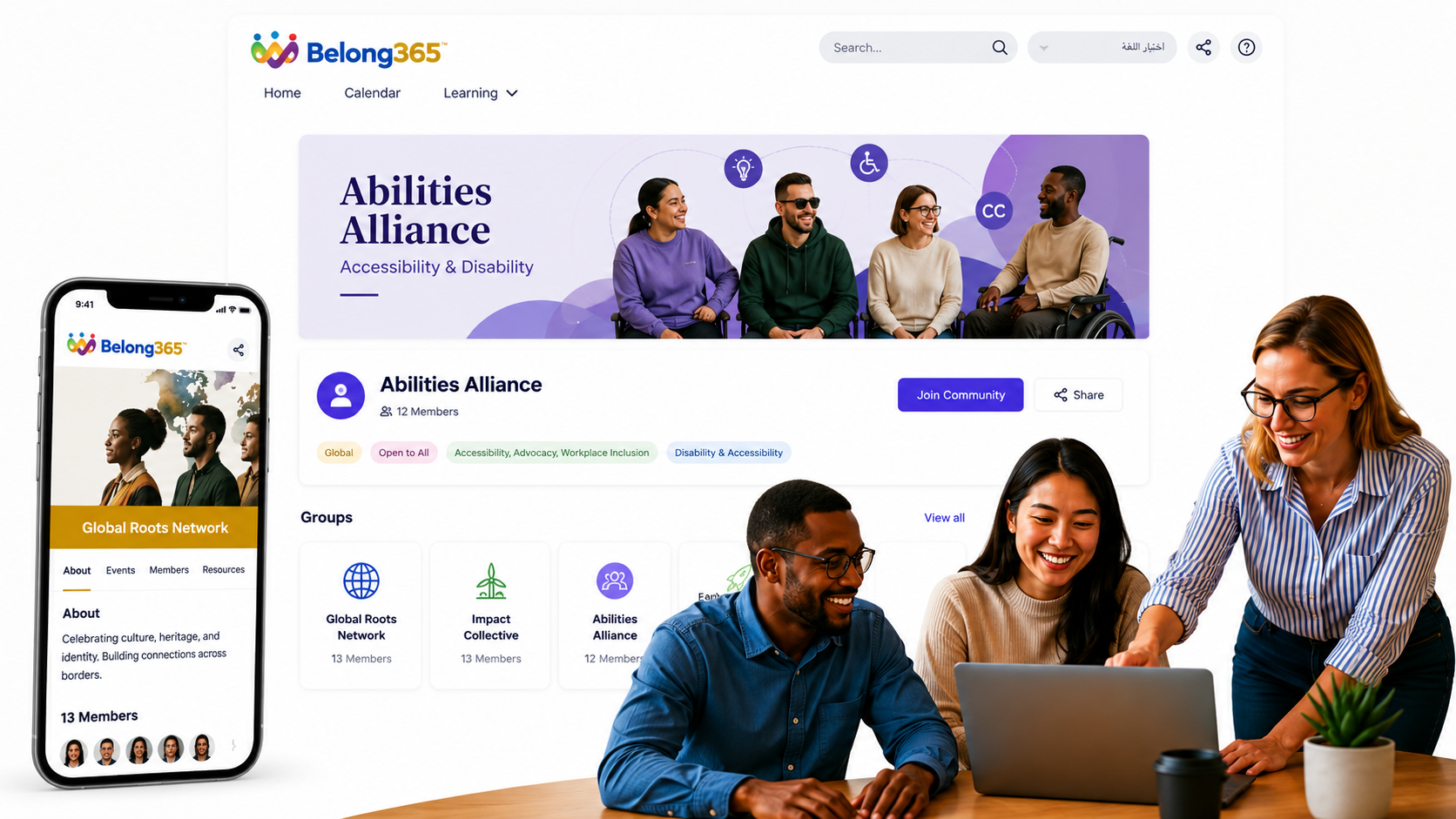
Today, ERGs are a staple within large organizations. In fact, 9 out of 10 companies on the Fortune 500 list have ERGs, and their influence has only grown since then. These groups are becoming increasingly significant for both the employees they represent and the leadership teams they engage with.
If you’re working toward DEI goals in your organization, here are key ways ERGs can help foster that growth.
How ERGs Can Help
Diversifying Talent Acquisition
ERGs can broadcast a company’s commitment to DEI to employees, potential hires, and customers alike. This boosts the visibility of DEI programs and expands their impact.
For example, having ERG members at recruitment events can signal to potential employees that they will be welcomed and heard at the organization. ERGs can also serve as a bridge for new hires from historically underrepresented groups, helping them find inclusion and community in the workplace quickly.
Boosting Inclusion
ERGs directly improve inclusion by providing a space where employees with a shared identity can voice their unique concerns. They also support retention by removing barriers and opening channels of communication that might otherwise be overlooked. An inclusive HR calendar is a great way to support this.
Better Communicating Needs and Concerns
Diversity is multifaceted and extends beyond categories on a census. Employees from different backgrounds often report that their concerns are not always heard. ERGs offer a platform for addressing issues like unfair practices, biased processes, or microaggressions. These concerns, when shared through ERGs, are more likely to reach leadership in a clear and transformational way.
Social Impact
ERGs often lead community-focused activities, such as panels, volunteer opportunities, or charity drives, which strengthen a company’s outreach and visibility. This reinforces the organization’s connection to the diverse communities it serves, improving both its reputation and tangible community engagement.
A Powerful and Meaningful Resource
Employee Resource Groups help embed DEI values into an organization’s structure. They provide a welcoming space for employees to advocate for change and have a meaningful impact on everything from talent acquisition to employee engagement to community connection.
Ready to strengthen your inclusion strategy? Discover how our Belonging Calendar can support your efforts and drive meaningful change within your organization.