


Consistent workplace inclusion remains difficult to achieve because most workplace inclusion programs focus on the employees who are easiest to reach. Office-based teams receive company emails, attend live sessions, use digital learning platforms, and hear messages directly from senior leaders. Employees in factories, warehouses, stores, field locations, or different time zones often receive a reduced version of the same effort, if they receive anything at all.
Consistent workplace inclusion means providing every employee with an equivalent quality of experience, regardless of role, location, language, schedule, or access to company systems. It exists when employees can use cultural awareness resources, learning opportunities, manager support, and organizational information without their experience depending on where or how they work.
A program may appear available to the entire workforce while serving only a narrow part of it. The difference lies between formal availability and practical access.
What Consistent Workplace Inclusion Actually Means
What does consistent workplace inclusion require? It requires organizations to judge inclusion by the experience employees receive, rather than by the number of programs they launch.
A frontline employee, a part-time worker, a global team member, and a headquarters employee should all understand, access, and benefit from the same core support. Organizations may change the delivery method to suit different working conditions. The quality and relevance should remain comparable.
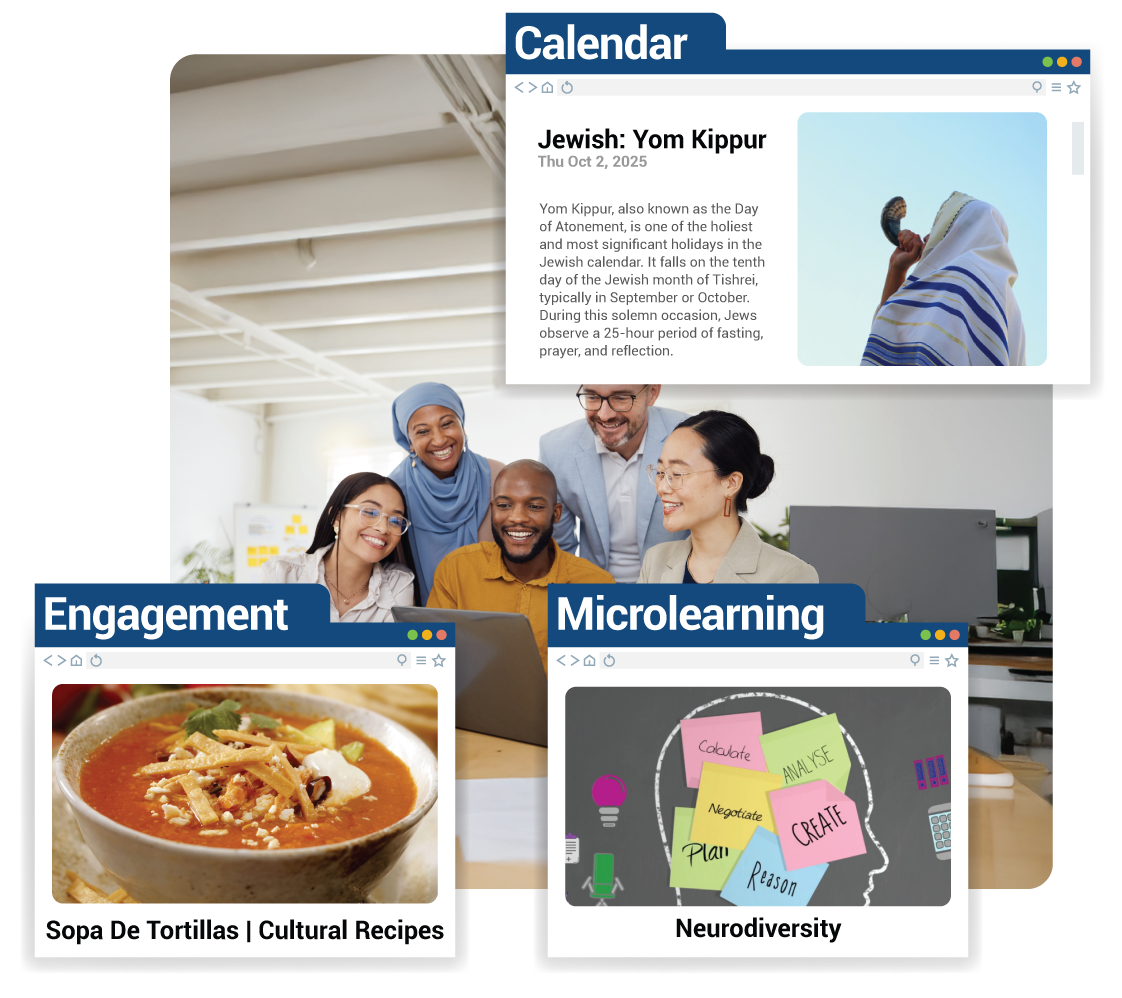
Consider an organization that publishes a cultural calendar through its intranet. Corporate employees can view upcoming dates, read background information, and register for related events. Manufacturing employees without regular computer access may never see it. The calendar exists across the organization, but the employee experience remains uneven.
The same problem appears in workplace learning. A 60-minute live webinar may suit employees with flexible schedules and individual laptops. Shift workers, retail employees, drivers, and people who share devices may struggle to attend.
A recording may help, but only when employees know it exists, have time to watch it, and can access it in a suitable language and format.
Most large organizations run workplace inclusion programs. Far fewer provide consistent workplace inclusion because consistency requires deliberate choices about access, timing, relevance, and delivery.
Where Workplace Inclusion Most Commonly Breaks Down
The most common failure point lies between designed intent and actual reach. This gap is one of the main reasons consistent workplace inclusion breaks down across large organizations.
Inclusion teams may create thoughtful resources, useful campaigns, and detailed manager guidance. The problem begins when they distribute those materials through systems that do not reach everyone equally.
What does this gap look like in practice? It looks like a cultural awareness campaign sent only through company email. It looks like an employee survey that people cannot complete easily from a shared device.
Effective communication with deskless workers requires organizations to consider employee access, schedules, locations, and preferred communication channels instead of relying on email alone.
The same gap appears when a manager toolkit assumes every team works in an office or can gather for a video meeting.
These examples reflect the everyday structure of many large organizations. Employee groups have different levels of digital access, schedule control, language fluency, manager support, and proximity to headquarters. One delivery method will usually serve some employees better than others.
This pattern surfaced at the d&i Leaders Global Workplace Inclusion Forum in London in May 2026, where global delivery, local relevance, manufacturing environments, and organizational consistency appeared as recurring practical concerns.
The implication is clear. Organizations should include reach in the original design of every program.
Inclusion Programs Must Fit the Reality of Employees’ Work
Before approving an initiative, leaders should ask three questions. Who can access it easily? Who will need additional support? Who may never encounter it?
These questions often reveal structural weaknesses before launch. They also show whether the organization has designed for consistent workplace inclusion across different roles and working conditions.
An organization may create an excellent learning resource but distribute it through a platform that requires a company laptop. That decision immediately limits access for employees who work on production floors, in stores, on the road, or from shared workstations.
Timing can create another barrier. Headquarters may schedule a live event at 10 a.m. local time and describe it as a global session. Employees in other regions may need to attend outside reasonable working hours. Shift patterns may prevent others from joining at all.
Language also affects the quality of access. Translating a headline or adding subtitles may not provide enough context. Employees may need locally relevant examples, clear terminology, and sufficient time to process unfamiliar subjects.
Organizations should design around the realities of work instead of expecting employees to adapt to office-based systems. That may require mobile access, short team briefings, printed resources, translated materials, shared screens, QR codes, or sessions built into shift schedules.
The right delivery method depends on how employees actually work.
Equivalent Quality Matters More Than Identical Delivery
Consistent workplace inclusion does not require every employee to receive the same format. Identical delivery can produce unequal outcomes when employees work under different conditions.
The stronger standard is equivalent quality. That standard sits at the center of consistent workplace inclusion.
What does equivalent quality look like? A corporate employee may complete a learning module on a laptop during the working day. A manufacturing employee may receive the same core information during a short facilitated session before a shift. A field employee may access a mobile version with audio. A global team member may use a translated version at a locally appropriate time.
The format changes, but the purpose, substance, and usefulness remain comparable.
This standard should also shape participation. A live event scheduled around headquarters hours may suit one region and exclude another. An equivalent option might include a locally hosted session, a well-produced recording with discussion prompts, or an asynchronous format that allows employees to contribute during normal working hours.
The test is simple: could the employee furthest from headquarters access and benefit from the program with the same ease as the employee closest to it?
Leaders should apply that question to every major inclusion initiative. It reveals whether the organization designed for its full workforce or simply offered a headquarters model to everyone else.
Building Consistent Workplace Inclusion at Scale
Building consistent workplace inclusion across a large organization requires systems that work across languages, devices, geographies, and working patterns from the beginning.
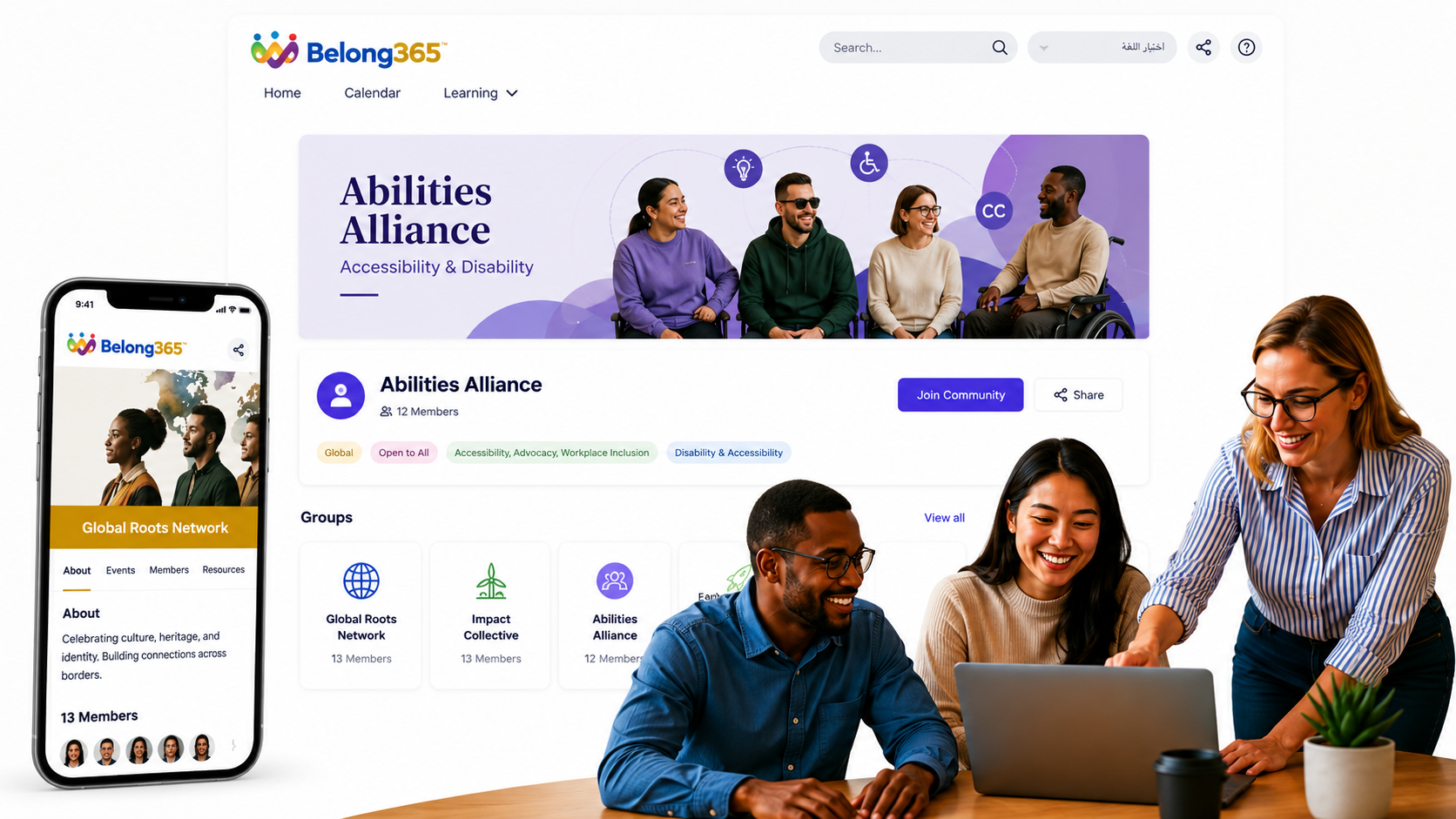
The first requirement is multi-channel delivery. Important resources should not depend on one platform. Email, mobile access, shared screens, printed materials, team briefings, QR codes, local facilitators, and translated content may all play a role.
The correct combination depends on the workforce. A retail chain may need manager-led briefings and mobile content. A manufacturing company may need shared screens, printed materials, and sessions built into shift changes. A global professional services firm may rely more heavily on translated digital resources and asynchronous learning.
The second requirement is manager consistency. Inclusive management often remains inconsistent from one team to another, which leaves employees with very different experiences inside the same organization.
Managers often form the final connection between an organizational program and the employee experience. When managers receive vague instructions or must create their own approach, inclusion depends on individual effort.
One team receives a thoughtful conversation. Another receives a forwarded link. A third receives nothing.
Organizations can reduce this variation by giving managers clear talking points, short facilitation guides, practical examples, and defined expectations. A warehouse supervisor should not have to convert an office-based toolkit into a shift-based conversation without support.
Measure Who Participates and Who Gets Missed
The final requirement is accountability for reach. Without clear data on who participated and who was missed, organizations cannot know whether consistent workplace inclusion exists in practice.
Many organizations measure whether a program launched, how many resources they produced, or how many people attended a central event. Those figures reveal little about which employees the program failed to reach.
A stronger approach tracks participation across locations, role types, languages, working patterns, and access channels. It also asks whether employees found the experience useful and relevant.
Low participation from one part of the workforce should lead to a review of the program’s design and delivery. Leaders should examine whether employees had a realistic opportunity to participate, whether the format suited their work, and whether managers created the time and conditions needed for engagement.
Availability remains a weak measure when access depends on extra effort from the employee. Reach, ease of access, relevance, and usefulness provide a clearer picture of whether an inclusion program works across the organization.
Consistent workplace inclusion exists when workplace programs reach every employee with equivalent quality and relevance. The standard applied to the most visible employee should also apply to the least visible one. Organizations can reach that standard by designing around the full workforce, supporting managers consistently, and measuring actual employee experience rather than formal availability. This benchmark demands more discipline, but it gives inclusion programs a far better chance of becoming credible, useful, and lasting.